Curio Aquarium
A bug became a bug.
The Harvard Mark II relay moth became a cabinet of handmade software creatures, reconstructed in three dimensions and released into a shared artificial-life aquarium.
- Period
- 2014
- Status
- Complete / Archived
- Form
- Interactive installation / tangible artificial-life system
The project
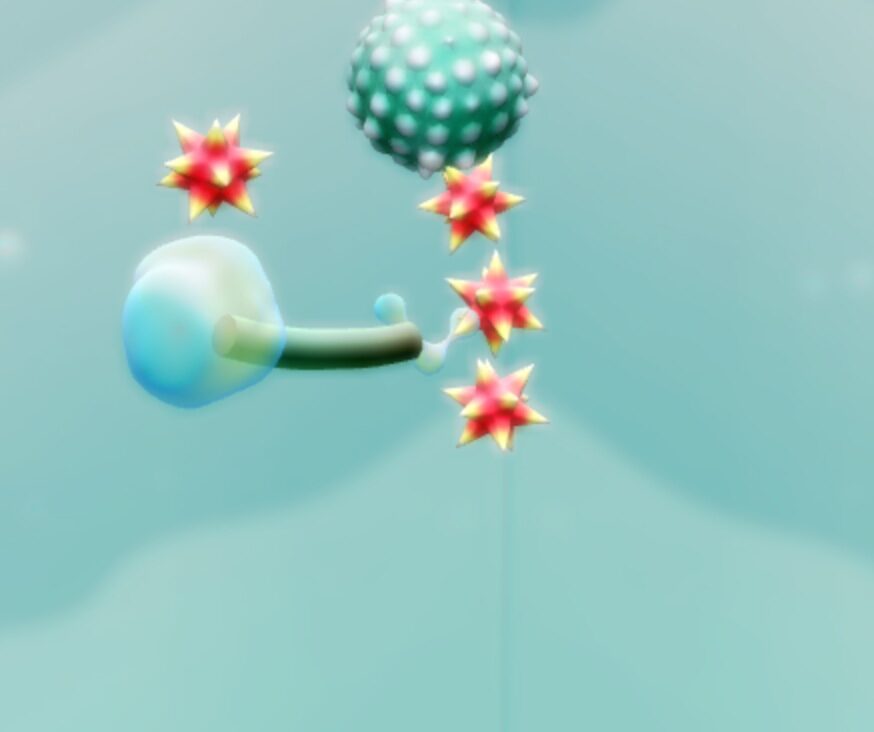
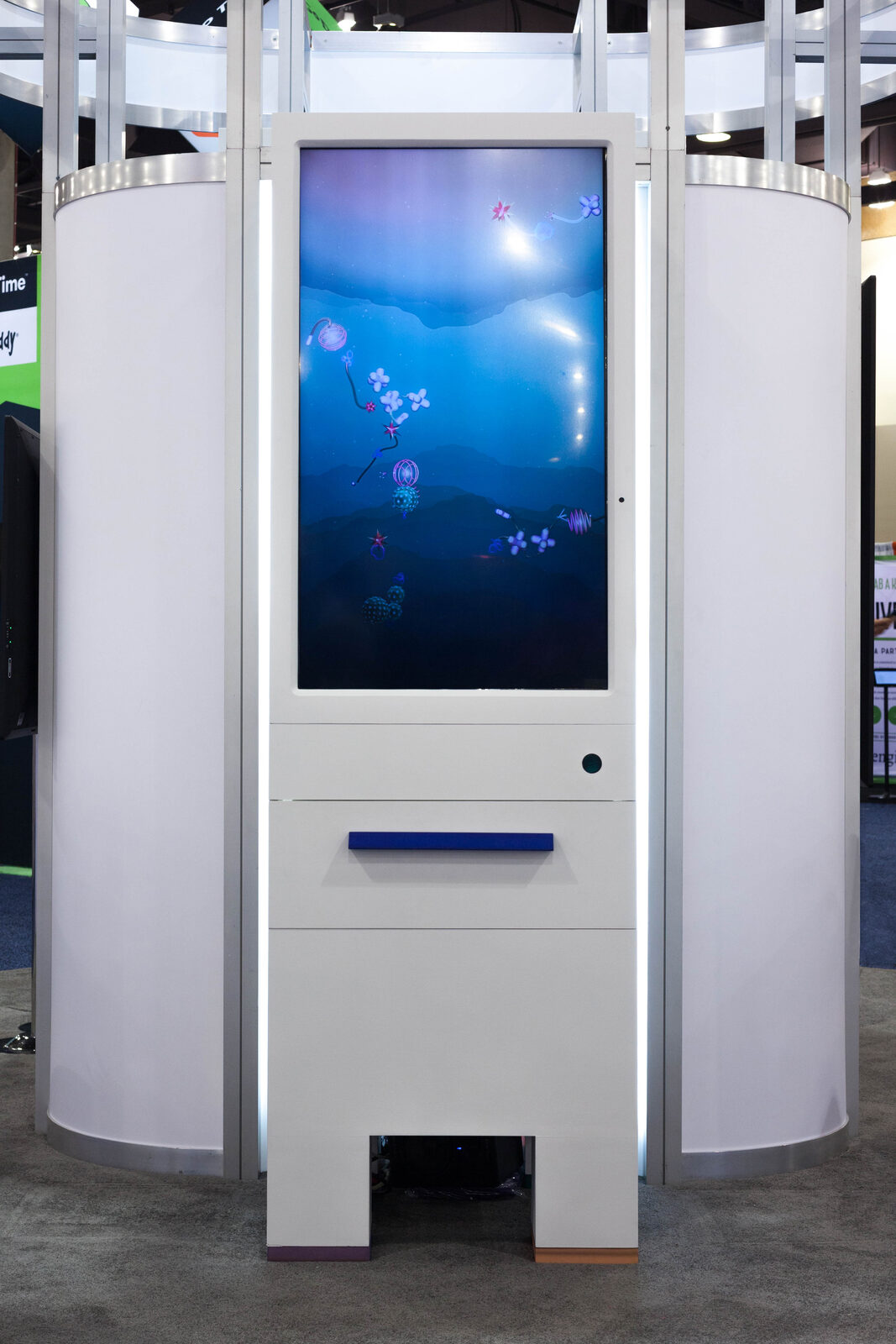
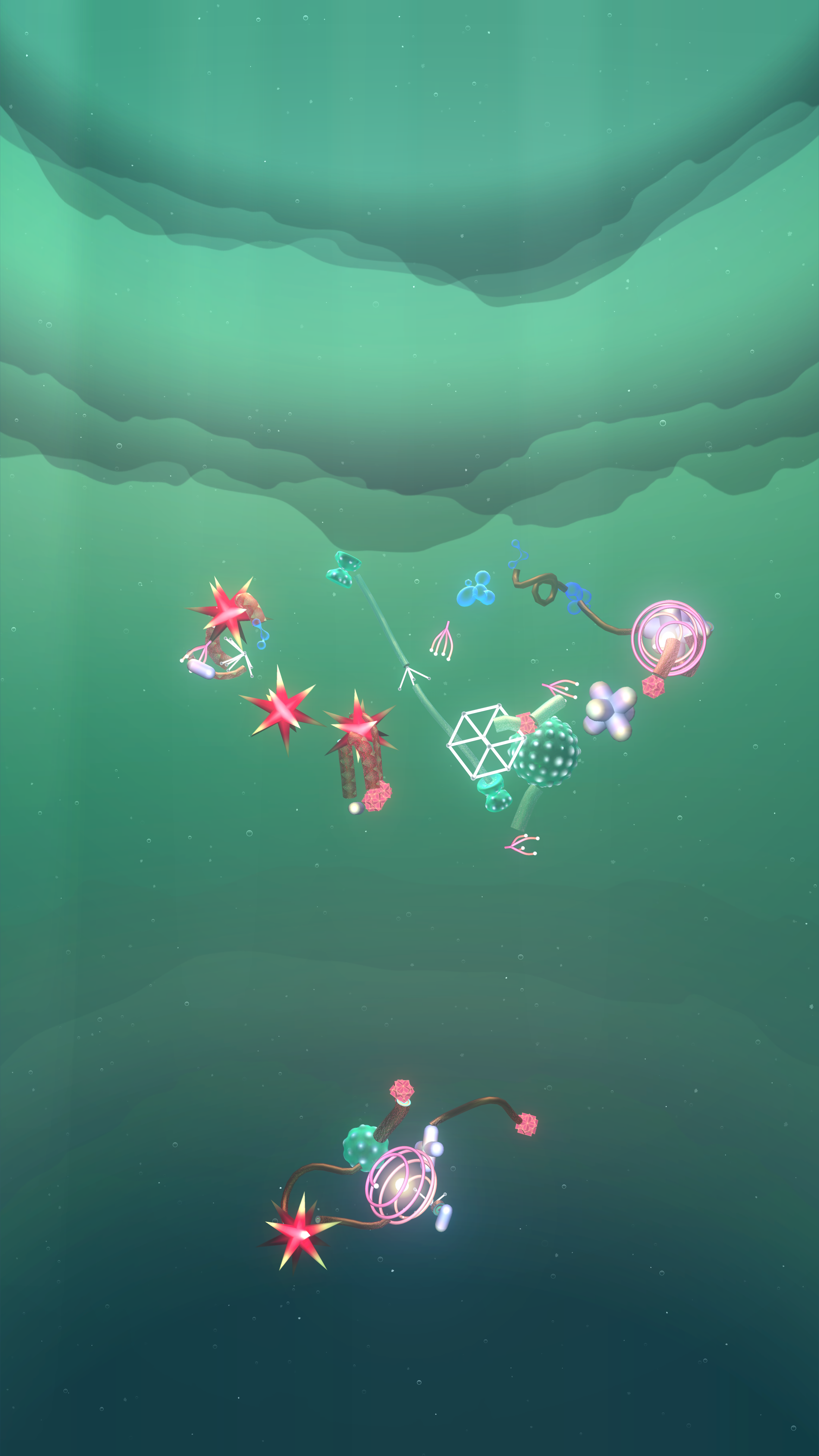
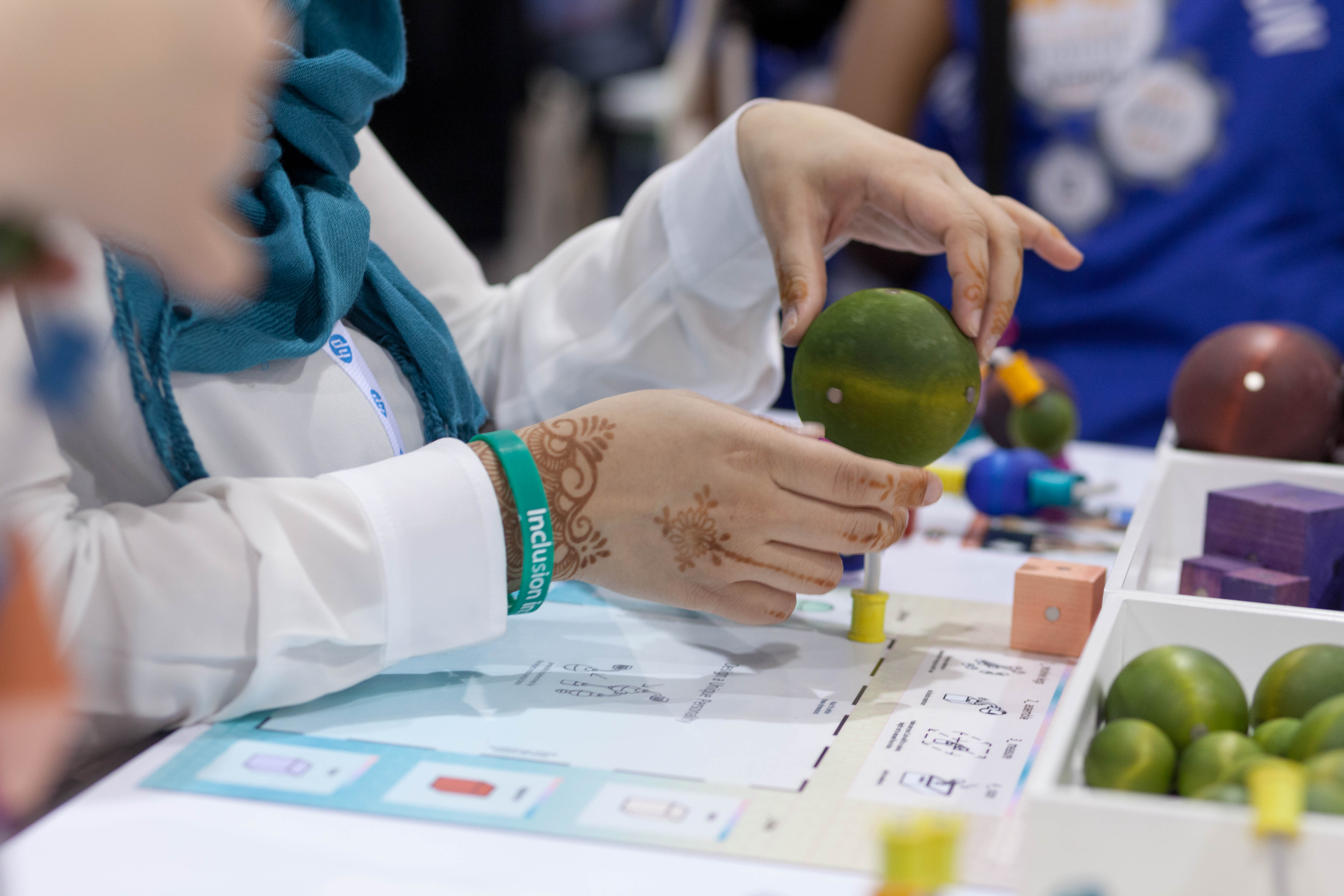
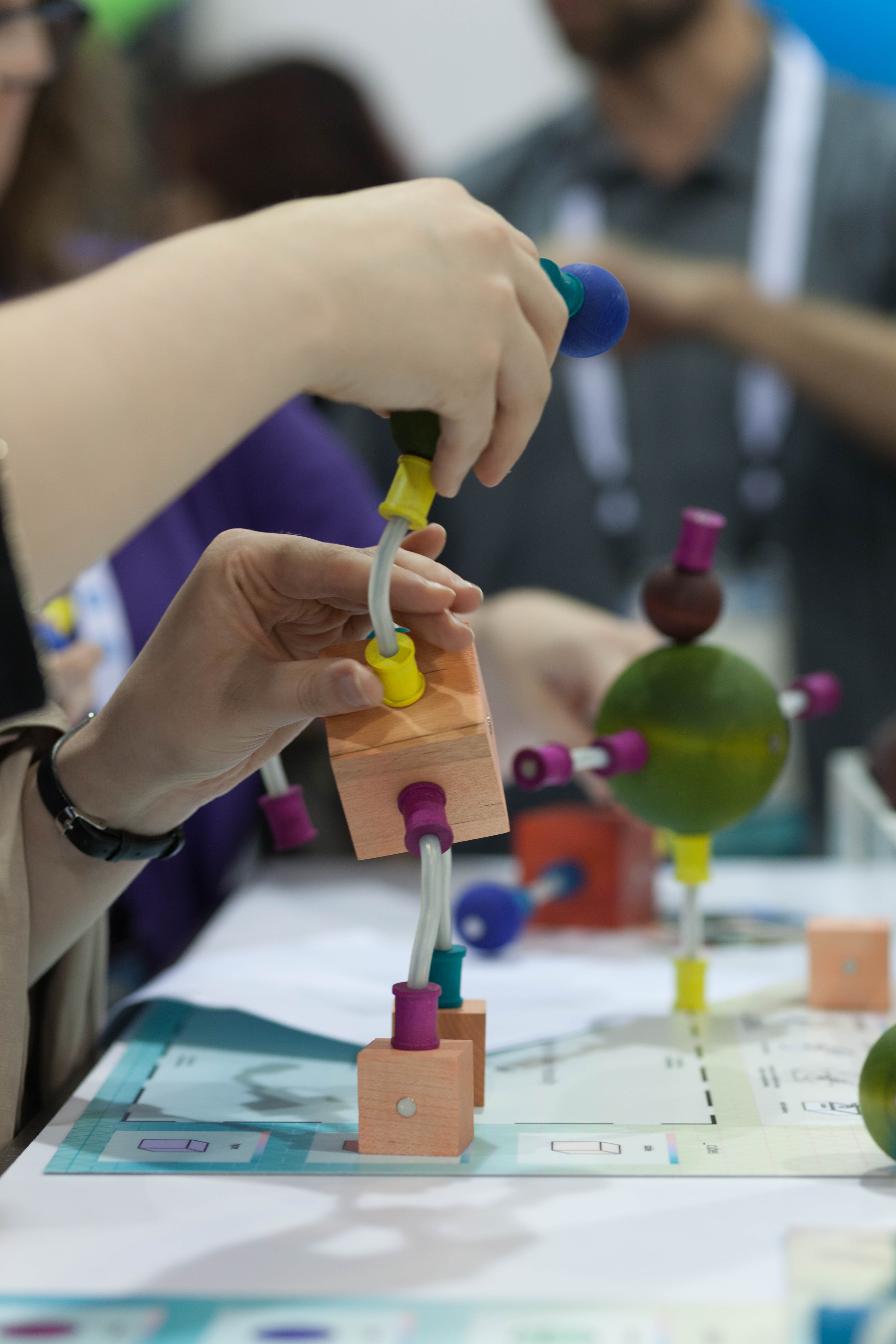
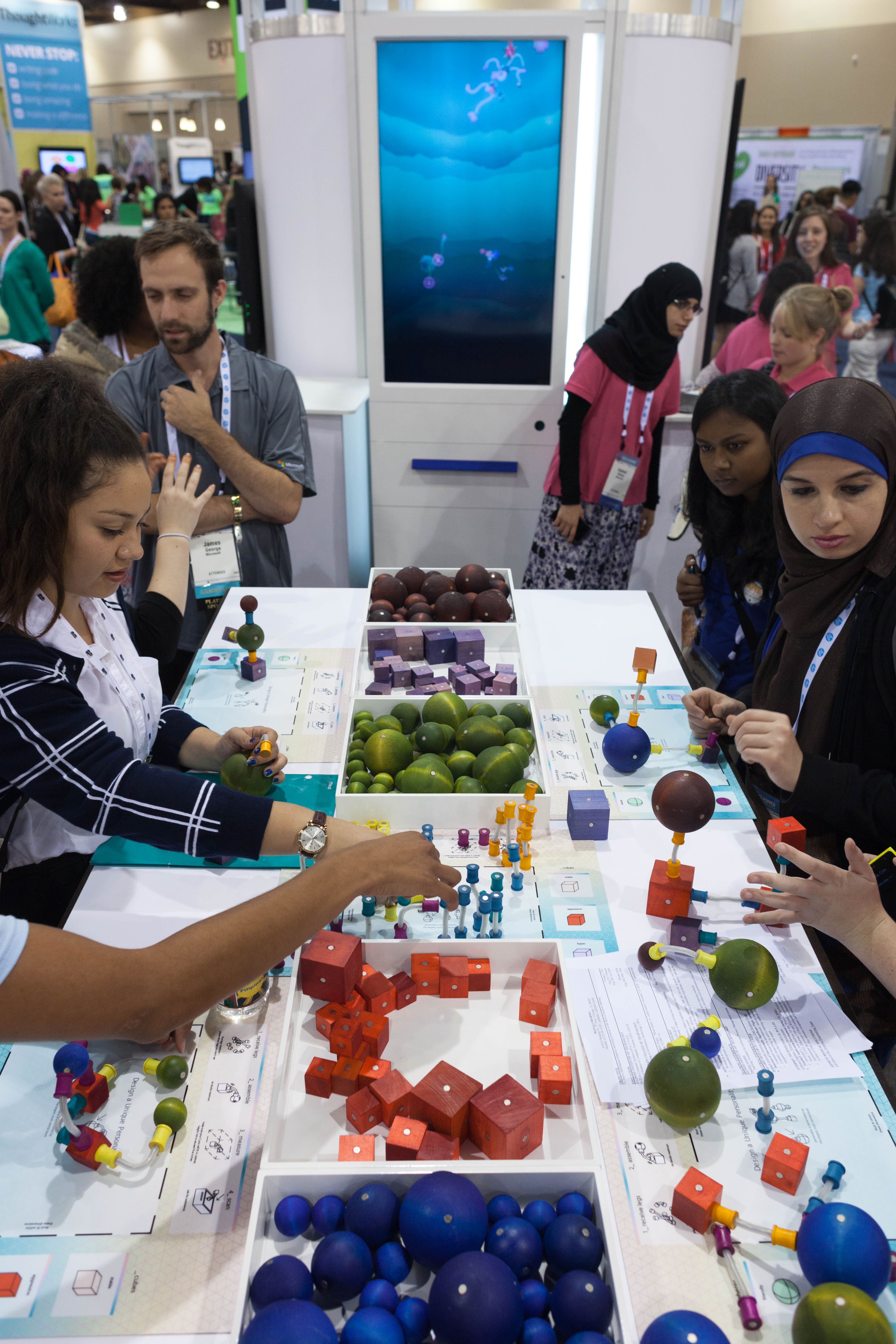
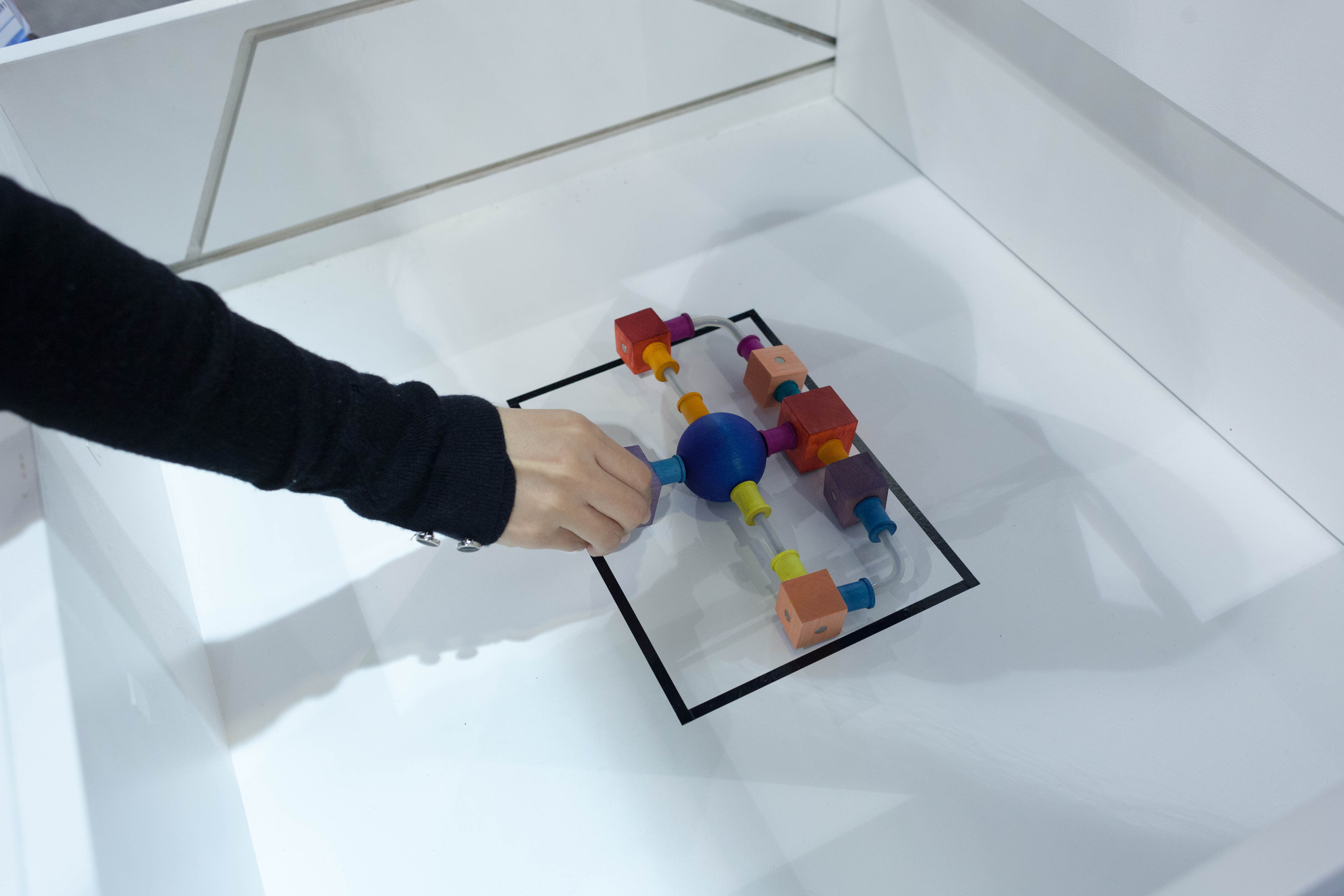
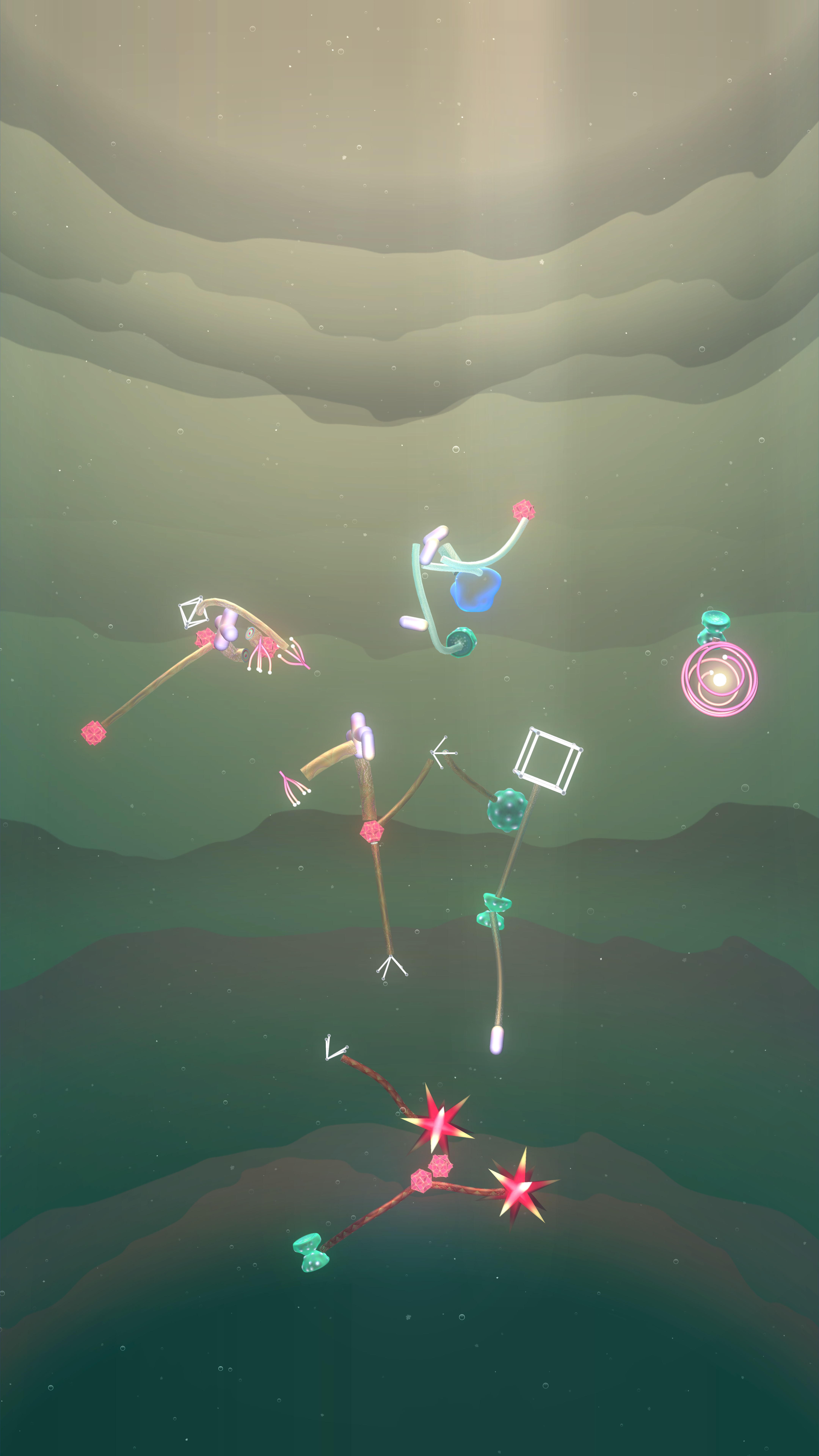
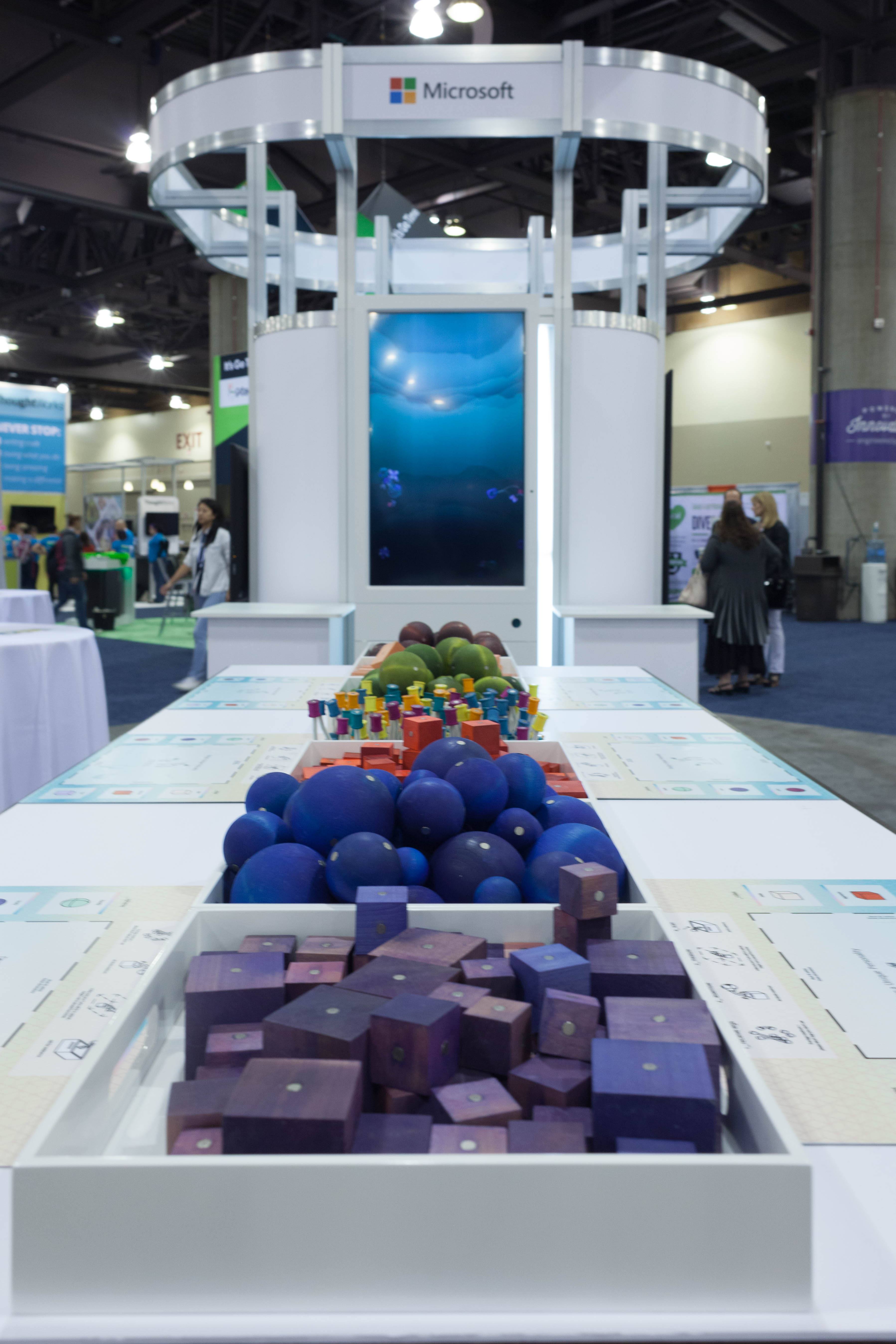
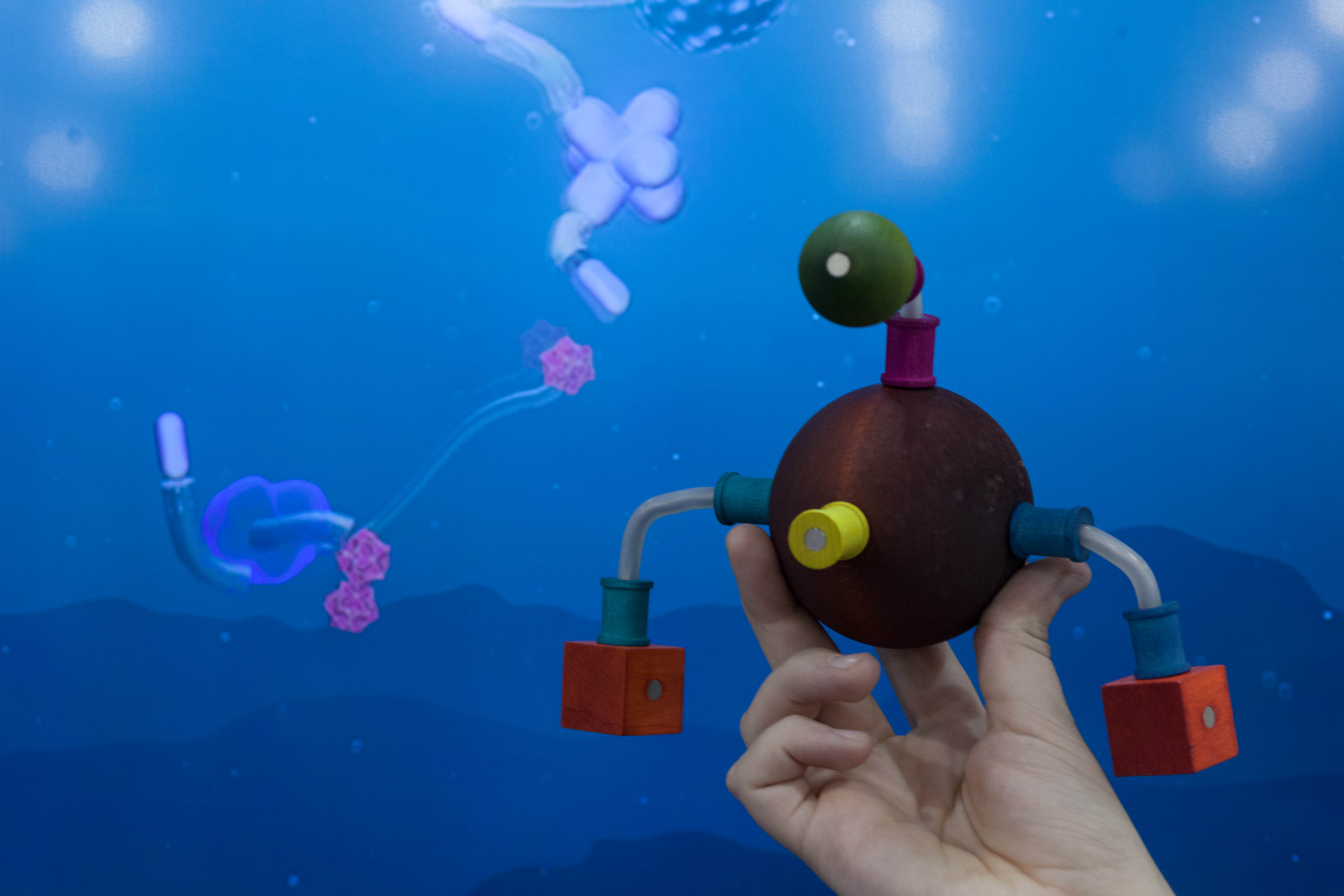
Curio Aquarium invited visitors to assemble a creature from dyed wooden parts, place it inside a cabinet, name it, and watch its software counterpart enter a growing virtual ecosystem.
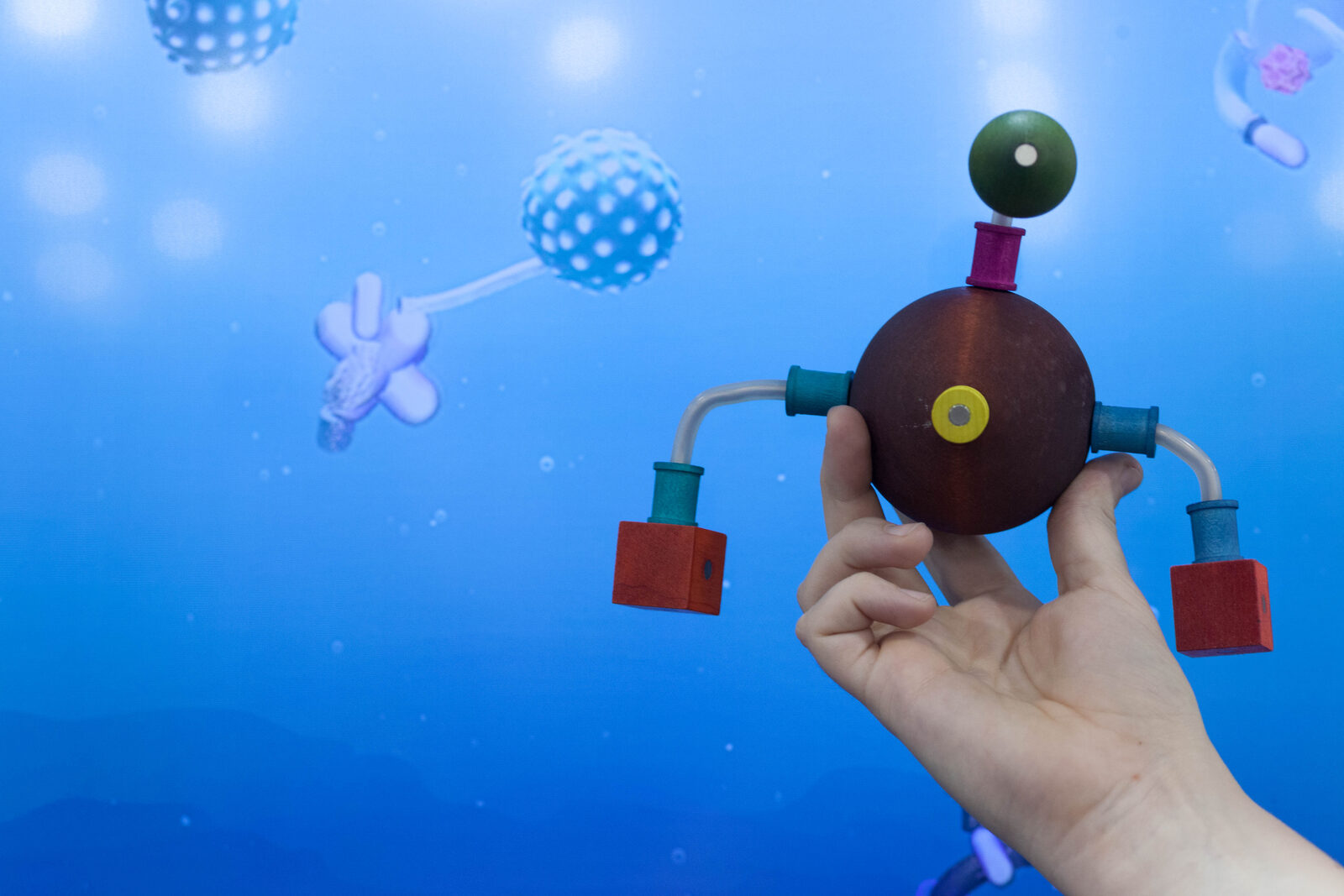
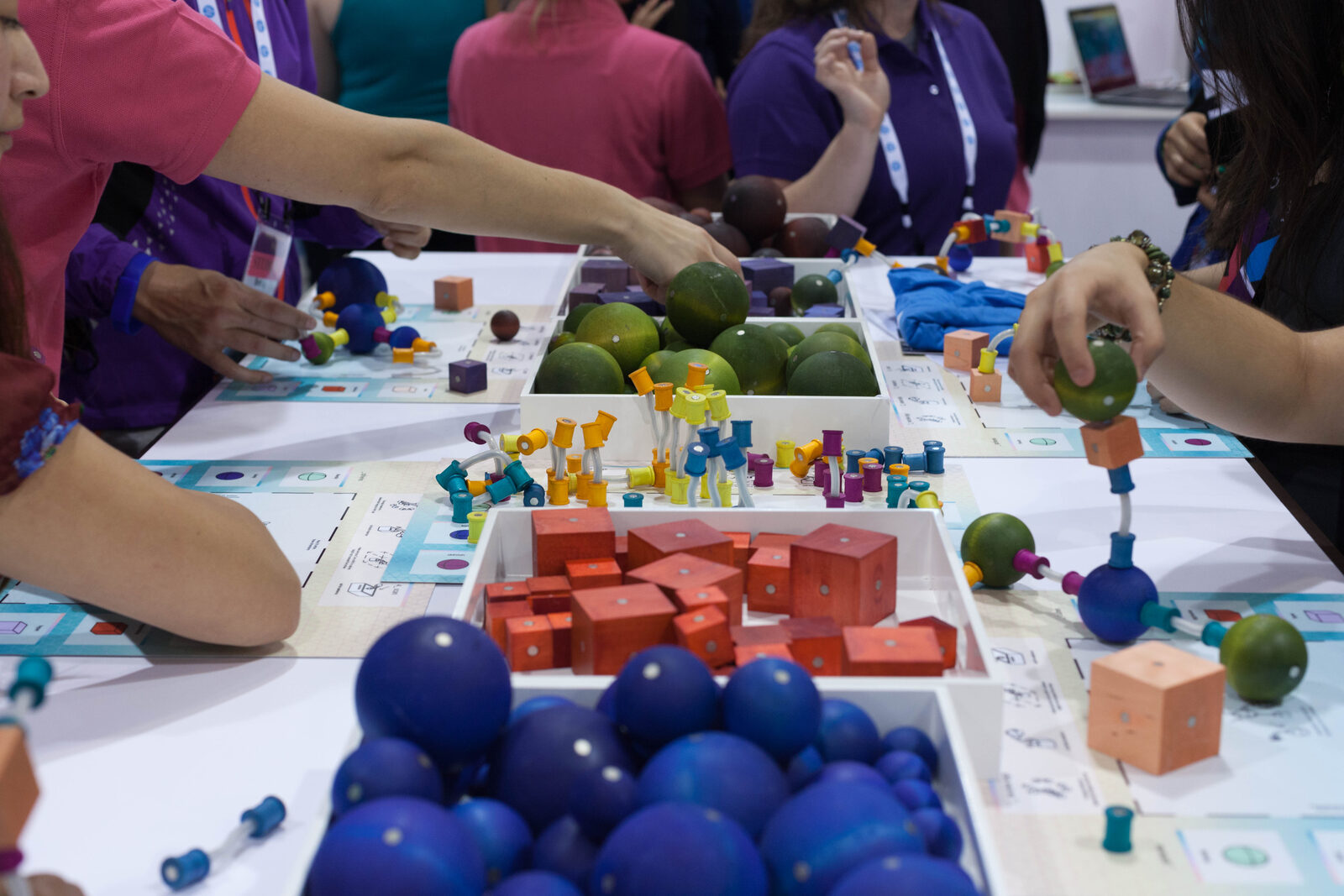
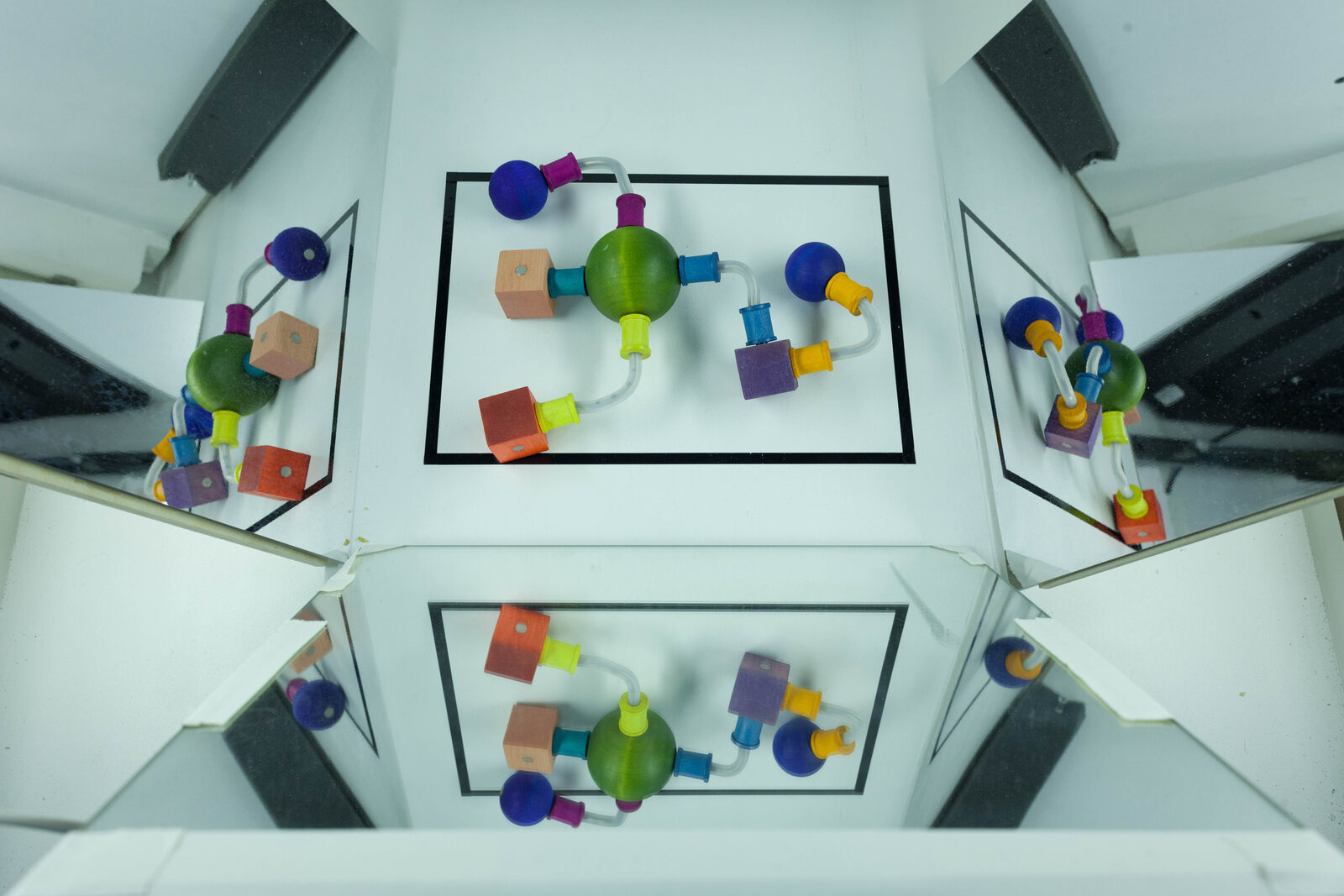
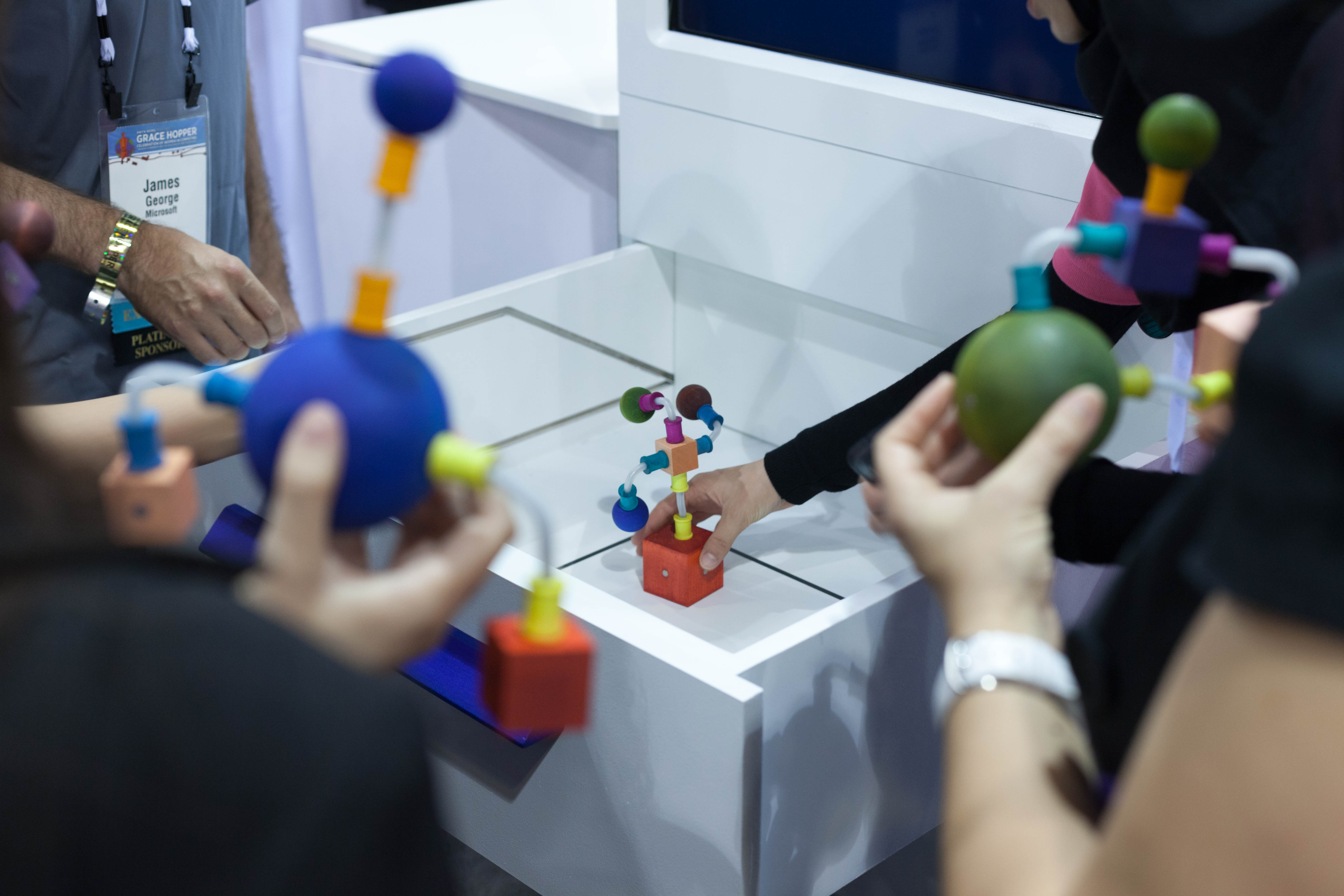
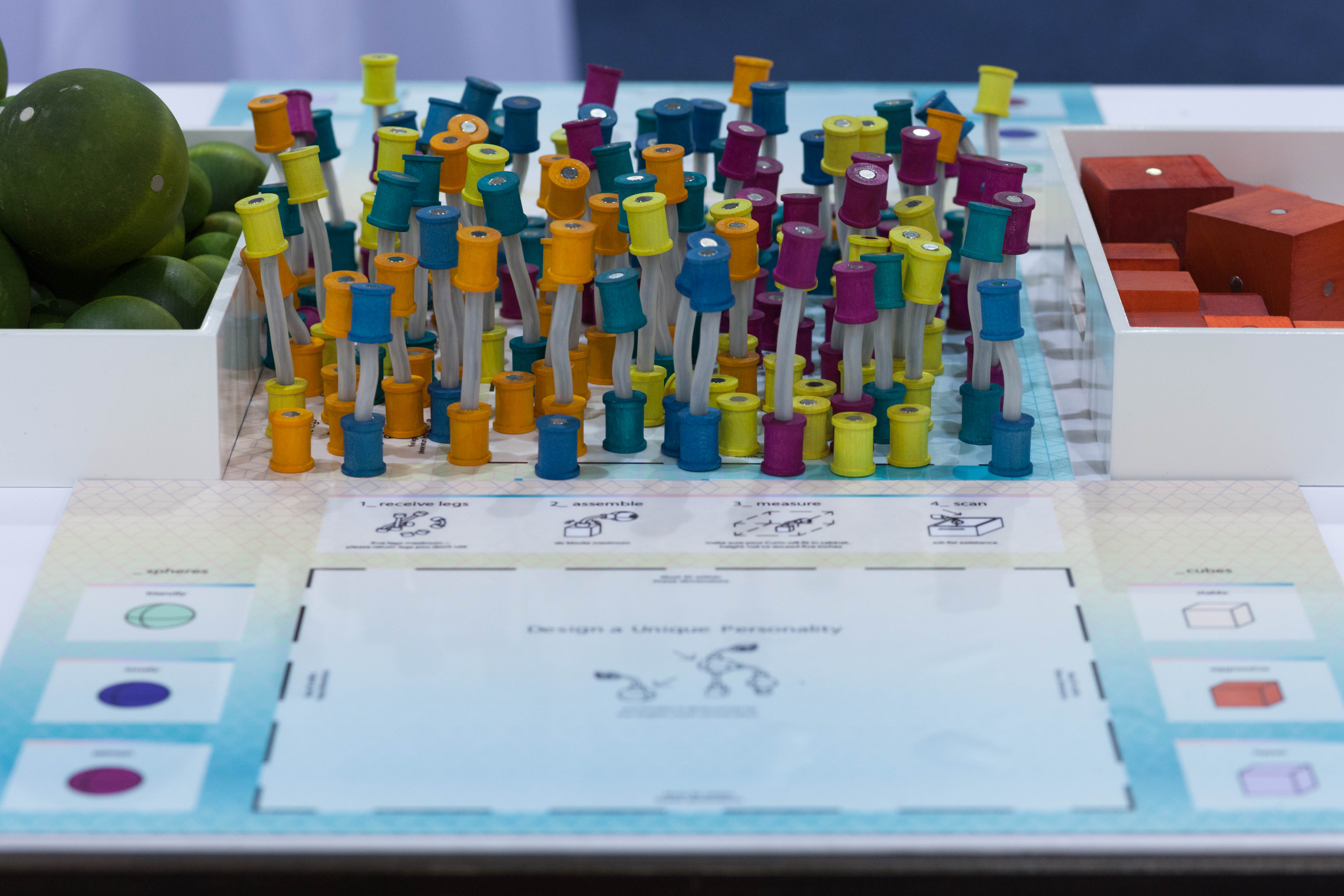
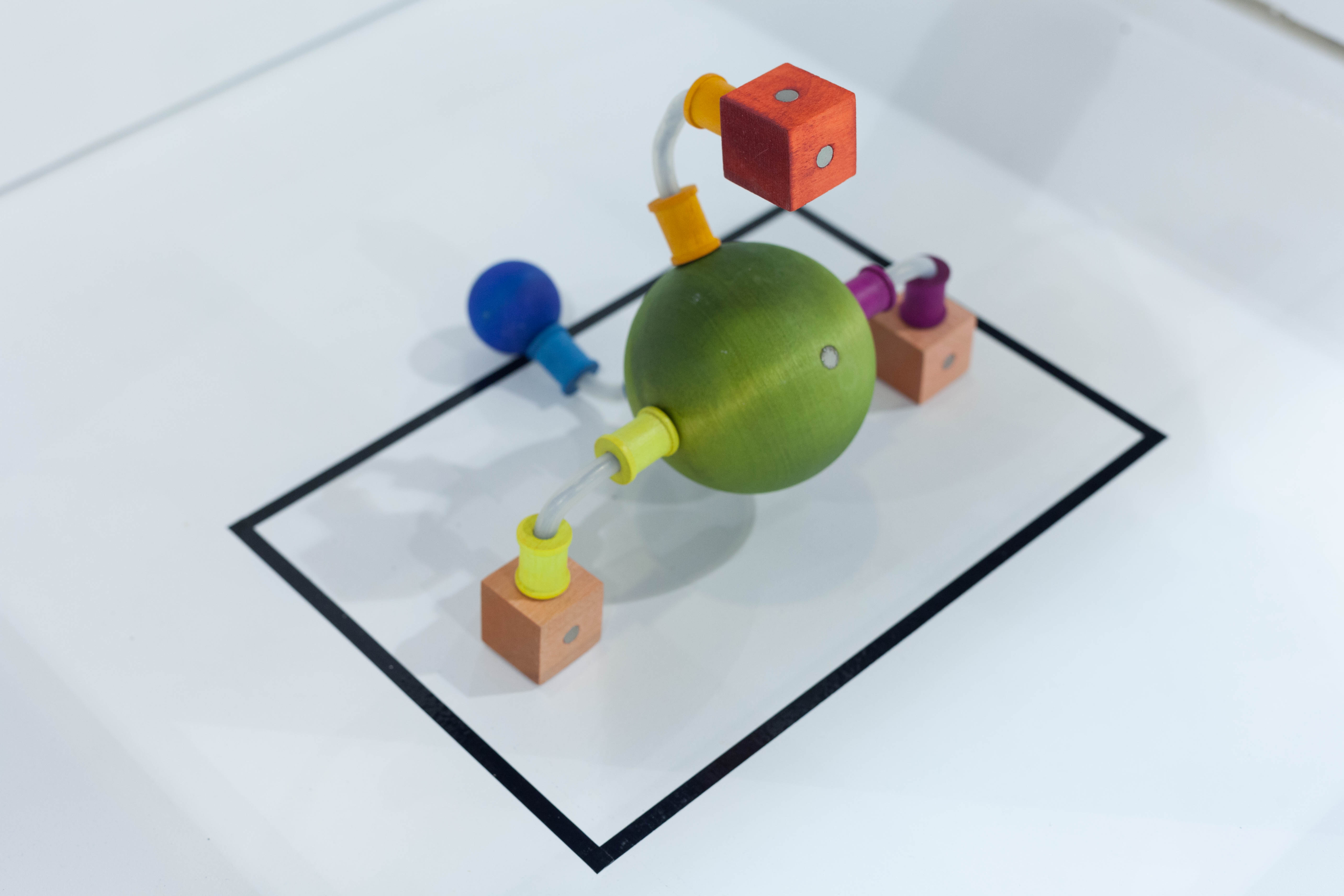
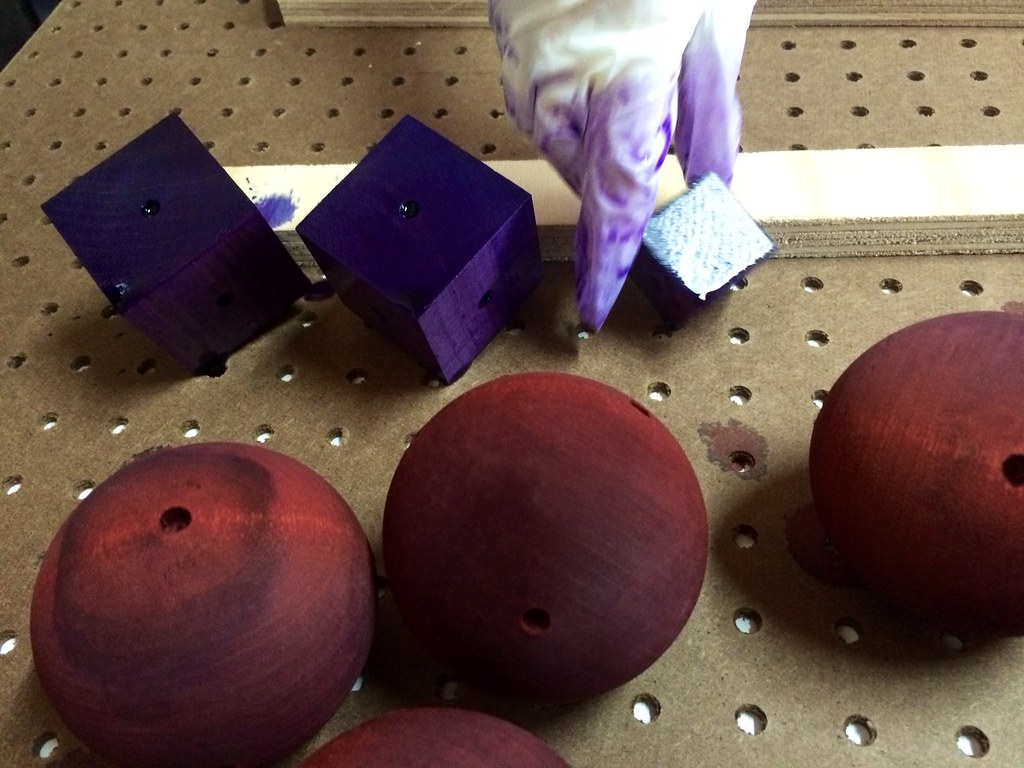
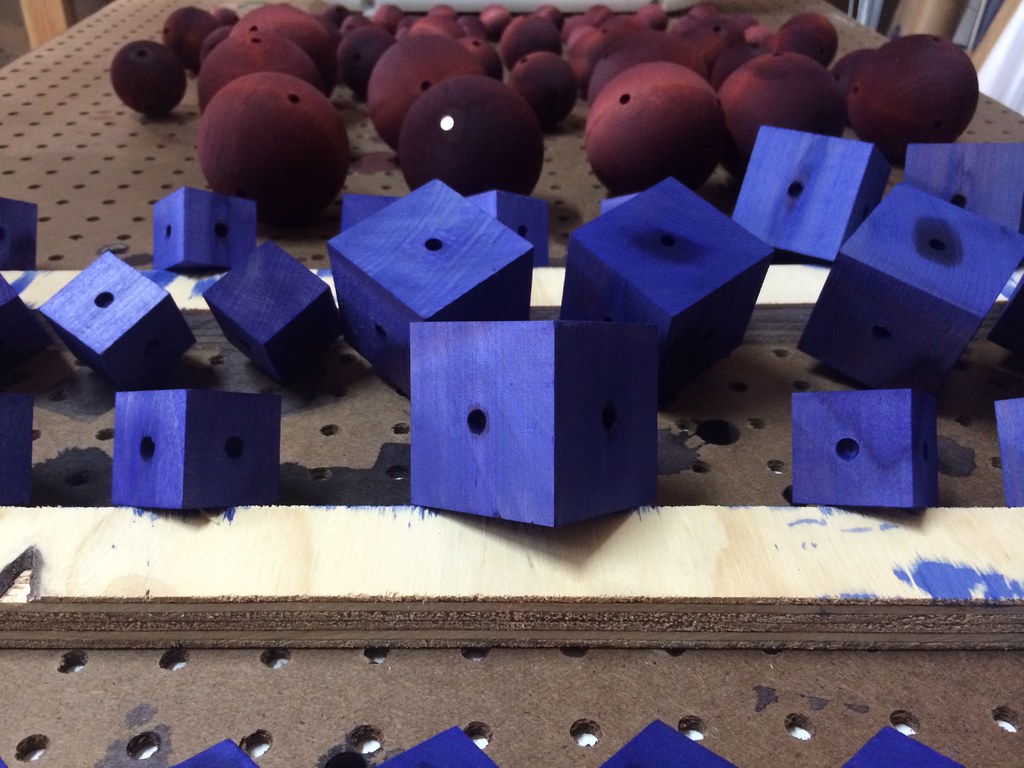
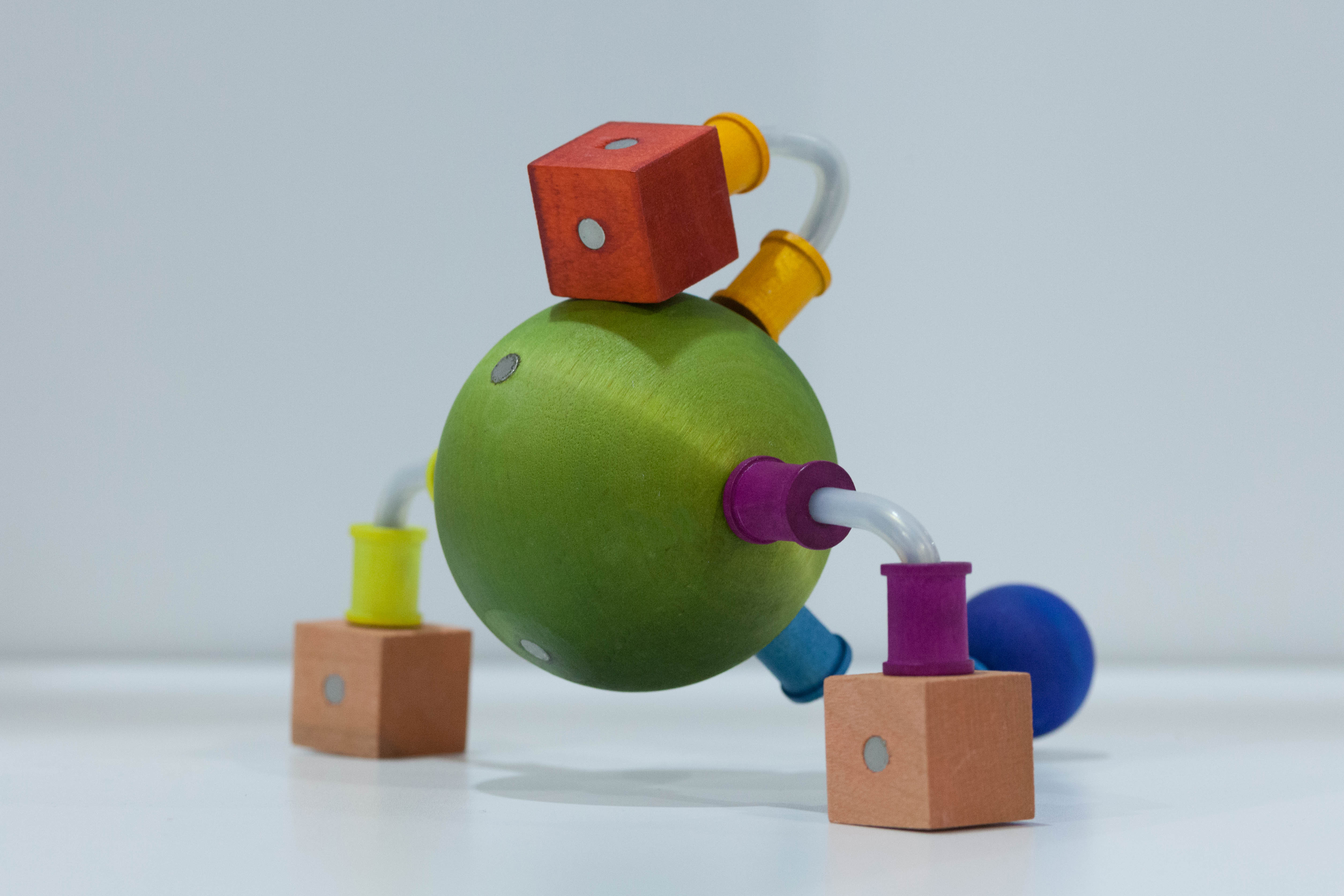
The relay-moth anecdote Grace Hopper helped popularize supplied the project’s joke: a physical bug enters a computer and emerges as software. At the Grace Hopper Celebration of Women in Computing, participants combined magnetic wooden blocks, spheres, and flexible connectors into creatures whose shapes and colors could be recognized by the installation.
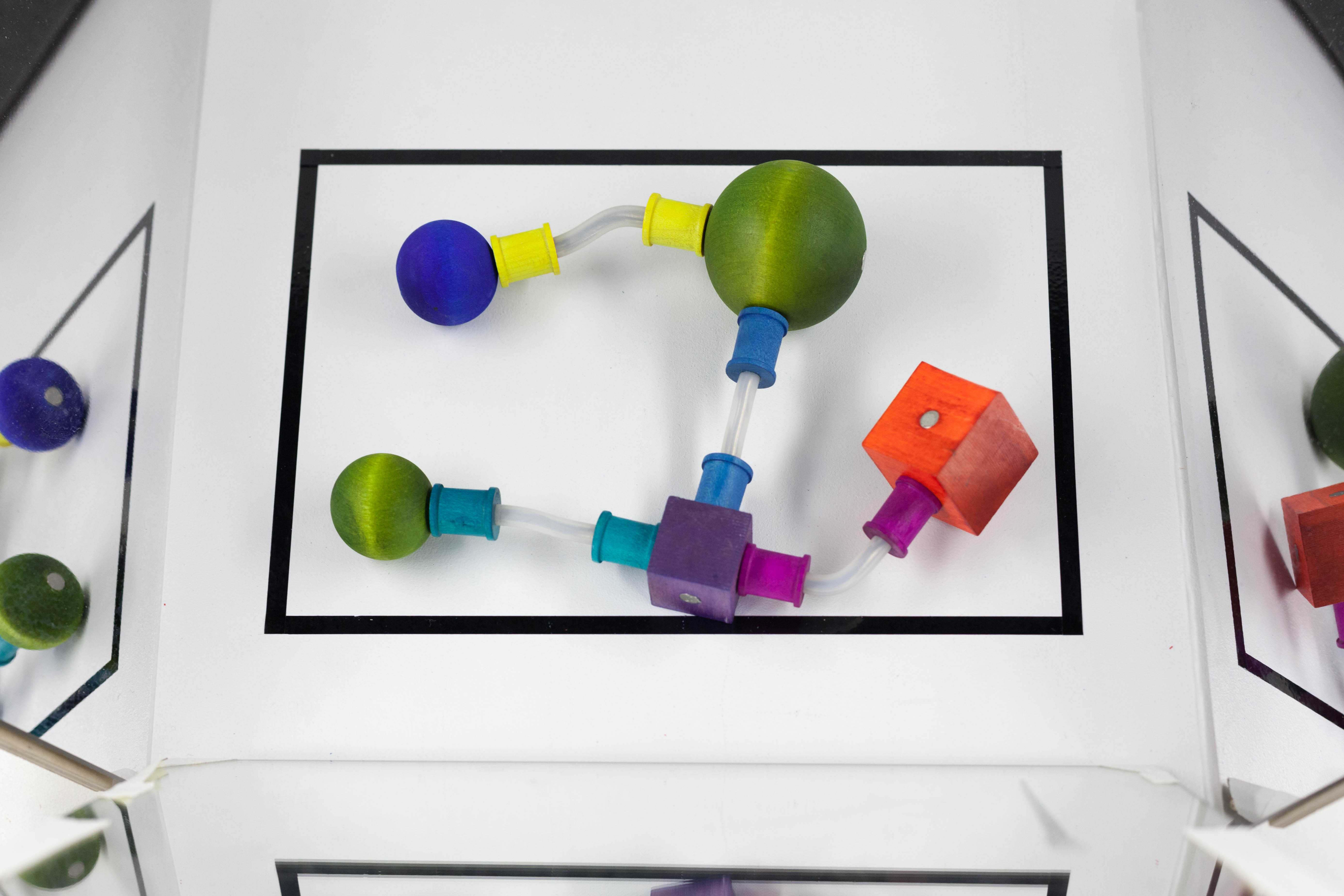
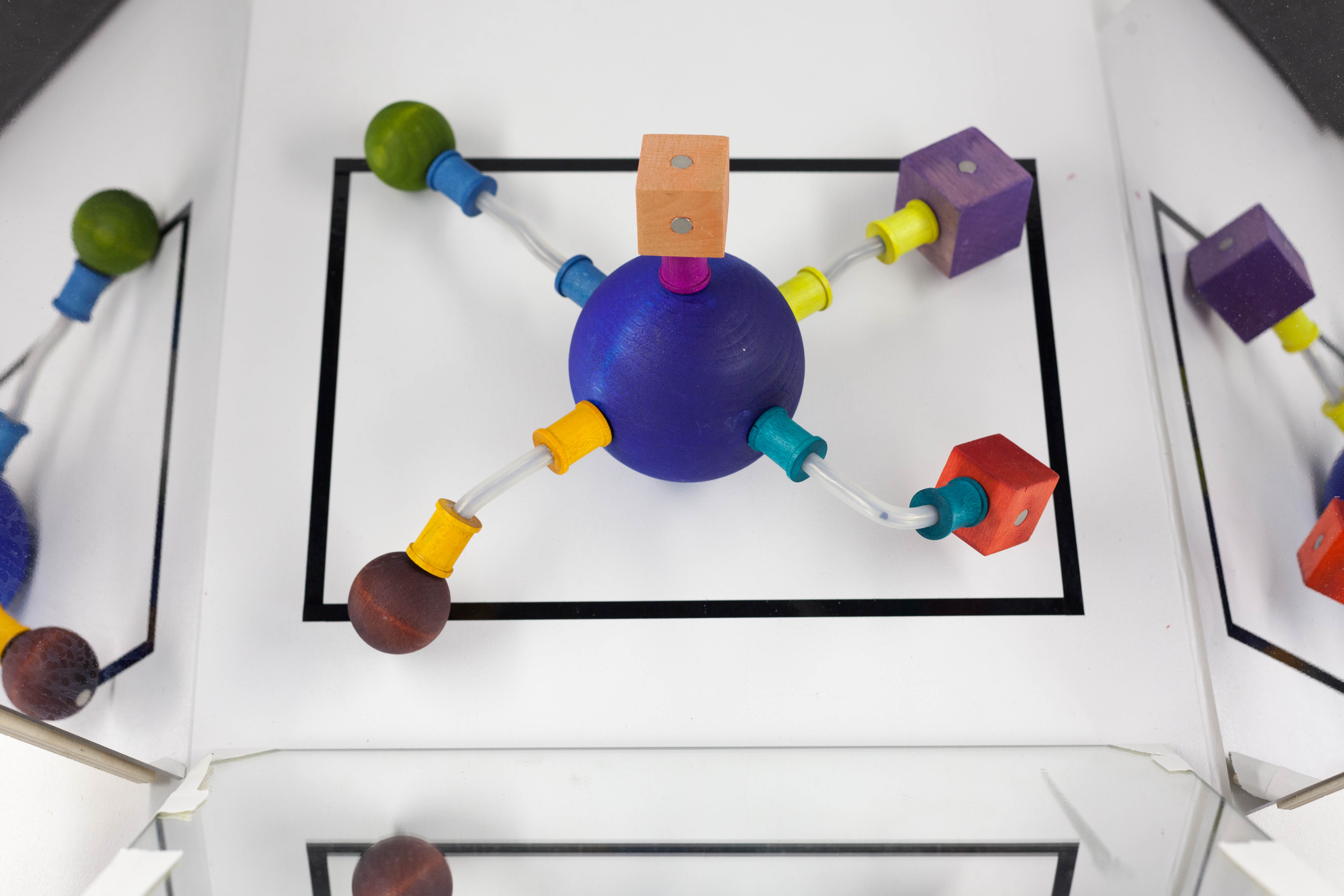
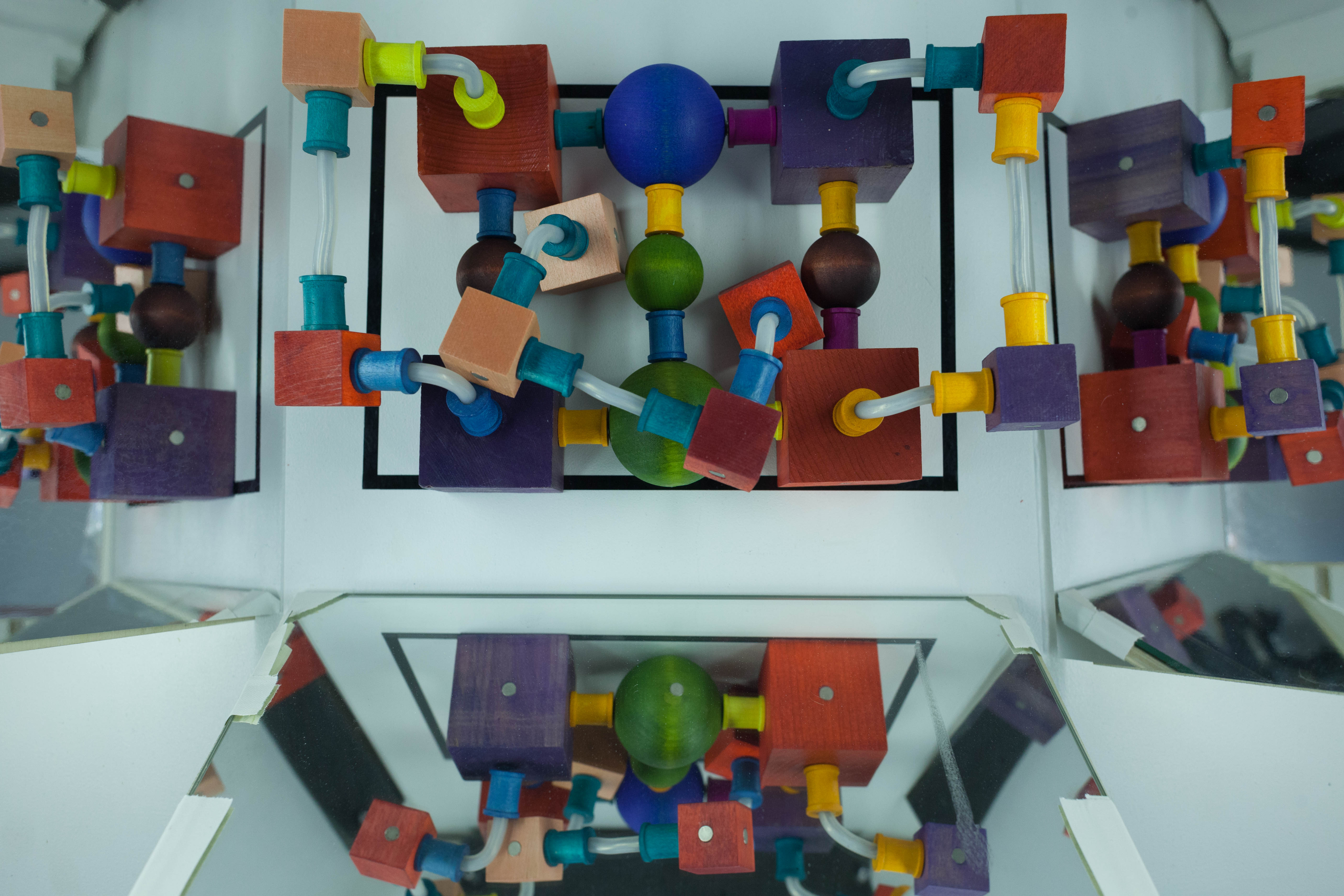
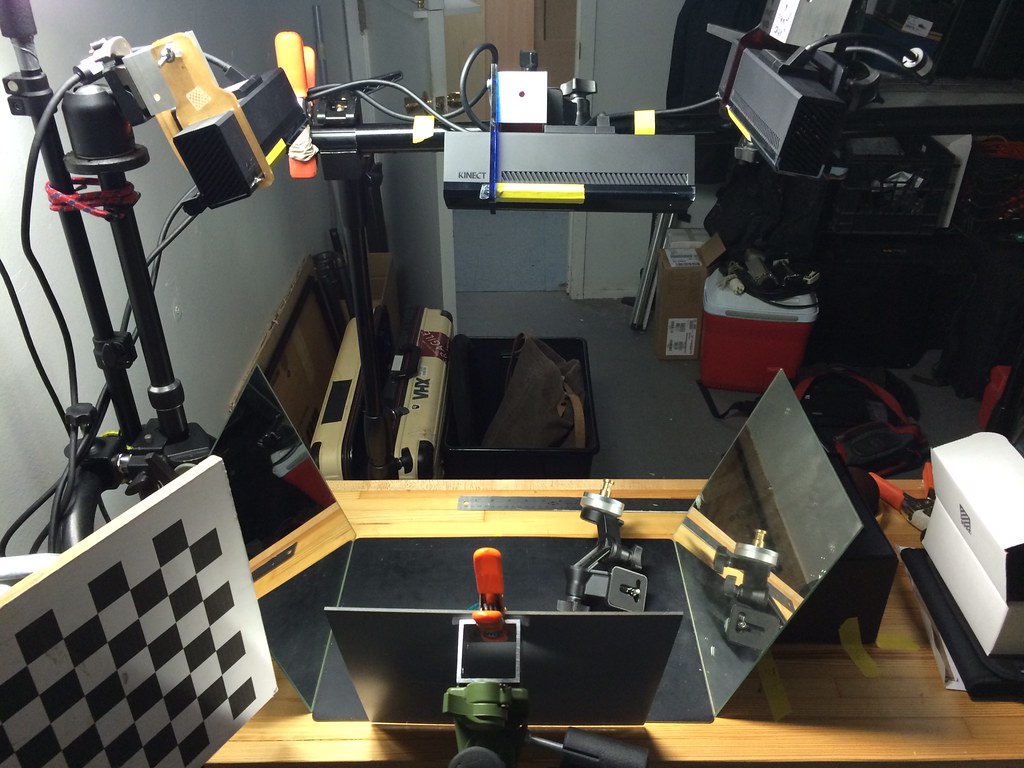
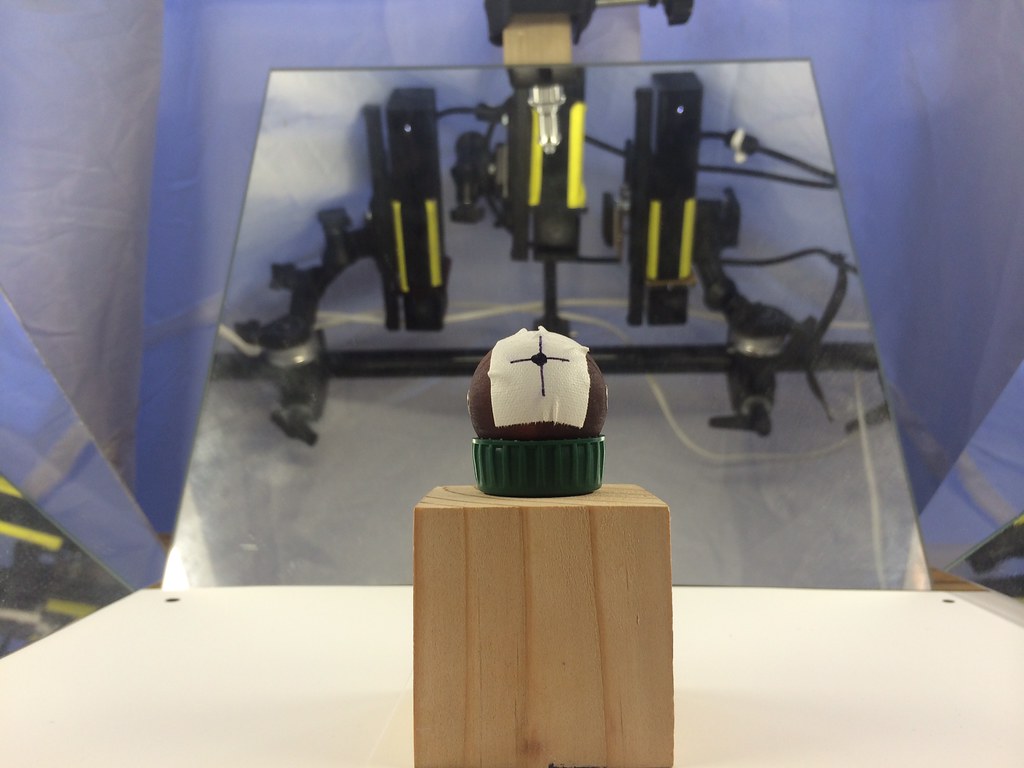
Inside the cabinet, three Kinect sensors looked into a confined drawer through mirrors. Their reflected views were calibrated together so the system could reconstruct an object regardless of how it was placed, identify its parts, and generate a corresponding software creature. A false-back mechanism made the wooden original disappear as its digital double entered the aquarium.
A participant closed the drawer on a handmade creature and opened it again to find the space empty. Its software double was already moving through the shared aquarium.
Process studies
A Bug Becomes a Bug
Curio Aquarium began with the moth preserved in the Harvard Mark II logbook, a literal bug found in a relay. Visitors assembled bright wooden creatures, placed them inside a scanning cabinet, named them aloud, and watched their software counterparts enter a shared digital aquarium.
Alexander Porter — Creative / Technical Collaborator; Capture and Mechanical Systems · Steph Mantis — Toy Maker / Modular Creature System · Keetra Dean Dixon — Cabinet and Construction-Table Design
- 01 / Starting point
We wanted visitors to build creatures the computer could recognize and release into a shared aquarium.
- 02 / How it worked
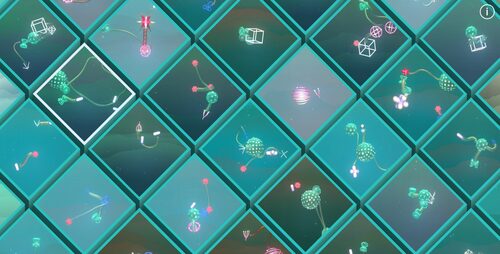
Visitors combined hand-dyed wooden parts joined by magnets. Our multi-Kinect vision system reconstructed each creature's shape, color, and connection topology inside the cabinet, and speech recognition supplied its name. The software recreated the physical curio as a digital creature and released it into the aquarium with creatures made by earlier participants.
- 03 / What it opened
The cabinet carried the relay moth into a public system. Each visitor built a creature and released its named digital counterpart into the growing aquarium.
Calibrating Through Mirrors
Curio Aquarium’s hand-built creatures had to become complete spatial records inside a cabinet barely large enough to hold the sensors. Mirrors let three Kinects see around each object.
 fabrication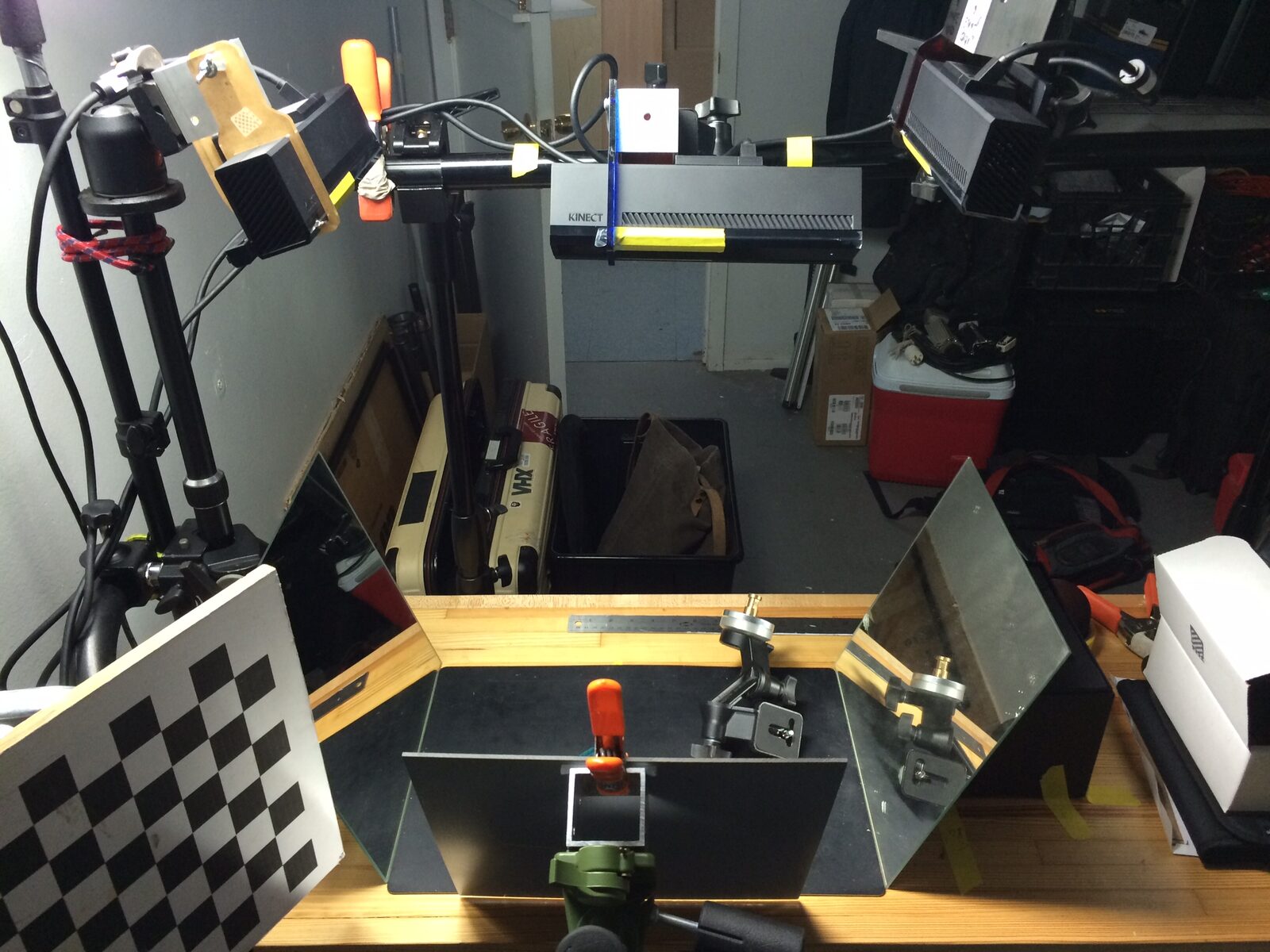
Alexander Porter — capture and mechanical systems · Steph Mantis — modular toy development. Process account and photographs supplied by Alexander Porter.
- 01 / Starting point
The cabinet was too small for three Kinects to see every side of an object directly.
- 02 / How it worked
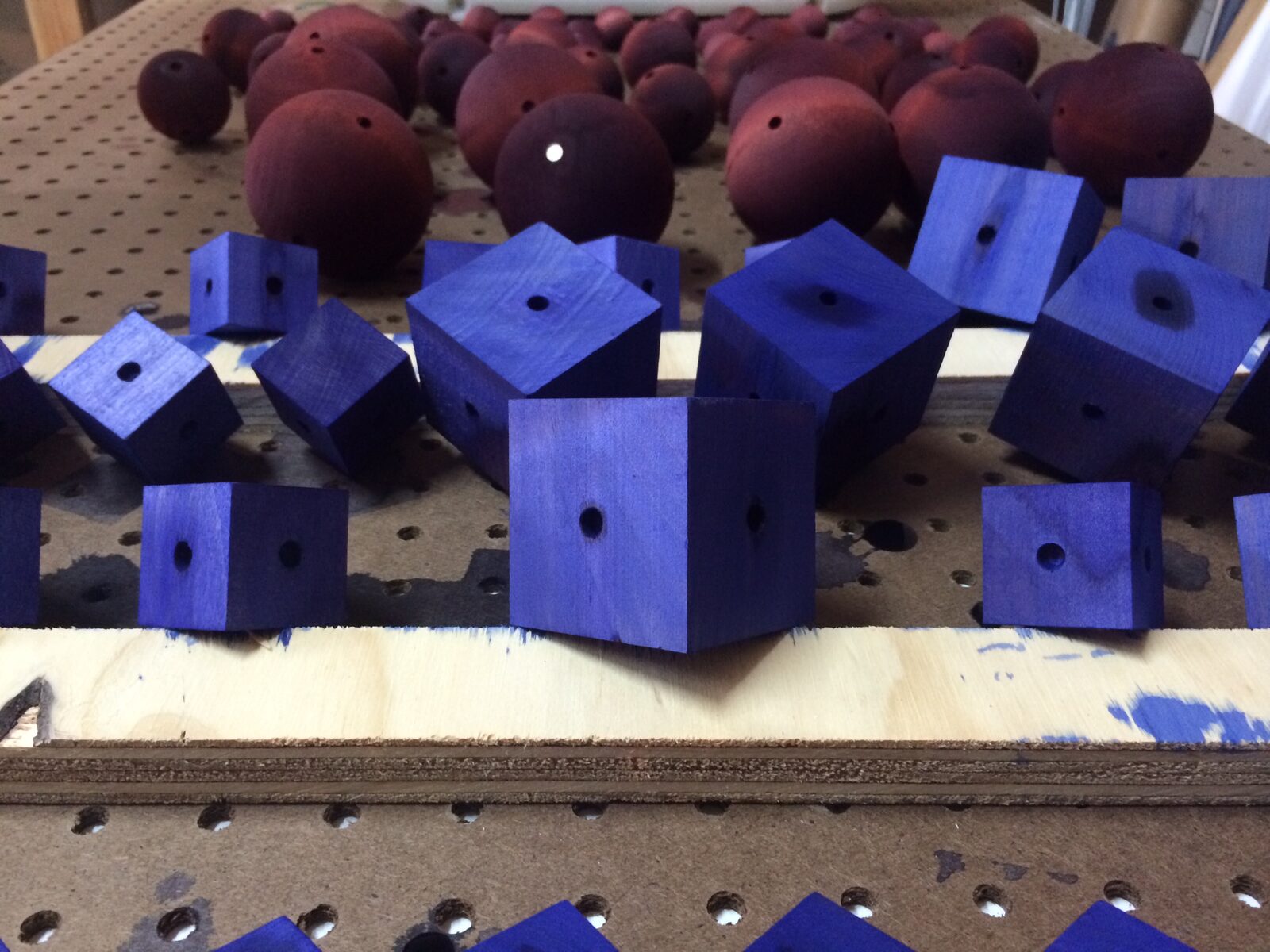
The modular wooden parts gave us irregular test objects while we tuned the capture system. Inside the cabinet, we calibrated three Kinect sensors and directed two of their views through mirrors, extending their sightlines within the confined drawer. Depth and color from the three views were fused into a single point cloud.
- 03 / What it opened
The combined view produced a fuller spatial record of each curio, allowing the system to infer shape, color, and connection topology even when the object entered the drawer in an unexpected orientation.
Installation film
A wooden creature enters the software aquarium
The short film follows the complete encounter: assembling a creature, placing it inside the cabinet, and meeting its digital counterpart in the aquarium.
 installation documentation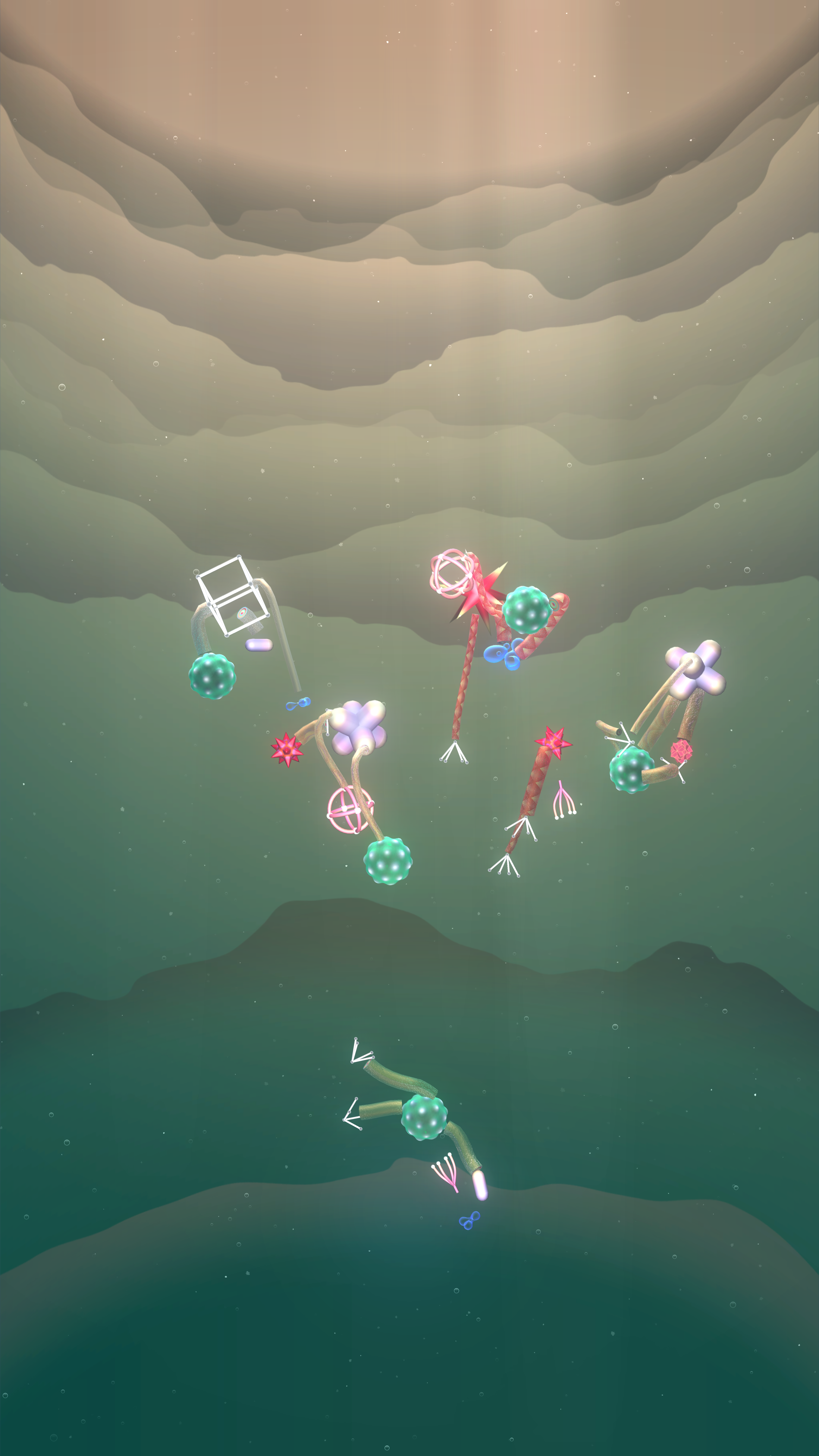
My role
I worked with Steph Mantis to develop wooden parts that visitors could assemble into creatures, and with Keetra Dean Dixon on the cabinet and construction table. I developed a mirrored three-camera setup to scan each creature inside the drawer and designed a false back that made the physical object disappear as its digital counterpart entered the aquarium.
Selected credits
Specular
Co-Founder / Creative Director
- Alexander Porter
- Creative / Technical Collaborator; Capture and Mechanical Systems
- Keetra Dean Dixon
- Cabinet and Construction-Table Design
- Steph Mantis
- Toy Maker / Modular Creature System