Dissolution
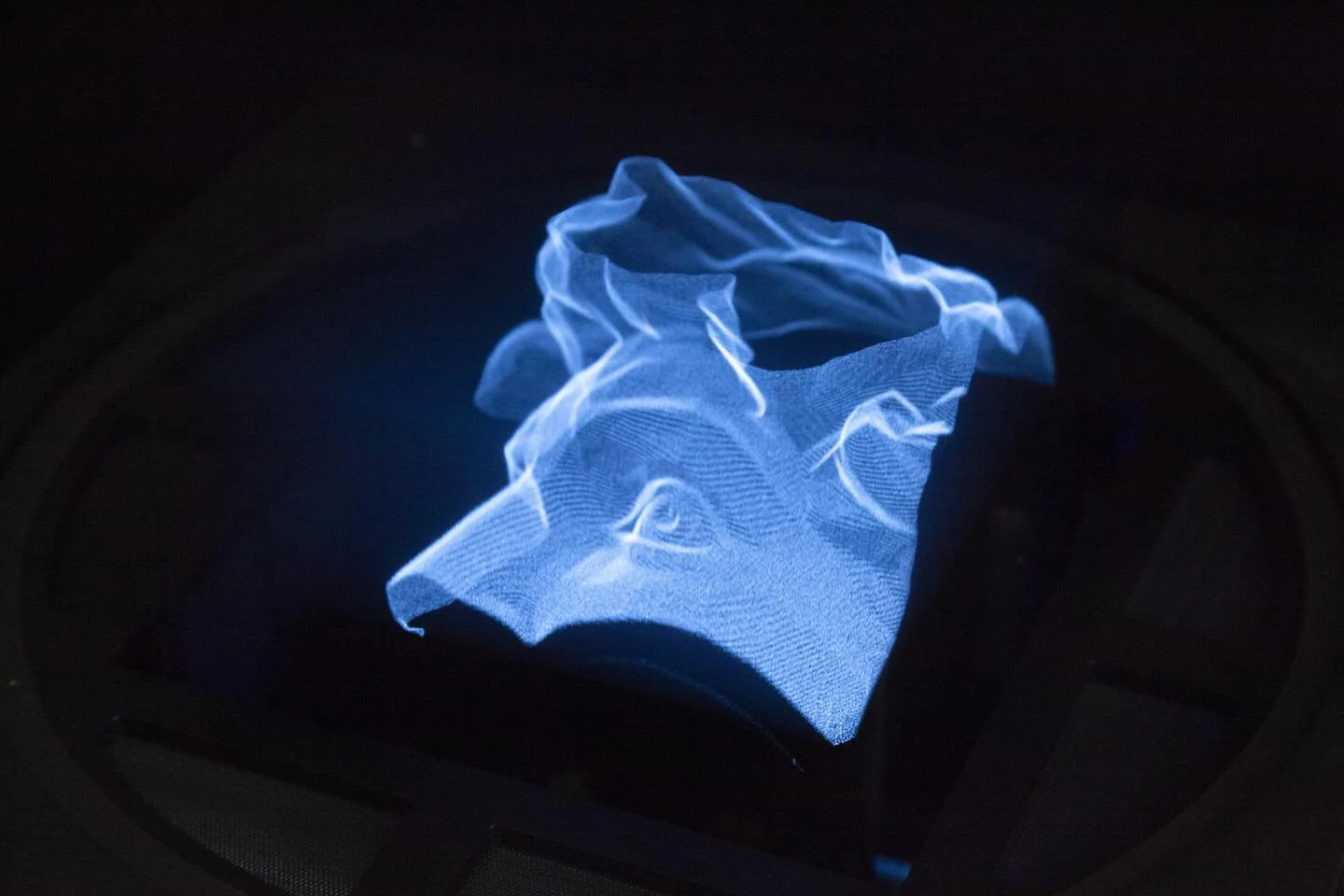
A twenty-minute film inside a six-inch volume of light.
- Period
- 2022
- Status
- Complete / Archived
- Form
- Volumetric film / installation · 20 minutes
The project
Dissolution is a twenty-minute volumetric film by artist David Levine, presented on a Voxon VX1. The image occupies a six-inch physical volume that people can circle and see from every side. It premiered in Fata Morgana at Jeu de Paume in Paris in 2022 and had its U.S. premiere at the Museum of the Moving Image in 2023.
David brought me into the final production phase of Dissolution, a twenty-minute film made for a Voxon volumetric display. I developed specialized volumetric sequences with a moving camera and worked in Unity on scene retiming and animation adjustments. The title problem was physical: horizontal resolution was sharper than vertical resolution, and every side became a potential front. I tested radial, pinwheel, boomerang, and obelisk forms so the credits could resolve from several viewing positions.
What others saw
Process studies
Volume-Native Typography
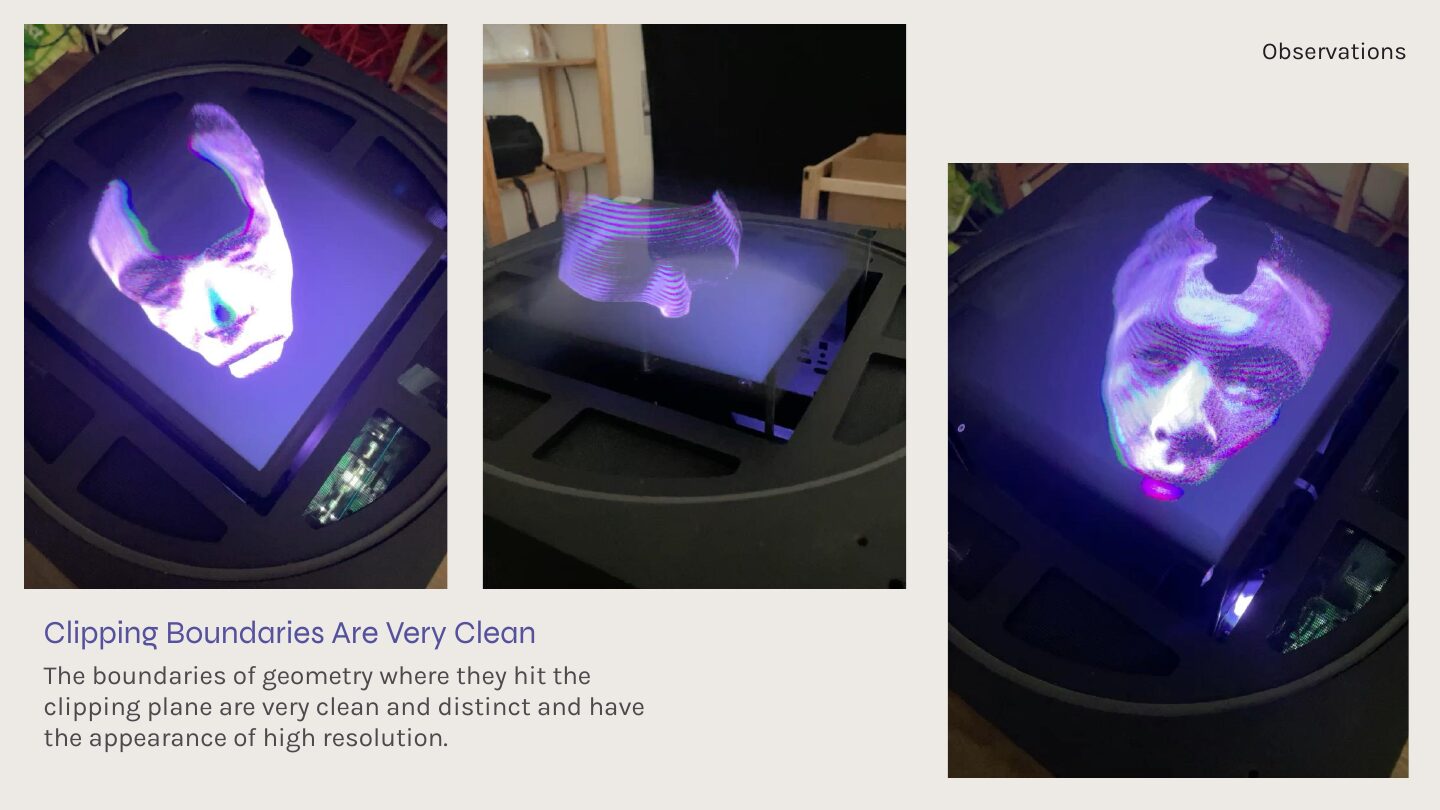
Dissolution’s end credits appeared inside a Voxon volume visible from several sides. Its horizontal plane held much sharper detail than its height.
 device test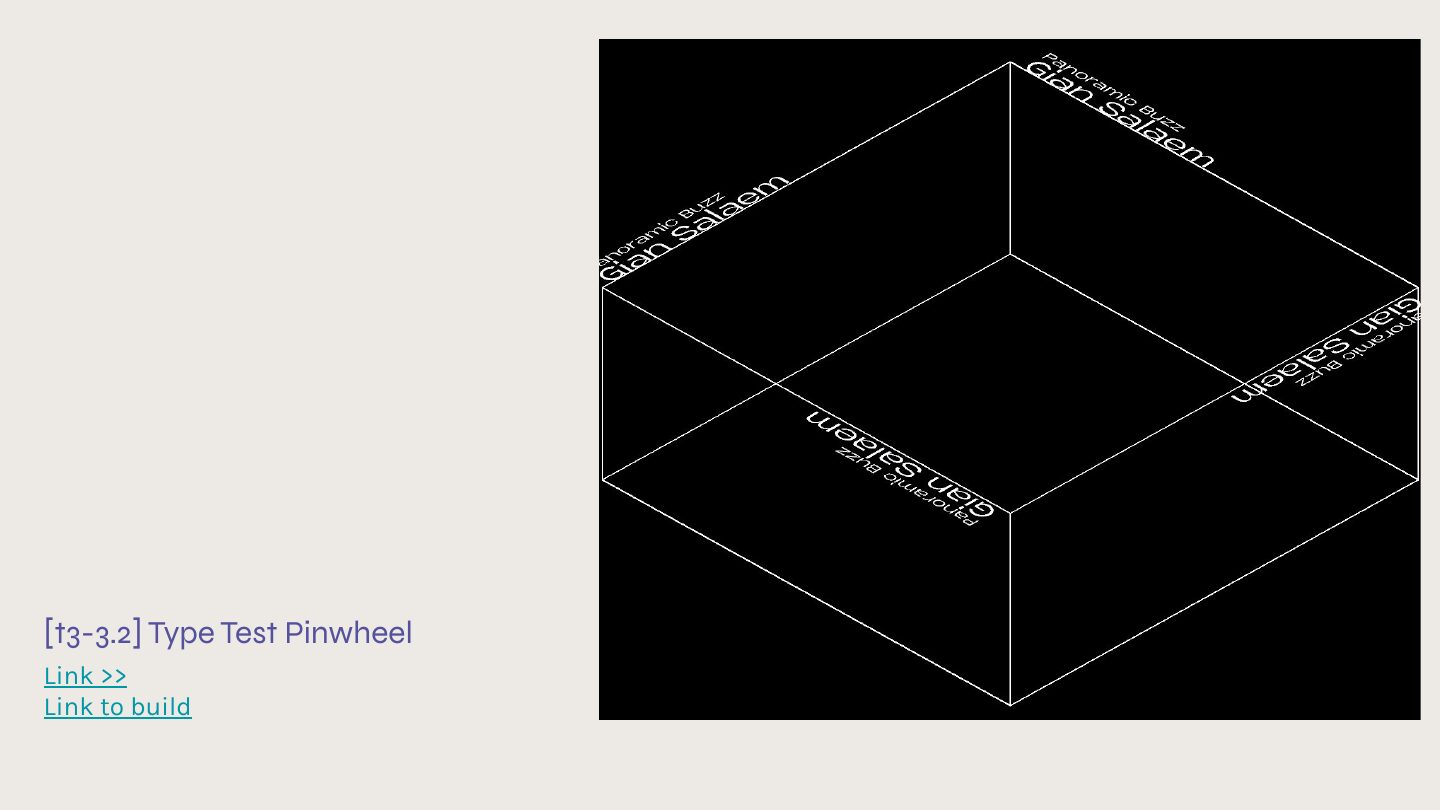
Alexander Porter — Volumetric Consultant / Credit Designer
- 01 / Starting point
How could the credits stay readable from several sides of the Voxon display?
- 02 / How it worked
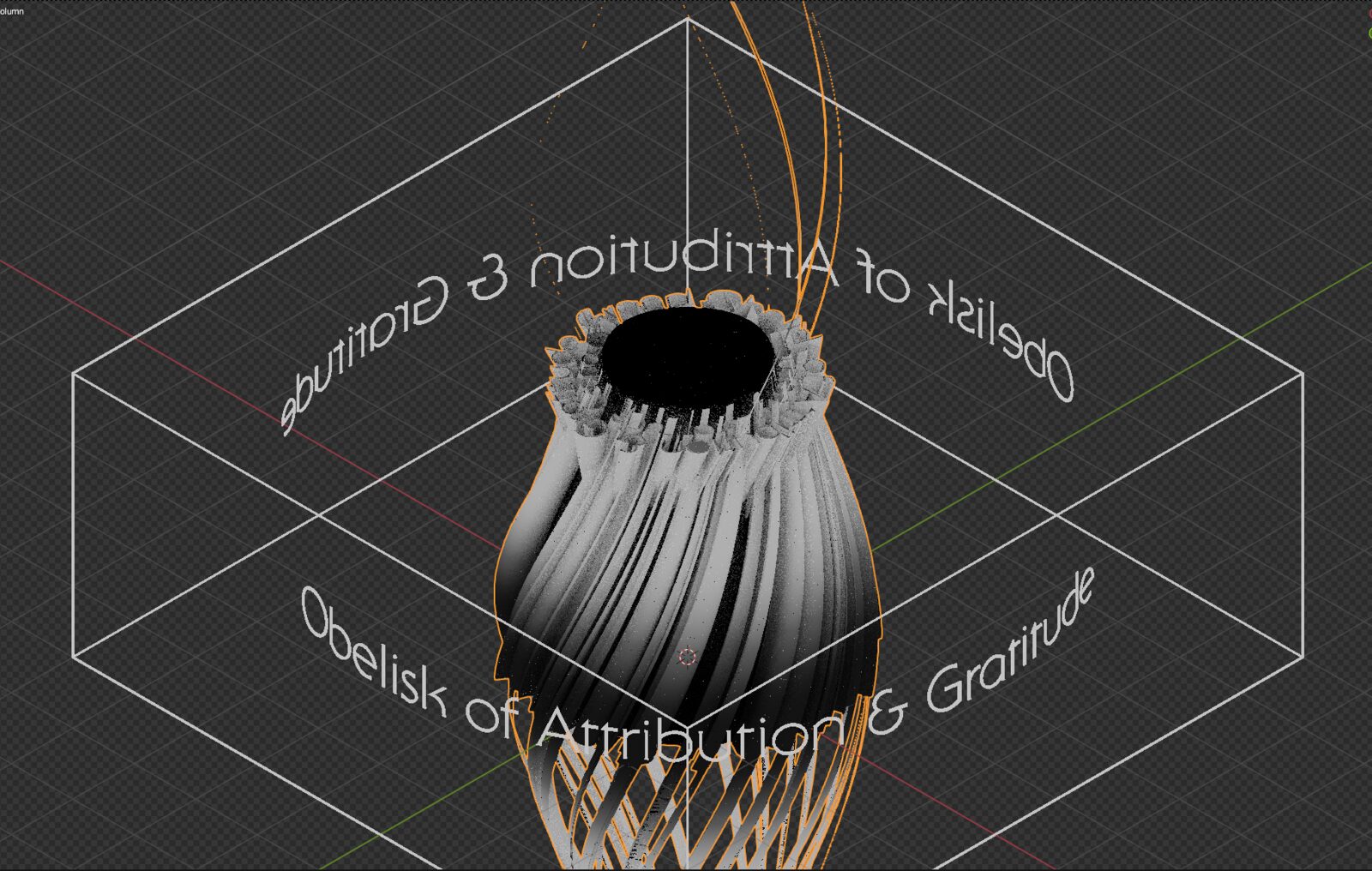
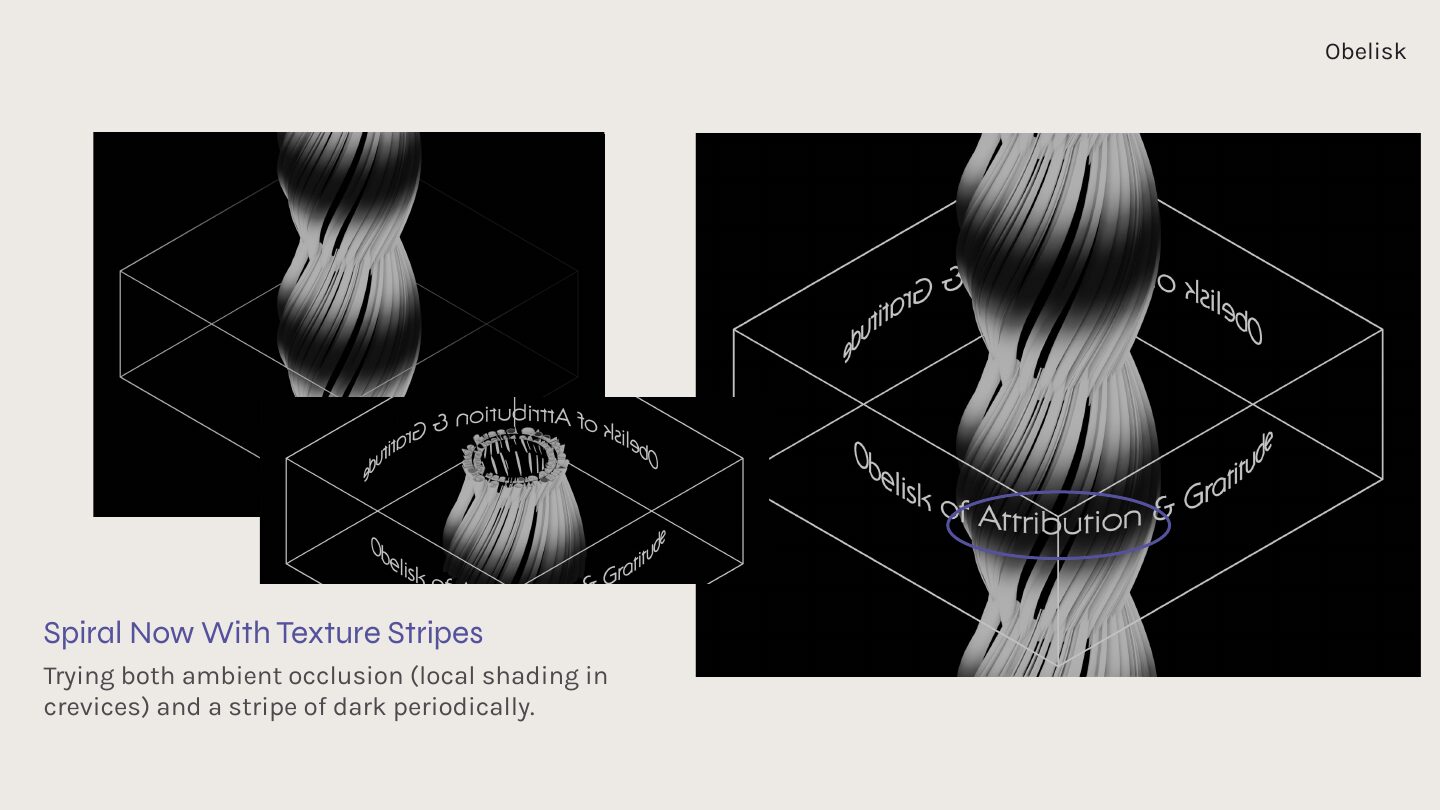
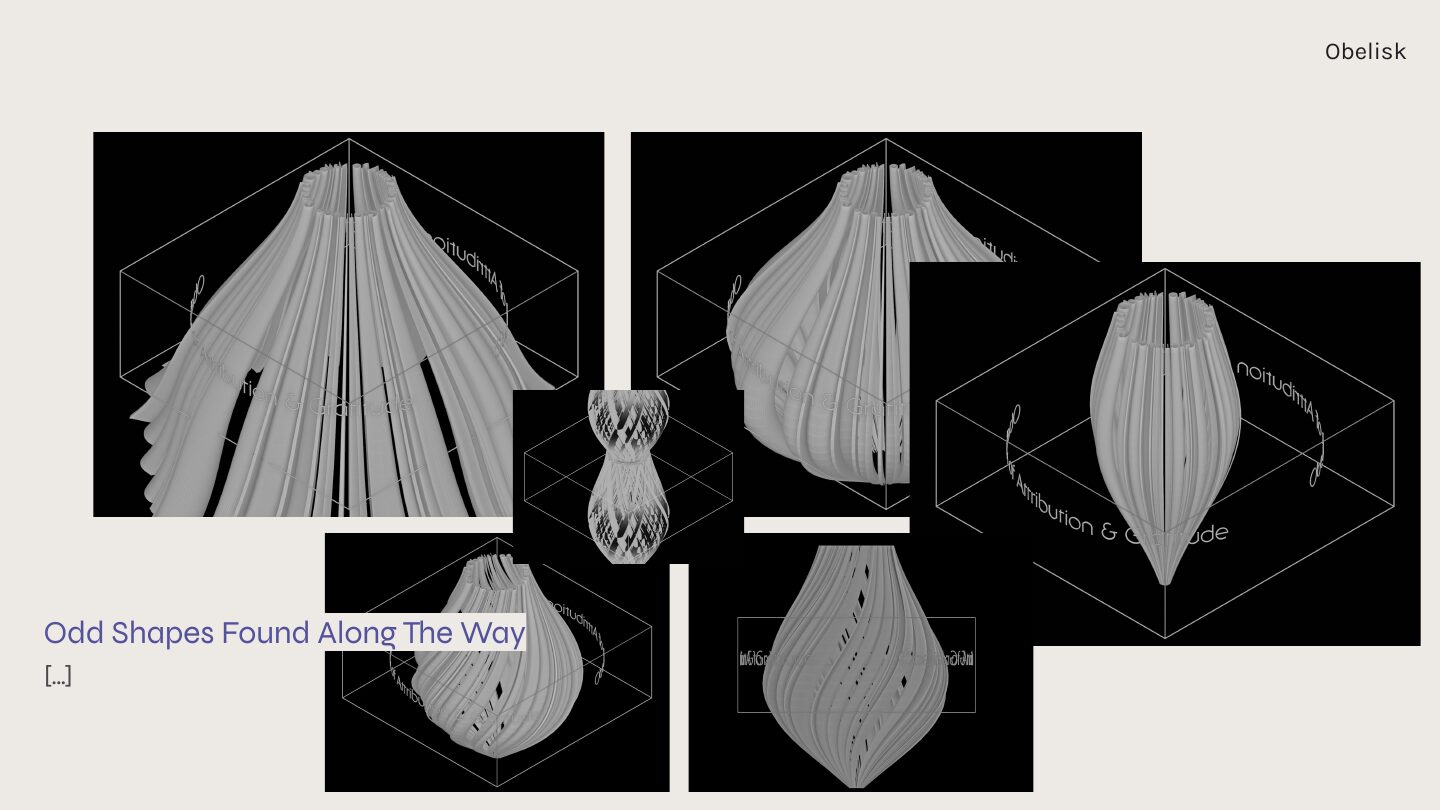
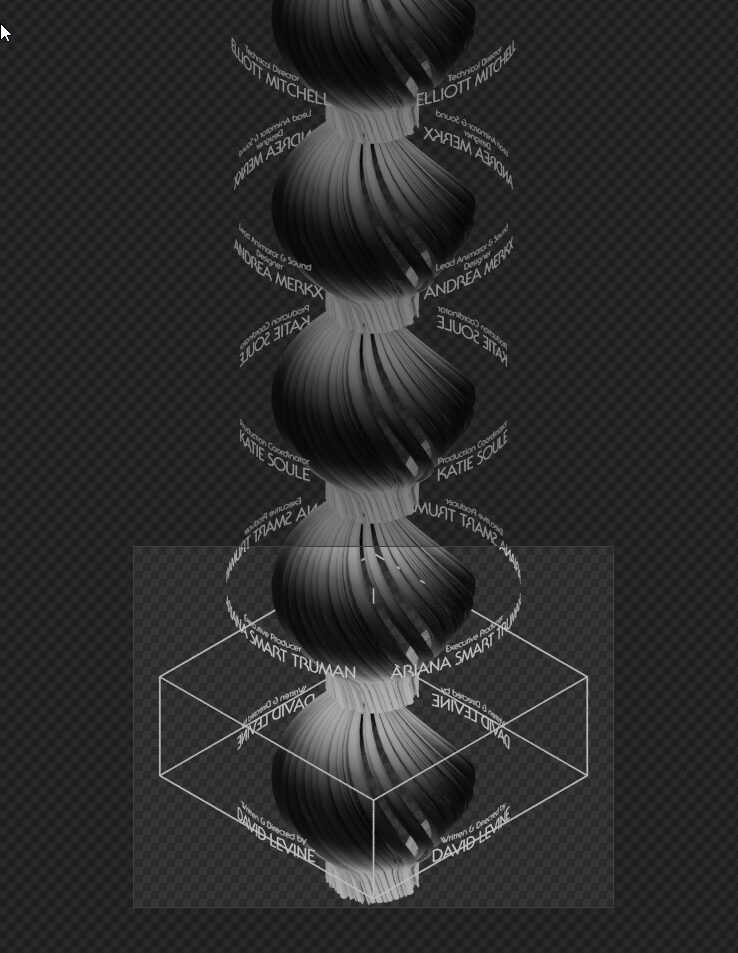
The Voxon's best resolution was in one horizontal plane. A name lying flat could be sharp. As soon as I moved it upward it began to come apart. I made the credits into geometry in Blender and went through a lot of ways of arranging them: radial, pinwheel, boomerang, column, something like an obelisk. One test showed me that the display's clipping boundaries were very clean. I built a pylon of extruded names and pushed it through the top of the volume, so the display only showed a thin section of the letters. That slice held together much better. The remaining tests were about how the pylon should move and look: rotation, taper, ambient occlusion, dark stripes, and then stranger fluted and spiral shapes.
- 03 / What it opened
Each name appeared as a crisp section through the pylon. People standing on several sides of the display could read it without assigning one side as the front.
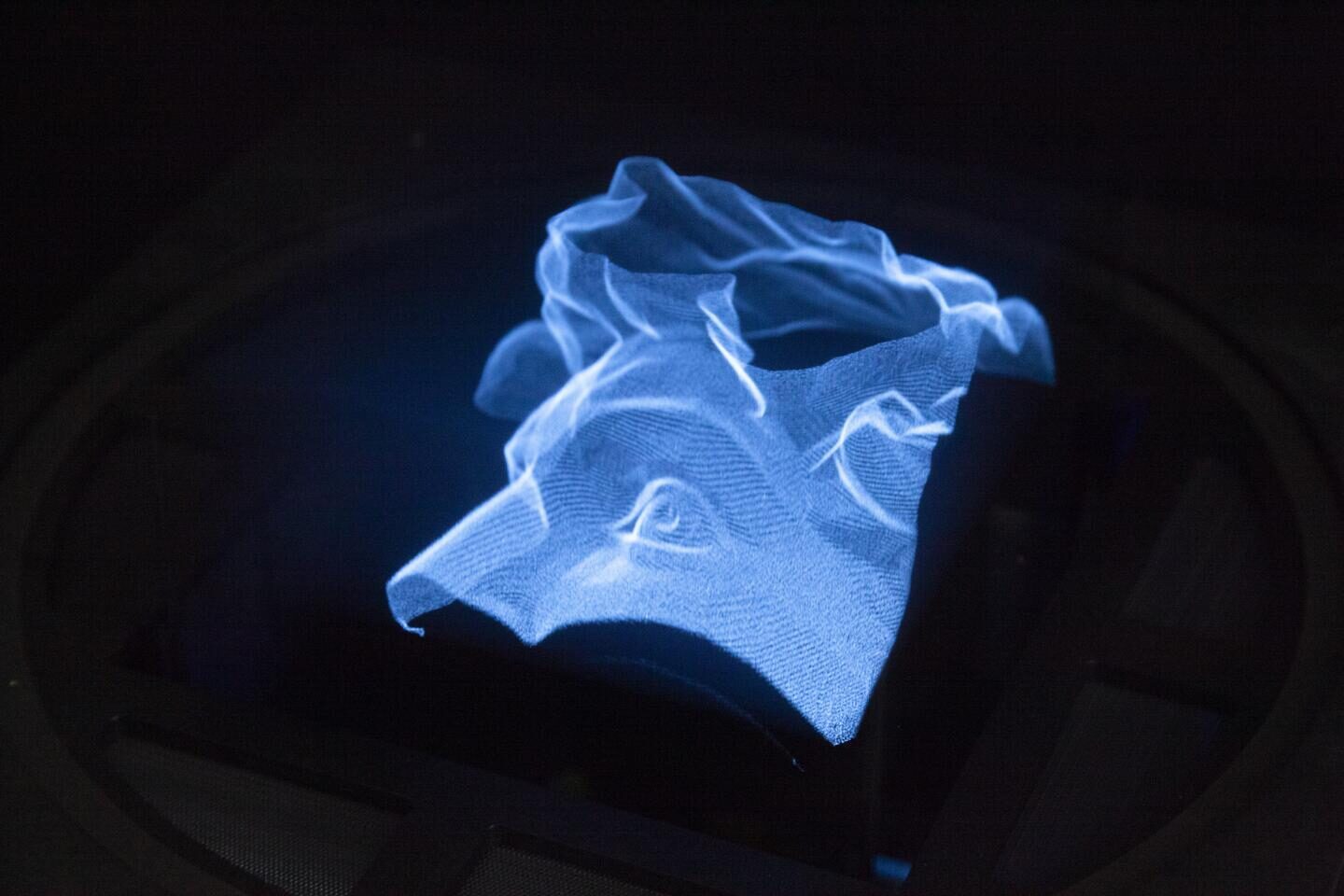
Moving the Volume Around Laocoön
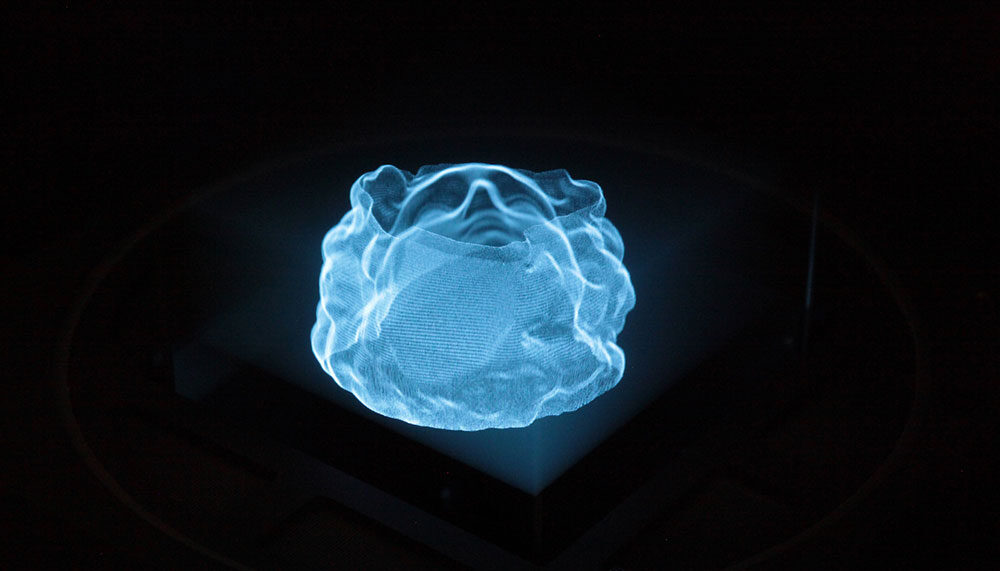
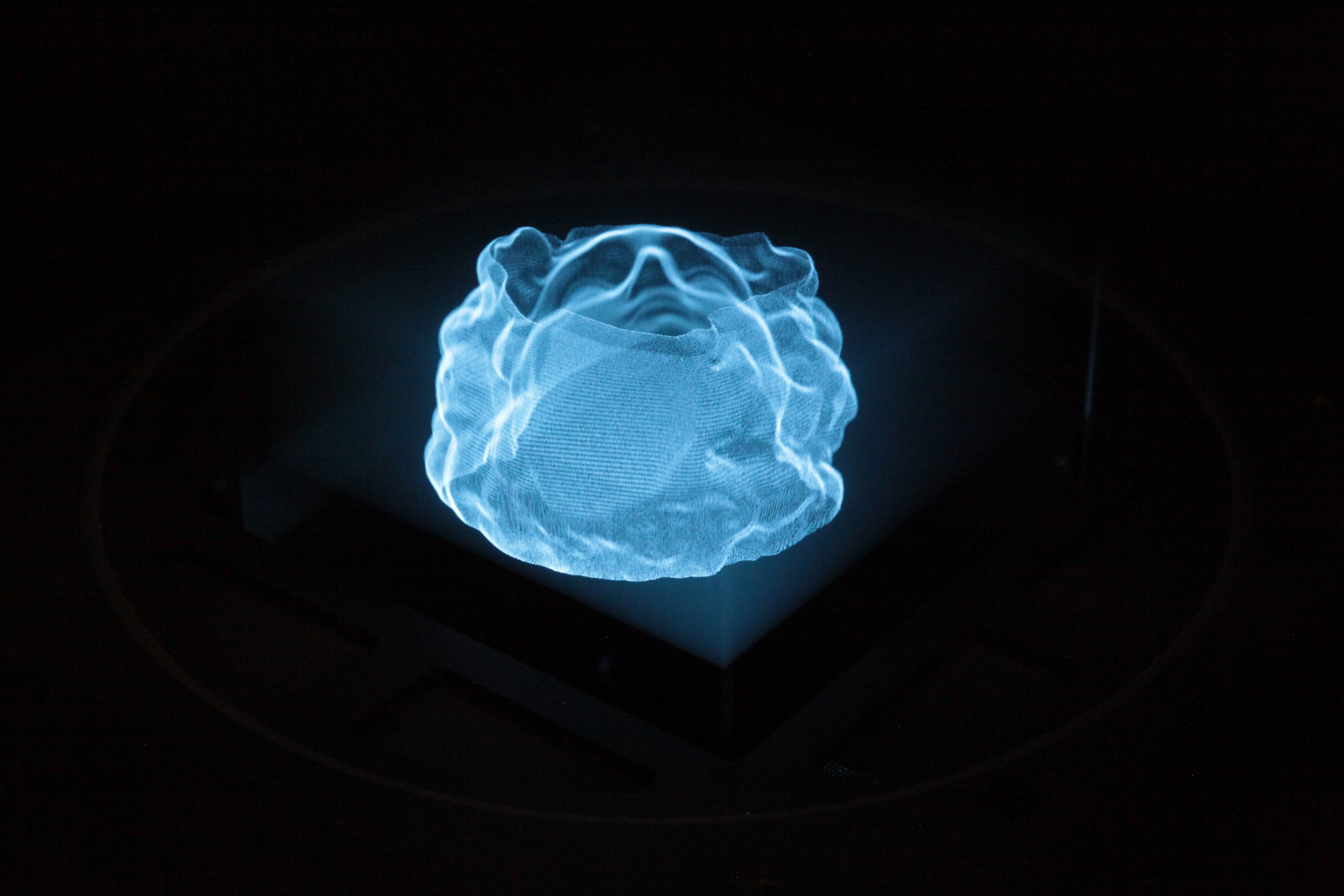
Dissolution placed scanned sculptures inside a Voxon display. For the Laocoön sequence, I wanted the volume itself to behave like a camera.
Alexander Porter — Volumetric Consultant / Credit Designer
- 01 / Starting point
How could I give the volumetric frame the small irregularities of a handheld camera?
- 02 / How it worked
I used a mobile phone as both a tracked controller and a preview for Blender. Moving it through the room let me record the kind of camera gesture I wanted, then apply that motion to the Voxon volume around the sculpture. I repeated the experiment in a VR headset so I could record and inspect the movement from inside the setup. I also animated the scale of the volume. As it grew or contracted, its boundaries passed through different parts of Laocoön and His Sons.
- 03 / What it opened
The physical display stayed in place. The recorded gesture changed which section of the sculpture occupied it, while scale changes made limbs and figures appear or disappear at the volume's boundary.
 display documentation
My role
I developed moving-camera volumetric sequences, retimed animation in Unity, and designed the final credits to be readable from several sides of the display.
Selected credits
- David Levine
- Artist / Director
- Alexander Porter
- Volumetric Consultant / Credit Designer
Links & presentations
- The New York Times · 2024What to See in N.Y.C. Galleries in February↗
- The Paris Review · 2024A Dollhouse-Sized Hologram↗
- Museum of the Moving Image · 2023Dissolution — U.S. premiere at Museum of the Moving Image↗
- Screen Slate · 2023What's in the Box? David Levine on Dissolution↗
- Museum of the Moving Image · 2023Museum of the Moving Image presents Dissolution by David Levine↗
- Artforum · 2023No Resolution: Video Art in and Around the Contemporary↗