Fitzania
Tracking a physical orb through virtual space.
A tracked, glowing orb turned a preventive-health check into a game for the Museum of Future Government Services.
- Period
- 2015
- Status
- Complete / Archived
- Form
- Interactive installation / spatial health game
The project
Immersive game and preventive-medicine check-up built for the Museum of Future Government Services (Prime Minister's Office of the UAE, directed by Tellart). Visitors lift a sensor orb from a pedestal and complete spatial-alignment tests of increasing difficulty. The orb reads biometric signals throughout, and each visitor receives a tailored “prescription” at the end. The installation turns a routine fitness assessment into a personalized, replayable experience. Despite clear labels on the project, for years I would get emails inquiring about licensing our novel medical technology. I had to let them down.
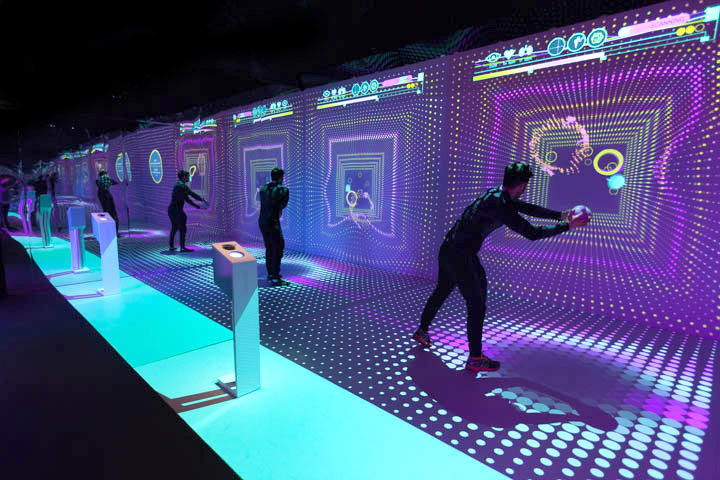
Fitzania combined an immersive game with a preventative-medicine check-up at the Museum of Future Government Services. The orb vibrates to acknowledge a successful log-in as you lift it from the pedestal; stepping into the game space, you complete a series of spatial alignments increasing in speed and difficulty. As you position the orb in 3D space, its sensors read your biometric signals, provide an on-the-spot diagnosis, and update your fitness profile. When the tests are complete, you return the orb and receive a prescription tailored to your needs.
We collaborated with exhibition creative and production director Tellart on the research, technology, and design. We wanted citizens to return regularly for fitness tests, so we built the analysis and diagnosis into the game. Fitzania's tracking system uses Halo retro-reflective coating on each orb; sensors determine its precise location in three-dimensional space and map its movement into a virtual area extending beyond the physical walls.
Process study
Tracking the Orb
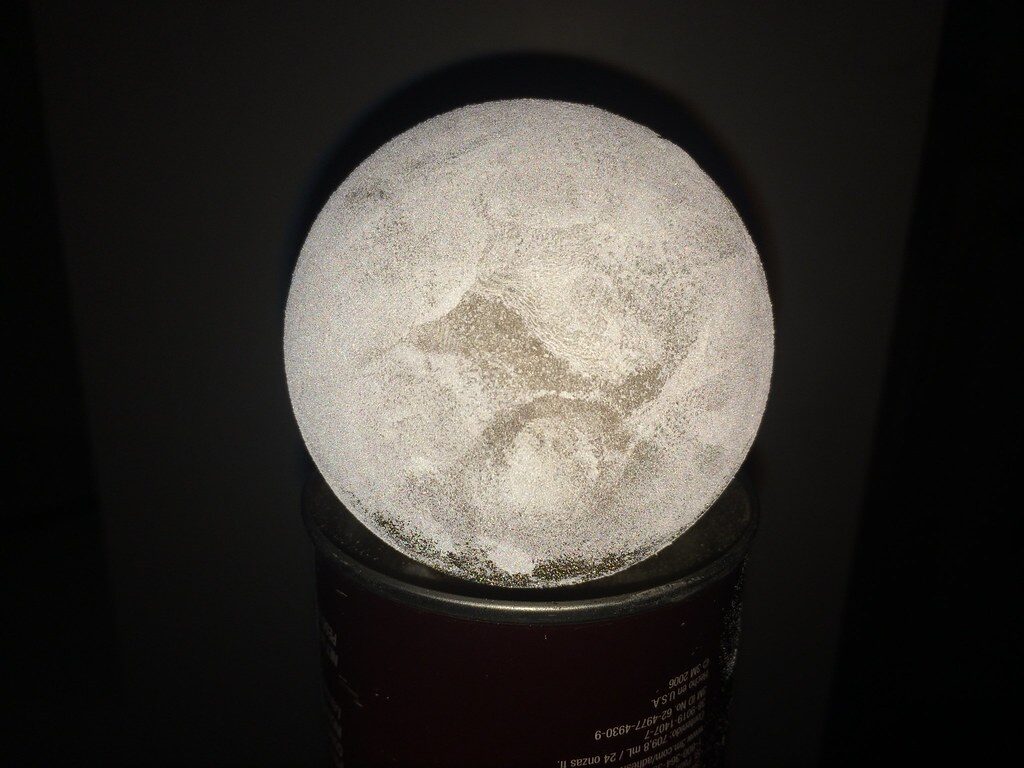
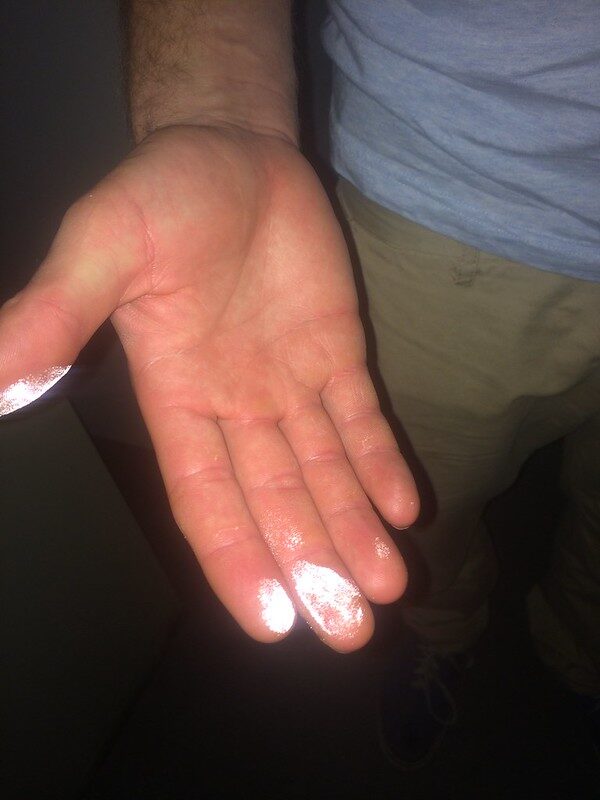
We discovered that retroreflective coating turned Fitzania’s orb into an unusually dependable Kinect V2 target. The coating produced a bright infrared blob; sampling just beyond it recovered stable depth from the orb’s edge, while an iPhone inside the shell supplied haptics and refined motion data.
Process developed by the Specular team for Fitzania · Alexander Porter — Physical Design · James George — Technical Direction · Charlie Whitney — Creative Code
- 01 / Starting point
Fitzania's handheld orb had to stay visible to the Kinect through shifting light and constant movement.
- 02 / How it worked
We hand-painted the early test orbs, then worked with a specialist that normally coated bicycles and safety equipment to spray the final metal shells. The Kinect tracked the bright infrared hotspot in two dimensions; expanding the sampled region slightly recovered reliable depth from the orb’s perimeter. We cut each orb in half and mounted an iPhone inside for haptic feedback and additional IMU data. A semi-translucent joining ring let the phone’s flashlight make the orb glow responsively.
- 03 / What it opened
The orb stayed trackable across the exhibition while carrying haptic feedback and light in the same handheld object.
 installation documentation
My role
I developed the handheld sensor orb and its retroreflective coating, which let the Kinect track it as visitors moved it through the game.
Selected credits
Specular
Co-Founder / Creative Director
- Alexander Porter
- Physical Design (Specular)
- James George
- Technical Direction
- Mei-Ling Wong
- Specular Co-Founder / Head of Production
- Arturo Echeverria
- Design
- Charlie Whitney
- Creative Code
- Freckless
- Video Documentation Editing
Links & presentations
- The Verge · 2017The Verge — "The Future Agency: Inside the Big Business of Imagining the Future"↗
- Arabs Today · 2015Ruler of Dubai opens Museum of Future Government Services↗
- Khaleej Times · 2015Shaikh Mohammed opens Museum of Future Govt Services↗
- Idee und KlangMuseum of Future Government Services — exhibition design record↗
- James GeorgeMuseum of Future Government Services — James George project page↗
- Tellart (official site)Tellart — "Prototyping the Future City" project page↗