Proxybody (Dermawear)
Wearing the errors in a public 3D archive.
A collaboration with Simone C. Niquille carrying the distortions of rough 123D Catch self-portraits into garment patterns and physical objects.
- Period
- 2015–2016
- Status
- Complete / Archived
- Form
- Wearable spatial-image collaboration
The project
A collaboration with Simone C. Niquille that carried textures from public-domain 123D Catch self-portraits into garment patterns and physical objects. The stretched photographs, missing geometry, and fused edges of the scans remained visible on the new surfaces.
What first interested me was a familiar human gesture: whenever a new representational technology appears, people seem compelled to test it on themselves. We put ourselves through the system and ask whether we recognize what comes back. A distorted self-portrait can teach us about the mirror that produced it. Because the input is familiar, the differences—the seams, omissions, and strange substitutions—make the system perceptible.
I watched this happen, and participated in it myself, as new 3D-scanning platforms emerged. What remained was an accidental public archive of rough bodies: self-portraits made partly to test the technology, then left behind. Proxybody/Dermawear began from my fascination with that archive and with what could happen when those incomplete skins were carried onto other forms.
Process study
Scans Become Skin
I used rough 123D Catch self-portraits as material for wearable surfaces, carrying the distortions and missing geometry of public scans from a reconstructed body onto garments.
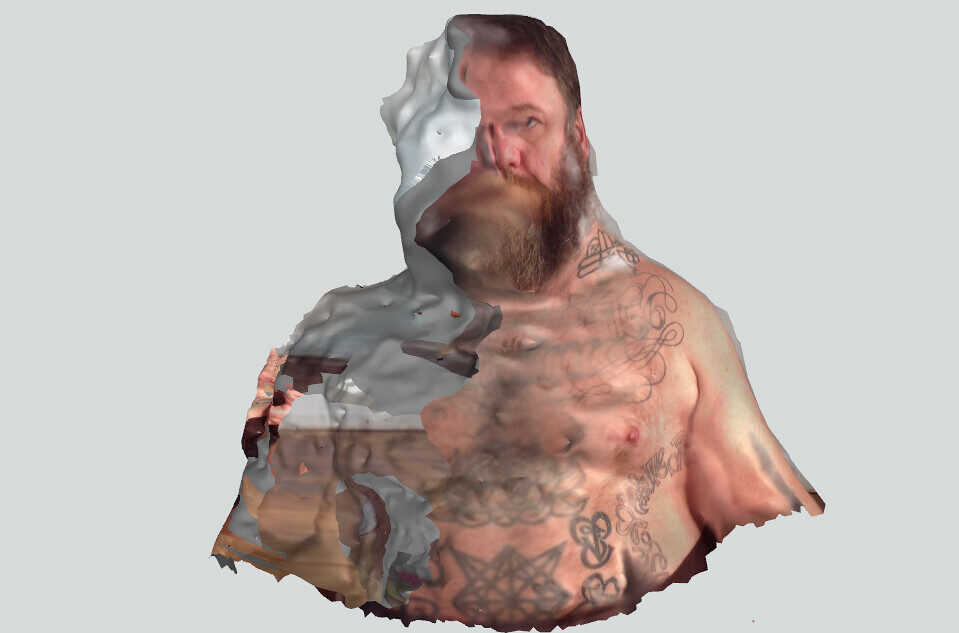
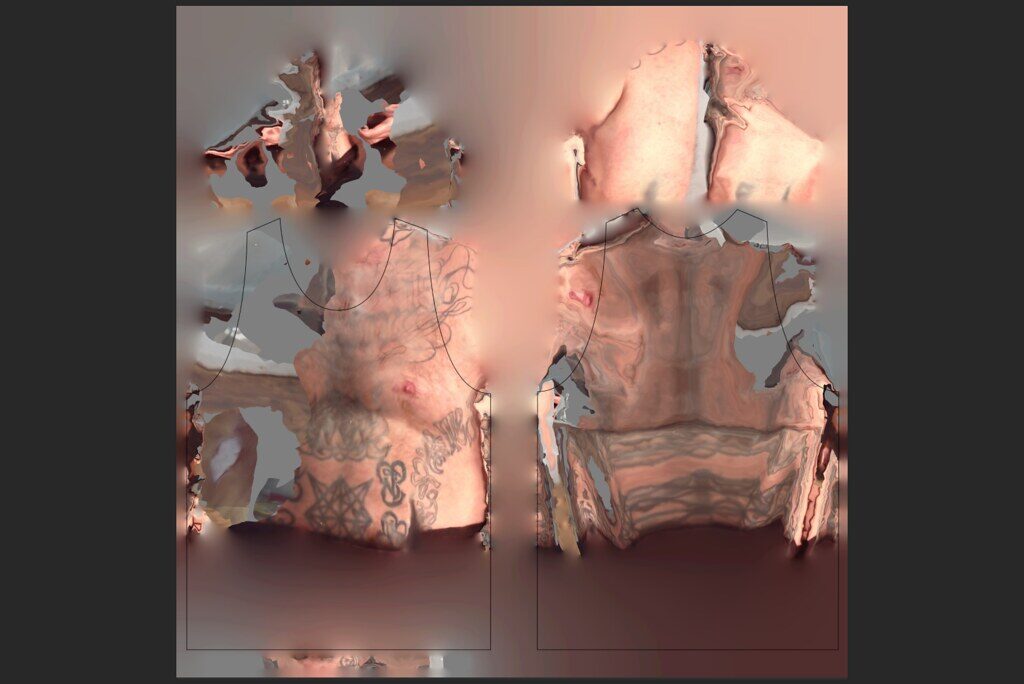
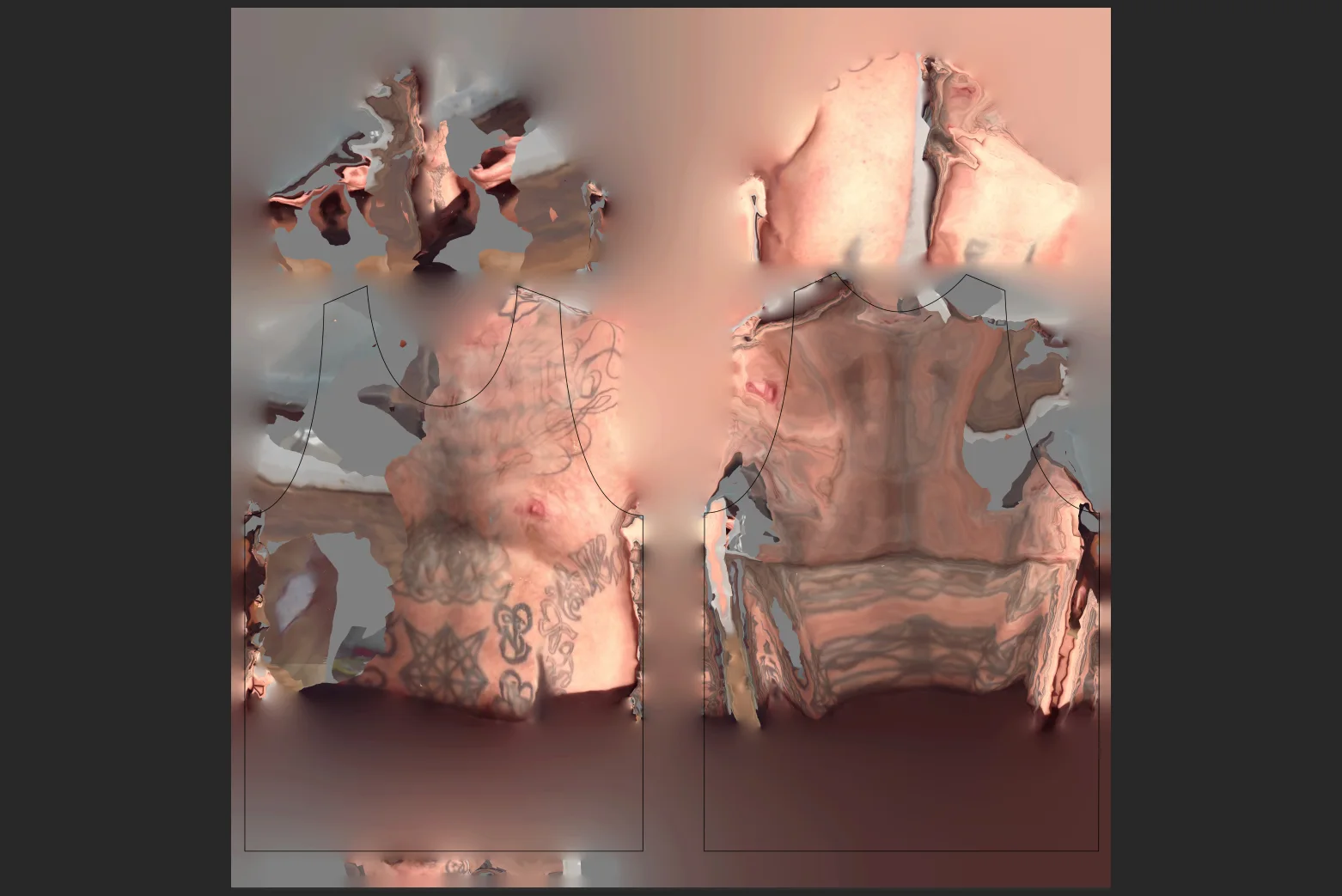
Alexander Porter — texture extraction, projection, and garment layouts. Developed as a collaboration with Simone C. Niquille; the source self-portraits were public-domain contributions to the 123D Catch archive.
- 01 / Starting point
Rough public scans of bodies offered a strange material for something another body could wear.
- 02 / How it worked
I worked with self-portraits people had published in the public domain through the 123D Catch archive. I extracted their photographic textures, preserved the stretching and gaps produced by the scans, and projected those surfaces onto front and back garment patterns.
- 03 / What it opened
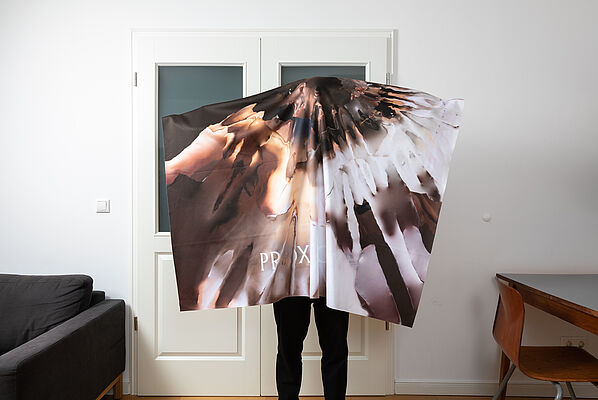
The garment layouts preserved the source photographs along with stretched textures, missing geometry, and fused edges. Fabrication moved those specific capture errors from a public 3D archive onto a surface that could be worn.
My role
I extracted the incomplete photographic textures from public-domain 123D Catch self-portraits and projected them onto garment layouts. The scan's seams, tattoos, and missing patches became part of the garment surface.
Selected credits
- Alexander Porter
- Collaborator / Co-Creator
- Simone C. Niquille
- Collaborator / Co-Creator