The Crash
Around Wall Street, 2008.
Black-and-white photographs made on repeated sunrise walks through Wall Street.
- Period
- c. 2008
- Status
- Complete / Archived
- Form
- Black-and-white photographic series
The project
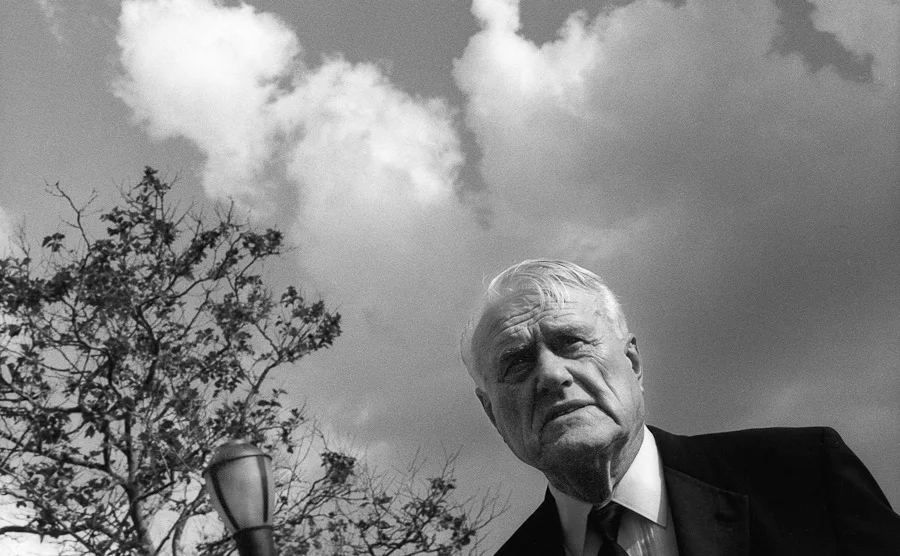
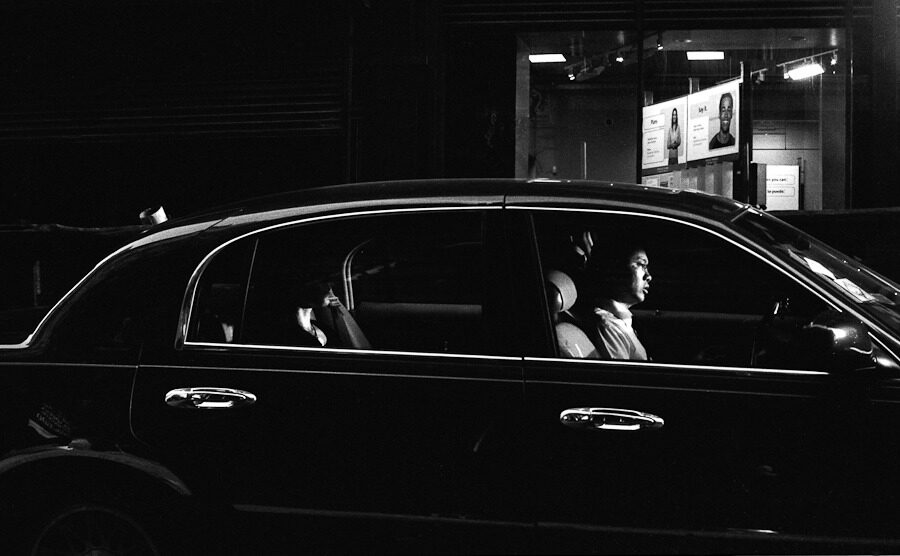
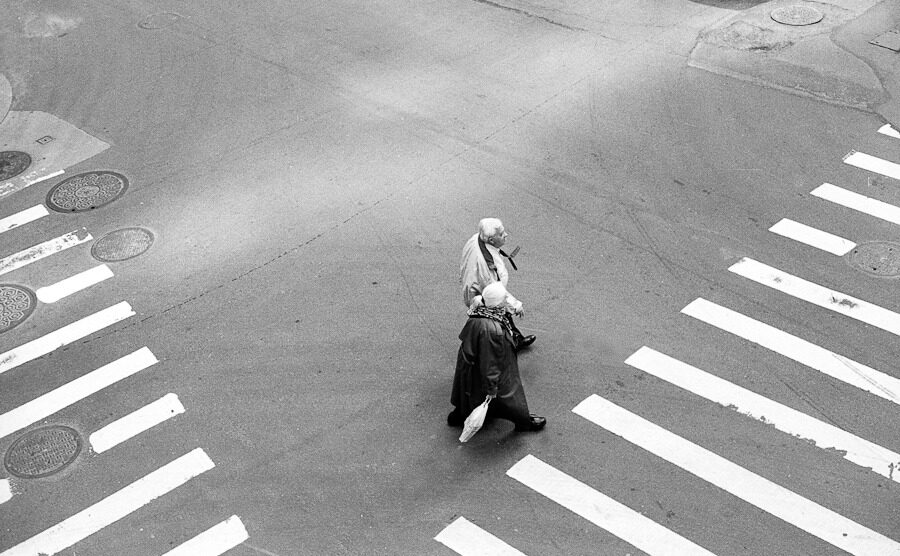
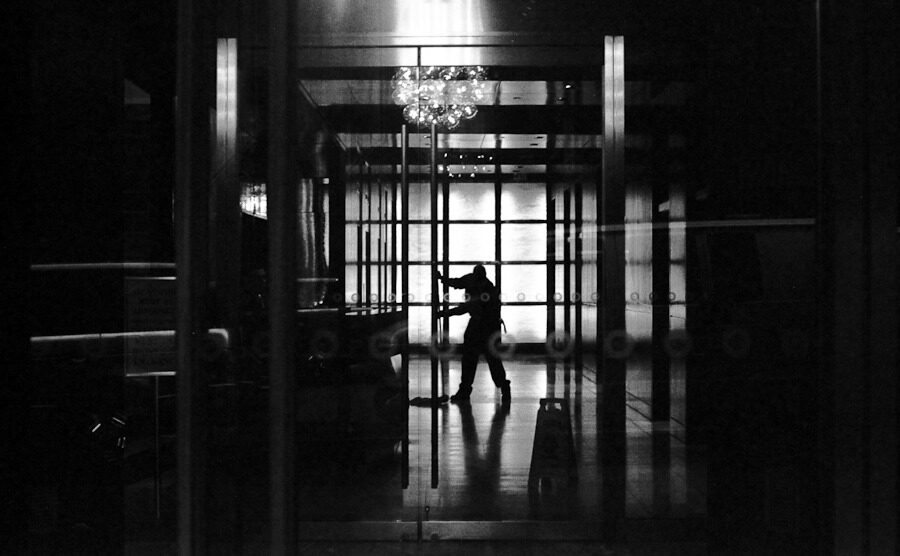
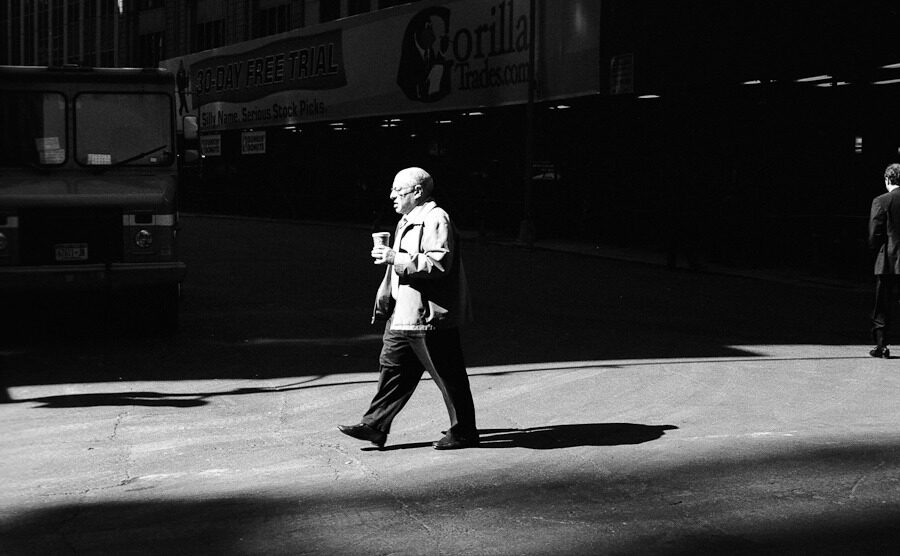
Thirty black-and-white photographs made on repeated early-morning walks through Wall Street around the 2008 financial crisis. The sequence observes finance as an ordinary place of labor: people entering lobbies, crossing streets, waiting beside cars, or standing with their hands behind their backs. The current page presents six images from a thirty-photograph sequence developed and printed by hand.
This started as an assignment in a class taught by photographer Charles Harbutt: go out and look at the world like an alien. Try to see something commonplace through new eyes, or go somewhere unfamiliar and treat it as such. I chose Wall Street, where I had spent very little time, and began going at sunrise, usually between five and six in the morning.
I was learning how to photograph and trying to become confident doing it. At the time I had fallen in love with reportage and documentary photography from the 1930s through the 1960s, and I was fascinated by the question of whether I could do that myself. So I repeated the process: see something worth photographing, take out the camera, get over the social embarrassment, and make the photograph until it became second nature.
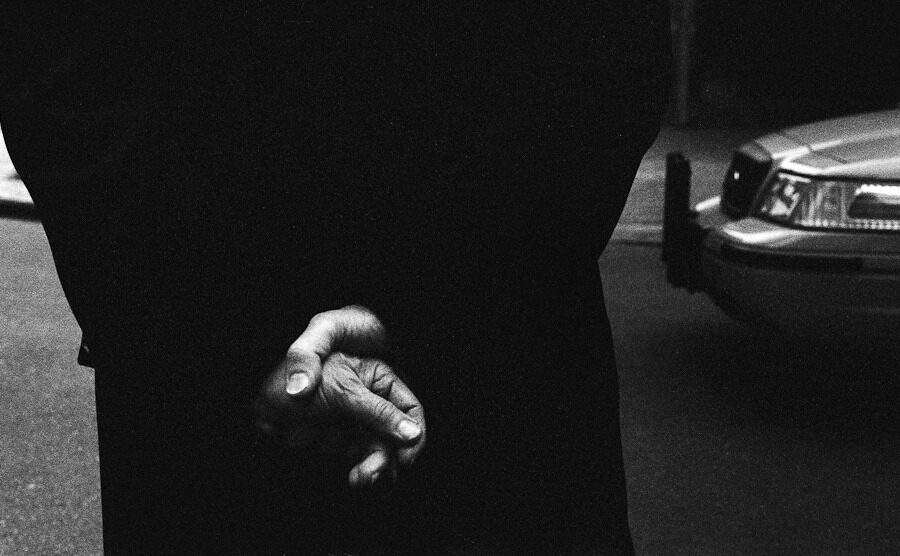
The photograph of a man's hands behind his back, with a cab at the right, was a breakthrough. I was using a wide lens, probably 28mm. To crop it tightly I had to hunch down very close behind him and take the picture while other people looked at me. When I developed it, it was exactly what I had hoped: the exposure, focus, and frame were right. I had seen the image, put myself through the discomfort, and made it.
After enough mornings, I was also allowing the place to speak to me. I began to see finance as labor, and a private, cloistered world around it. I did not want a villainous portrait. I was interested in the culture that makes financial abuses possible and normal: alienation from the impact of the work, deference to authority, social goals of wealth and posture. The connection to the 2008 crash is retrospective in that sense; it is not a cause-and-effect account of one event.
I shot Tri-X on an Olympus OM-1 my dad gave me, rolled and developed the film, and printed the photographs myself. I sequenced them as if for an exhibition or book. The series helped me get work, but for me it remains a kind of private talisman.
Selected credits
- Alexander Porter
- Photographer