Timberland X Stüssy Interactive
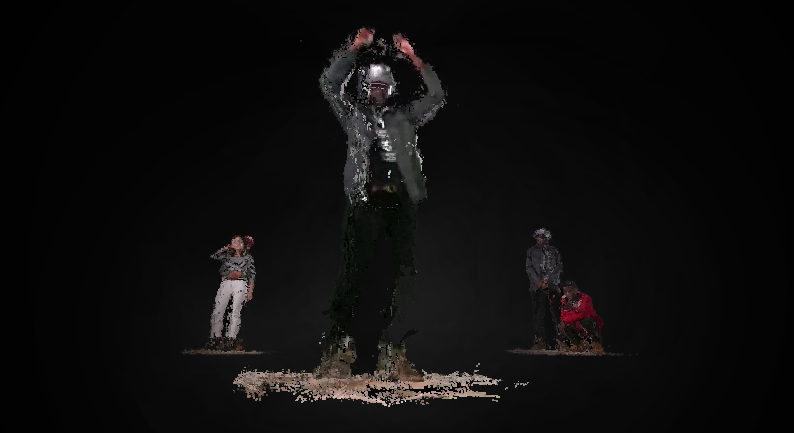
Six performers, captured from four sides
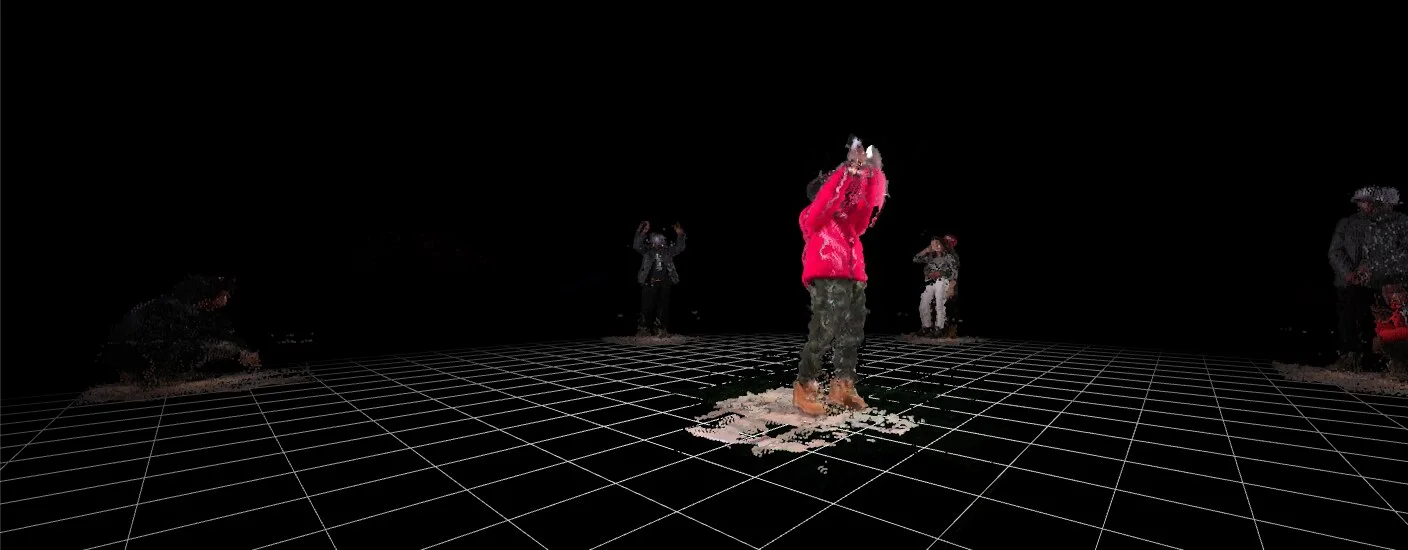
A WebGL experience for the 2013 Stüssy for Timberland boot, with rotation moving the captured figures from glass-like surfaces into disintegration.
- Period
- 2013
- Status
- Complete / Archived
- Form
- WebGL campaign experience
The project
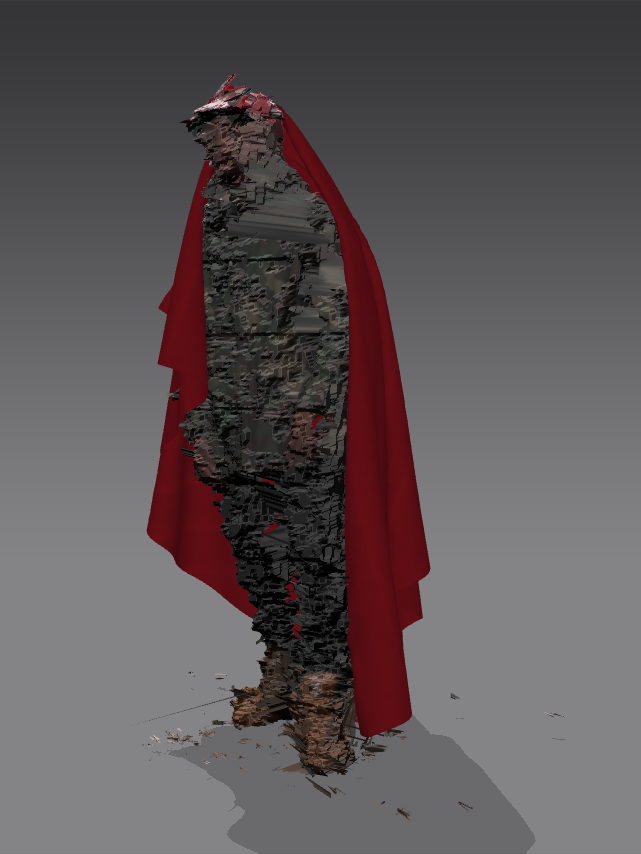
Made for the 2013 Stüssy for Timberland six-inch boot, this WebGL experience allowed visitors to rotate six volumetrically captured performers. The turn itself controlled the image: as a visitor moved around a figure, its surface shifted from something like glass or ice into disintegration.
I created the shoot, designed the web interactions, and developed the four-camera capture and calibration workflow. Four RGB-D rigs recorded each performer from the cardinal directions, then I brought the views into a common space so the figure could be turned after capture. Rotation was also the visual control: moving around a person shifted the rendering from a glassy or ice-like state into disintegration.
Process study
Calibrating Four Cameras
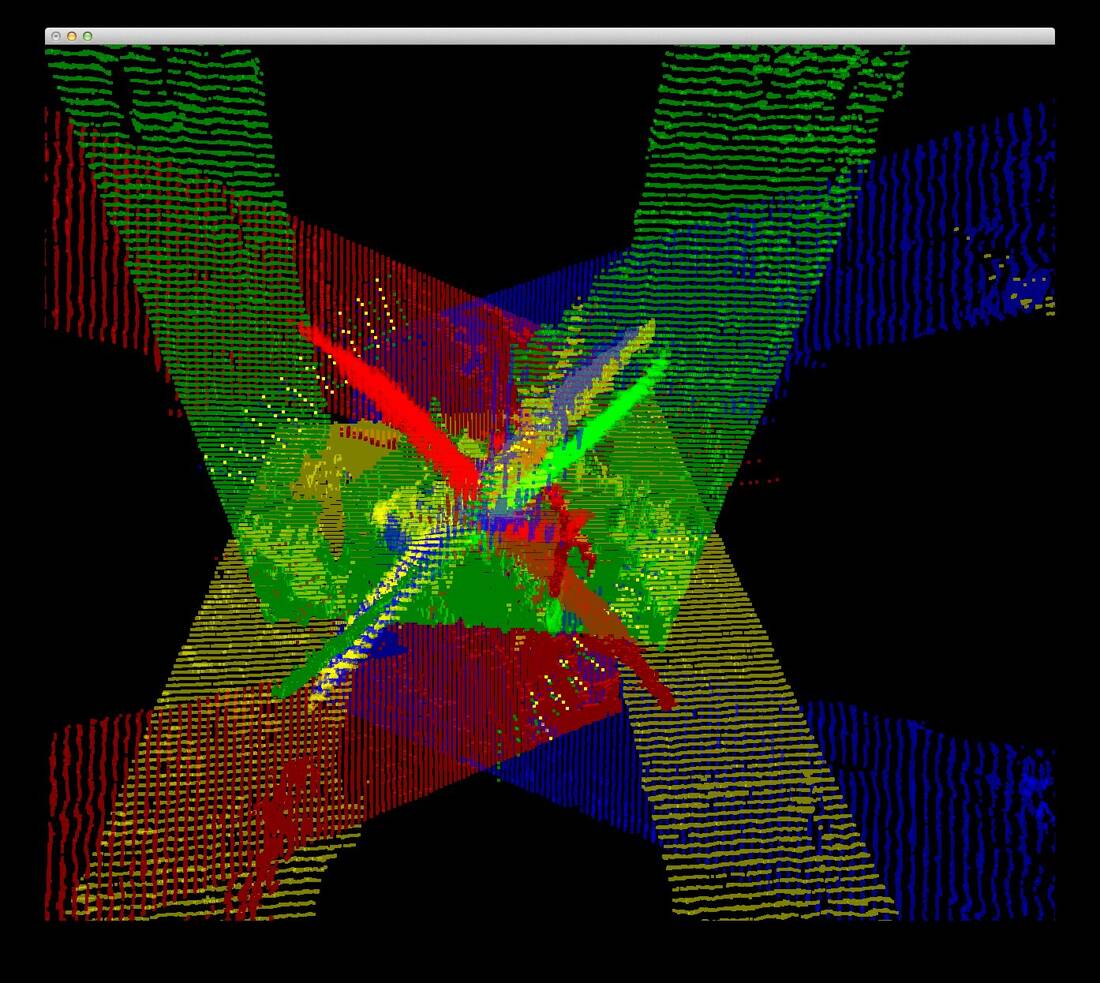
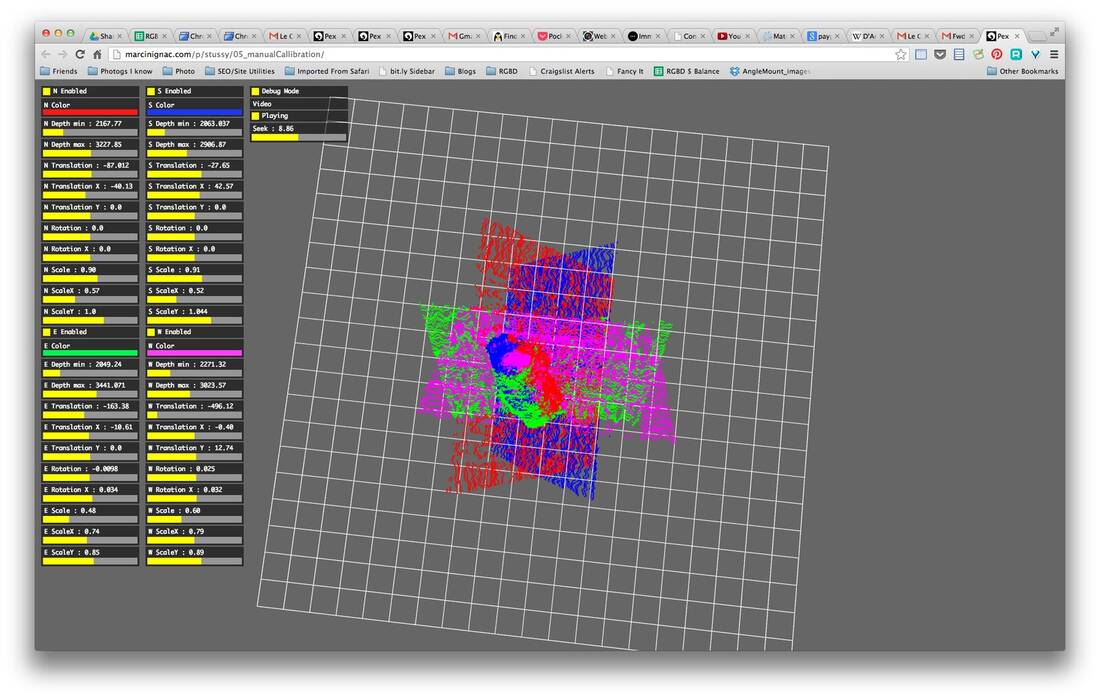
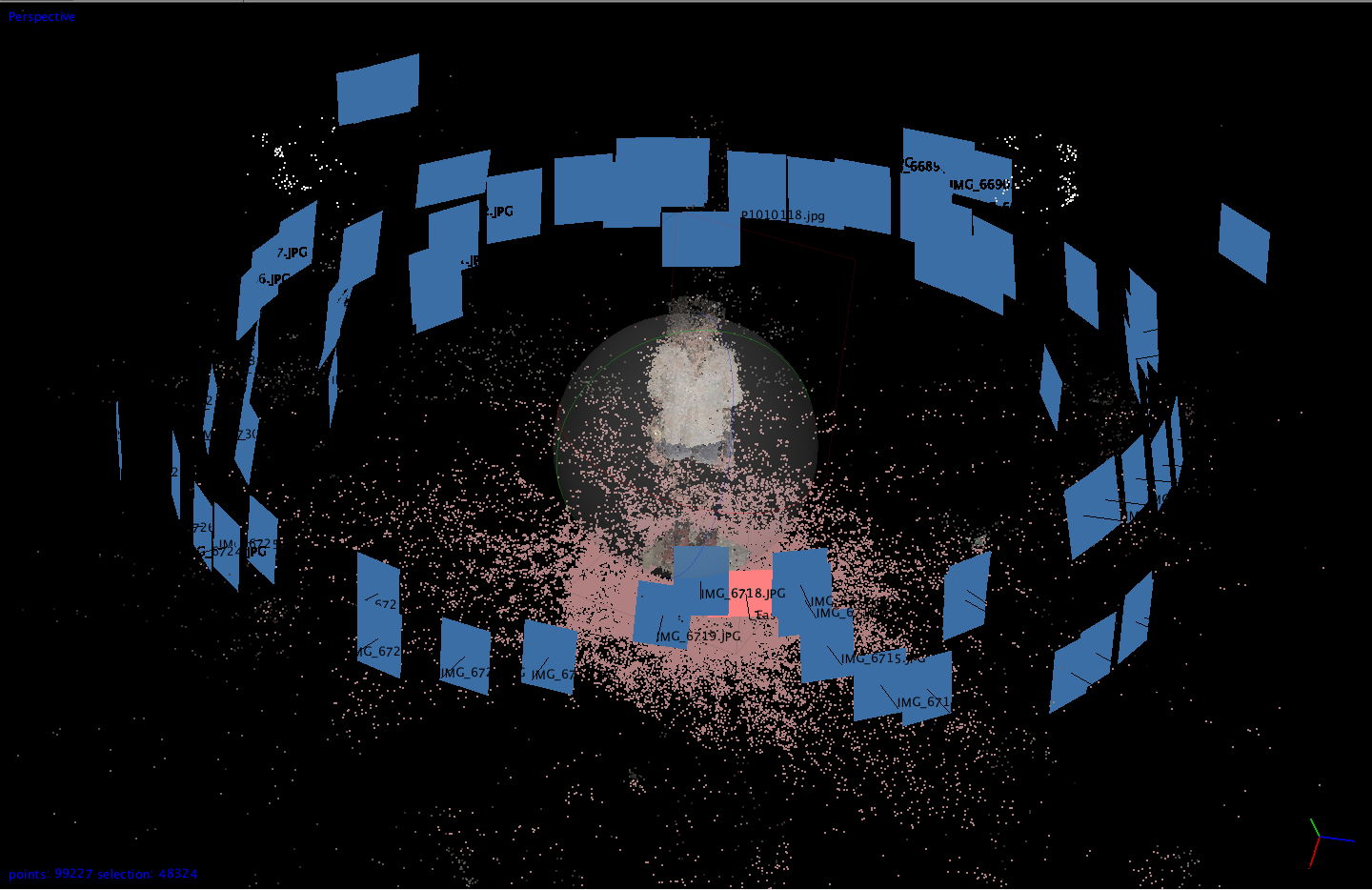
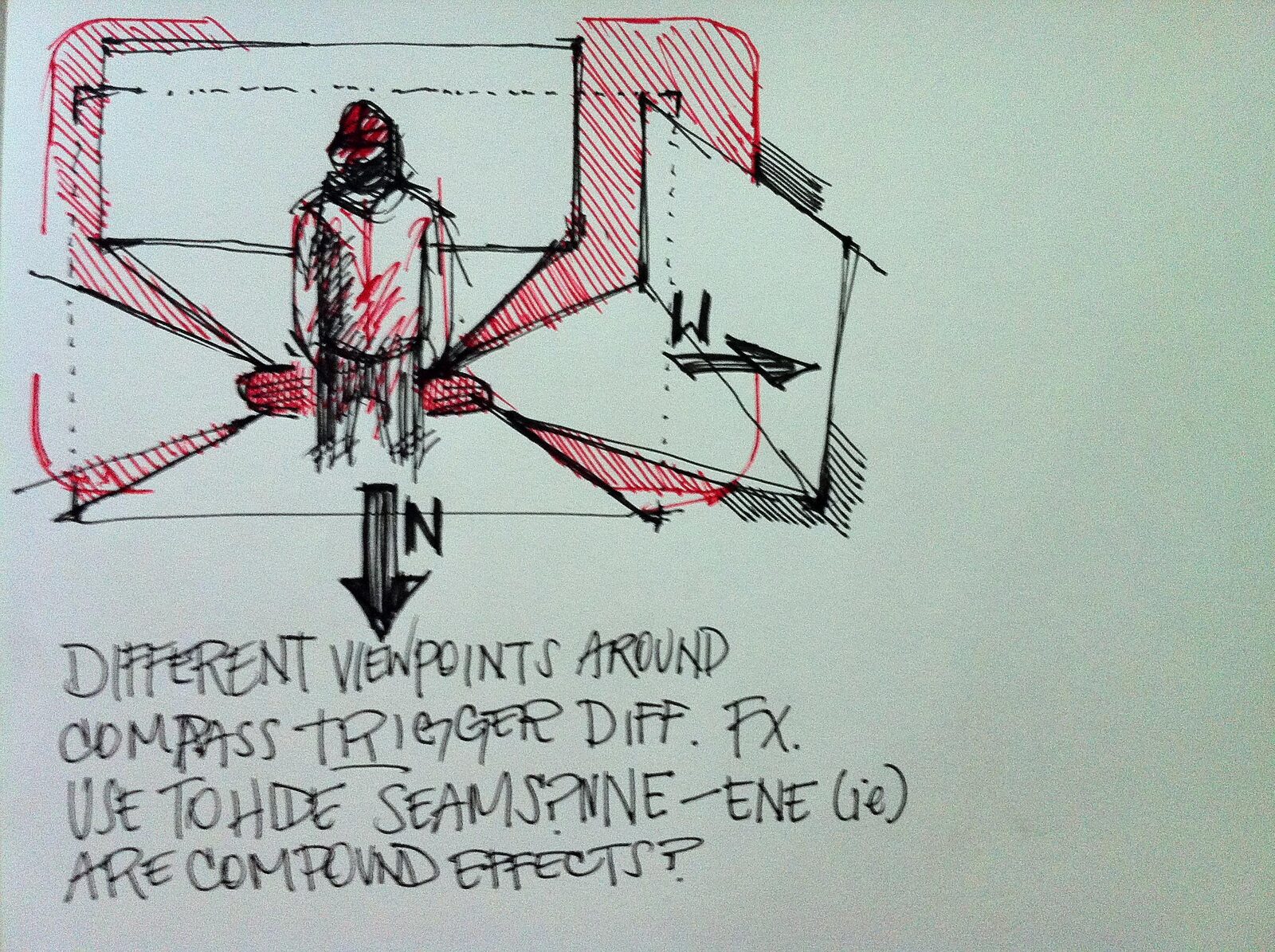
For the Stüssy shoot, we put four RGB-D cameras around one performer. Each camera saw one side. I built a calibration workflow to bring those four recordings into the same space, so you could turn around the person after the shoot.
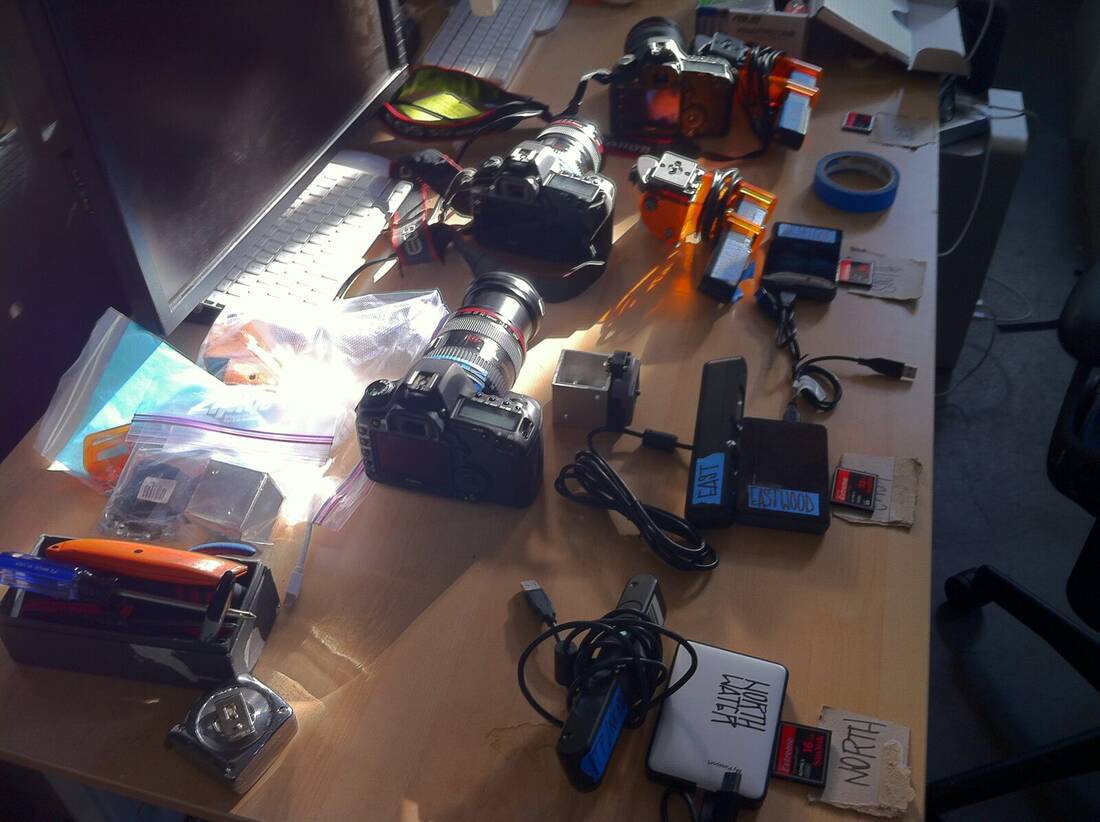
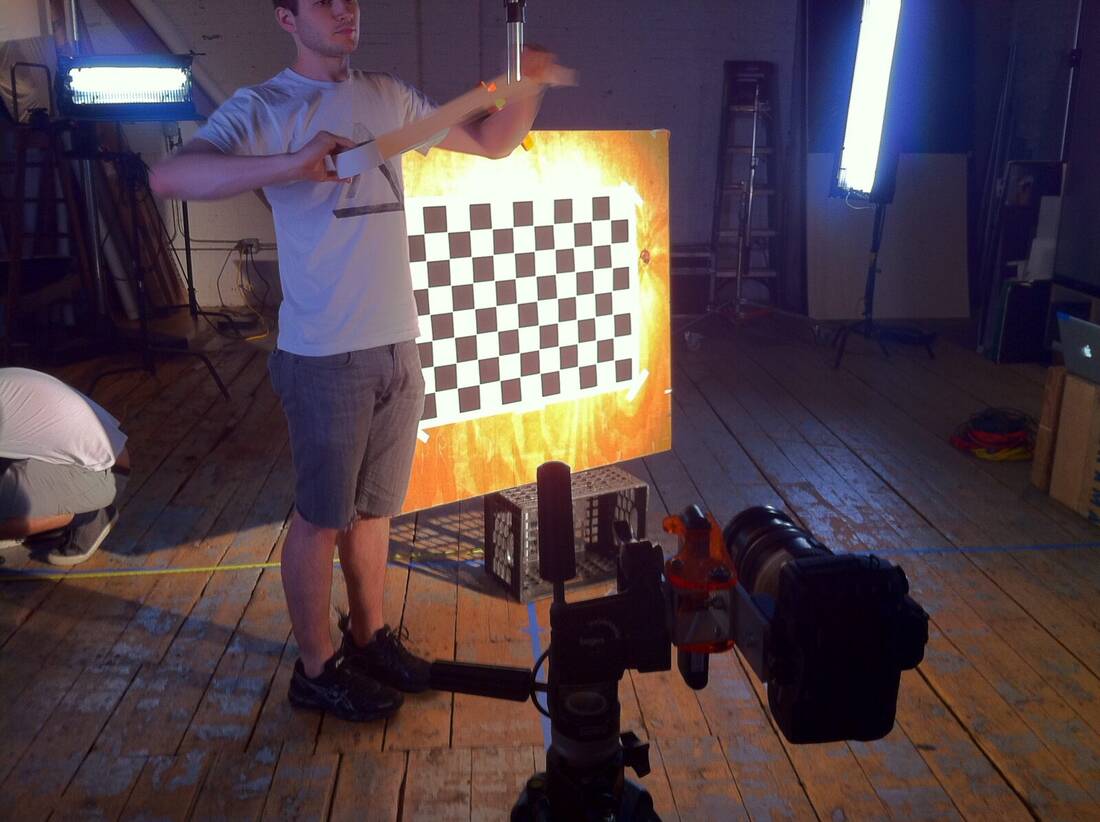
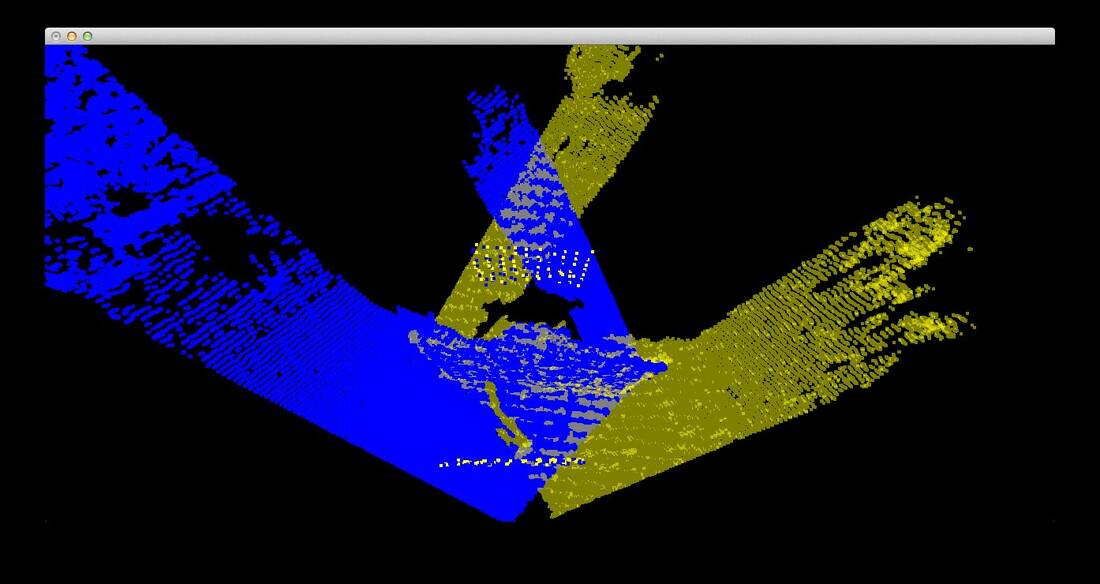
I developed the capture and calibration workflow for this production.
- 01 / Starting point
How do you record one person from several sides and make the cameras agree about where that person is?
- 02 / How it worked
A timelapse from the shoot makes the arrangement easy to see: we marked a central performance area and built one RGB-D rig on each side. Every rig first needed its own color-and-depth calibration. Then I used checkerboards and camera-position files to line up the four recordings. In a browser-based tool, I adjusted translation, rotation, scale, and depth until the color-coded walls and bodies stopped splitting apart. The project folder still holds the separate north, south, east, and west calibrations and the resulting transformation files.
- 03 / What it opened
Once the four recordings occupied the same space, a viewer could rotate around a captured person after the shoot. The workflow developed here continued into Blackout and later became part of Depthkit Studio’s multi-camera capture system.
Rotate the capture
Open in a full window ↗This is the recovered 2013 WebGL experience, running from the surviving deployment. Drag to move around the figure, scroll to change distance, and click the Stüssy or Timberland marks to change the image treatment. It is best experienced on a desktop computer.
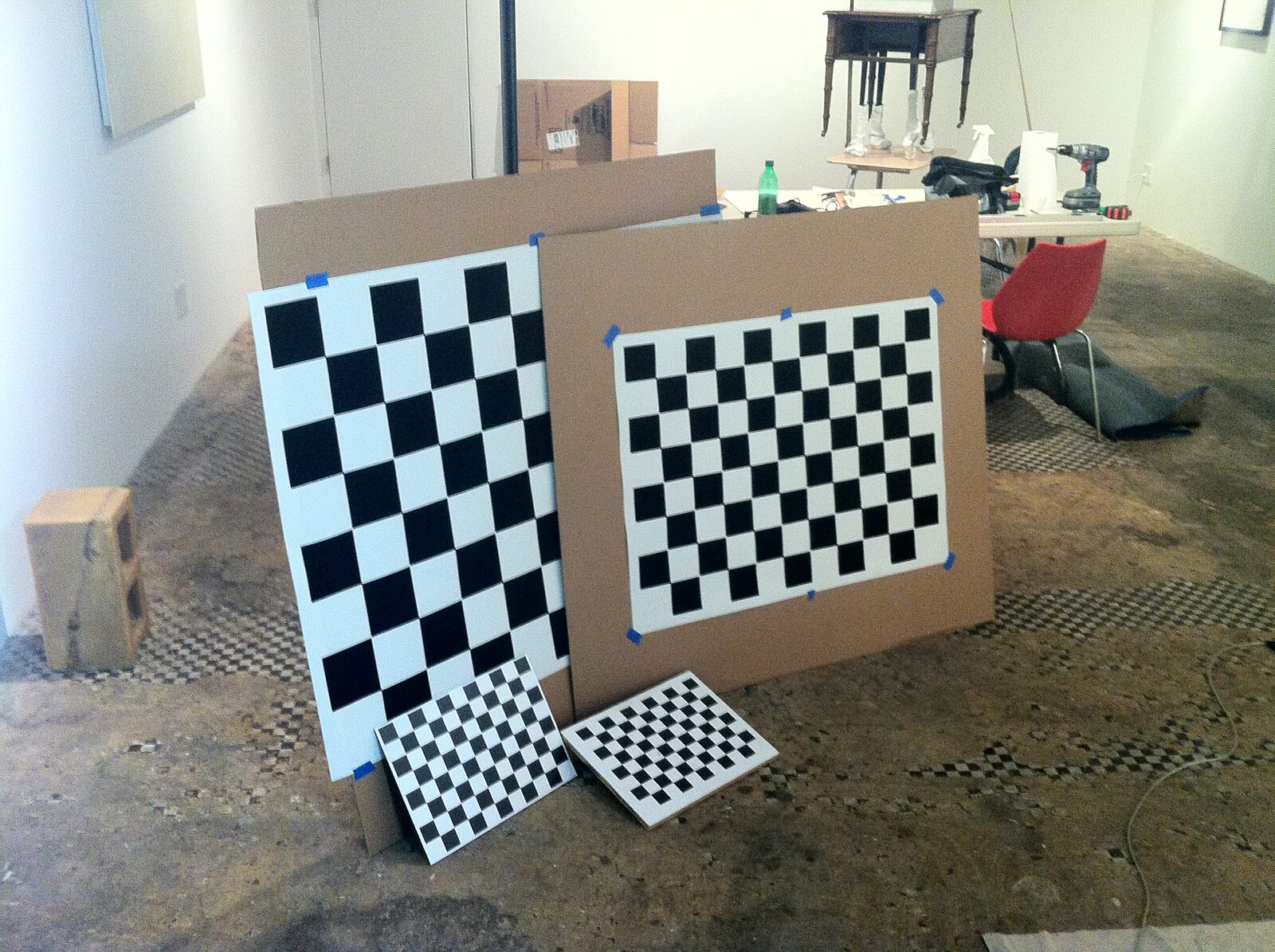 calibration boards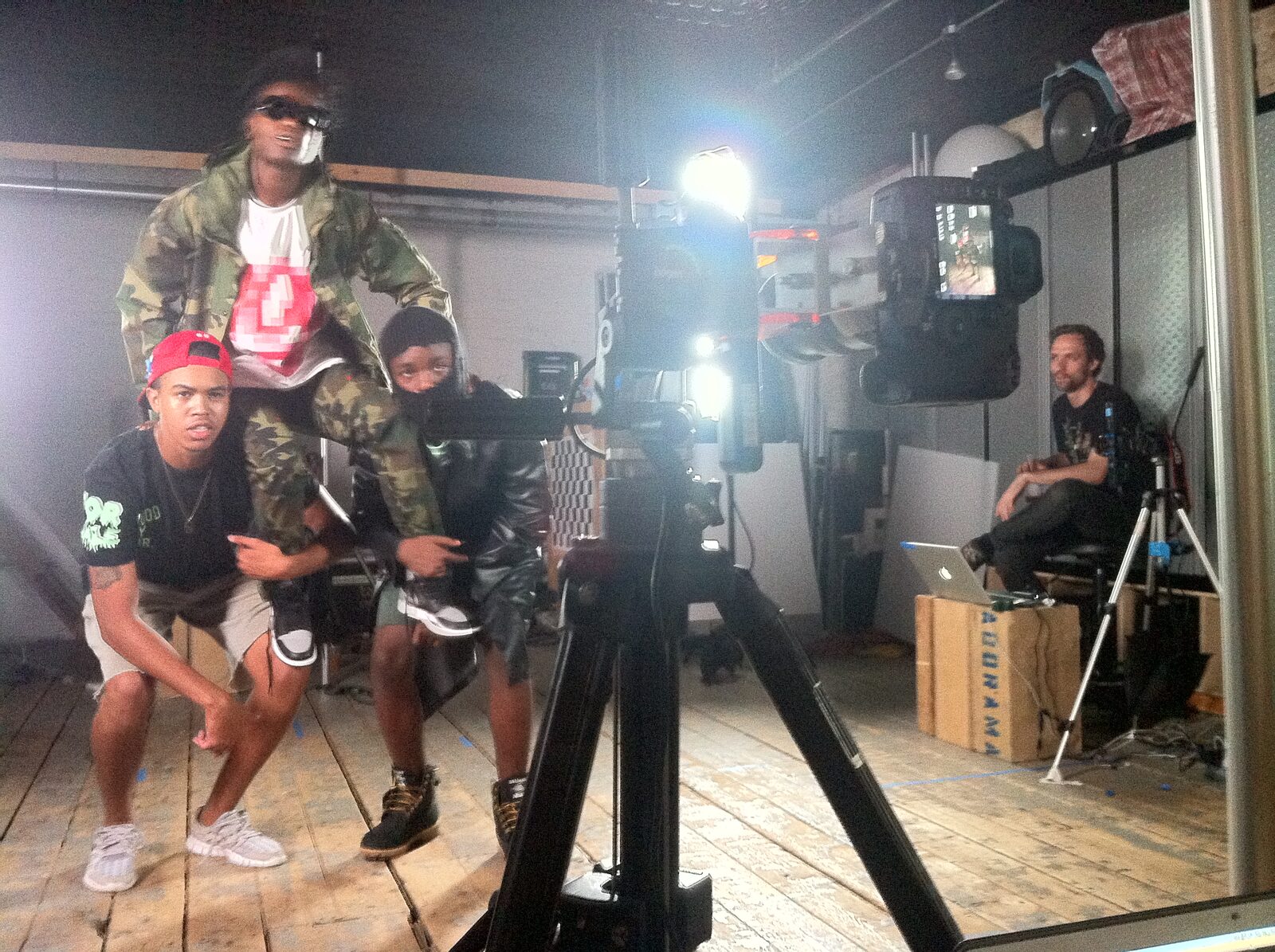
Selected credits
- Matthew Williams
- Director
- Jack Heller
- Director
- Alexander Porter
- Director of Photography, Visual Effects Supervisor, Interaction Designer
- James George
- Technical Direction
- Marcin Ignac
- Code and 3D Effects; Interaction Implementation / Technical Design