Presence
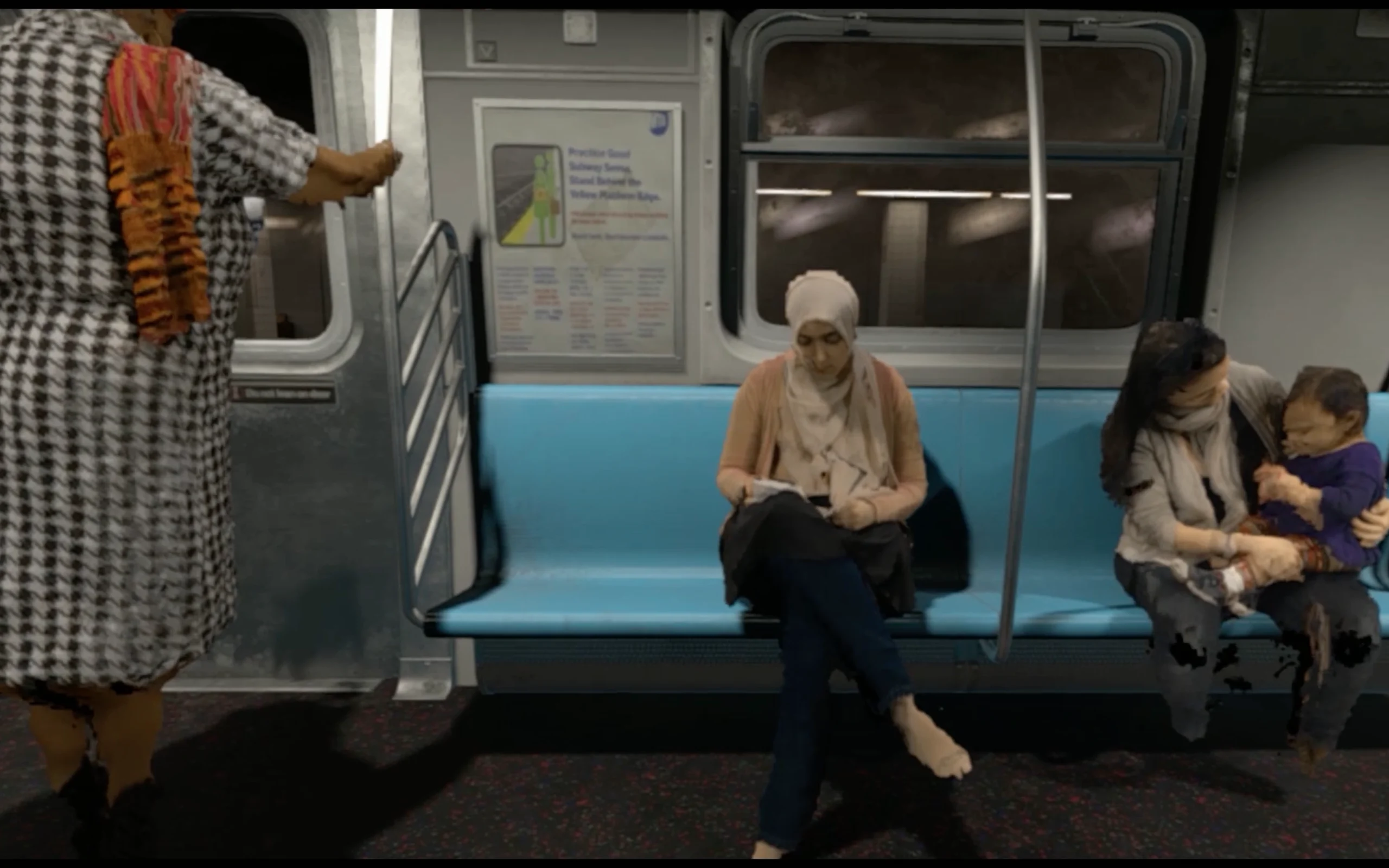
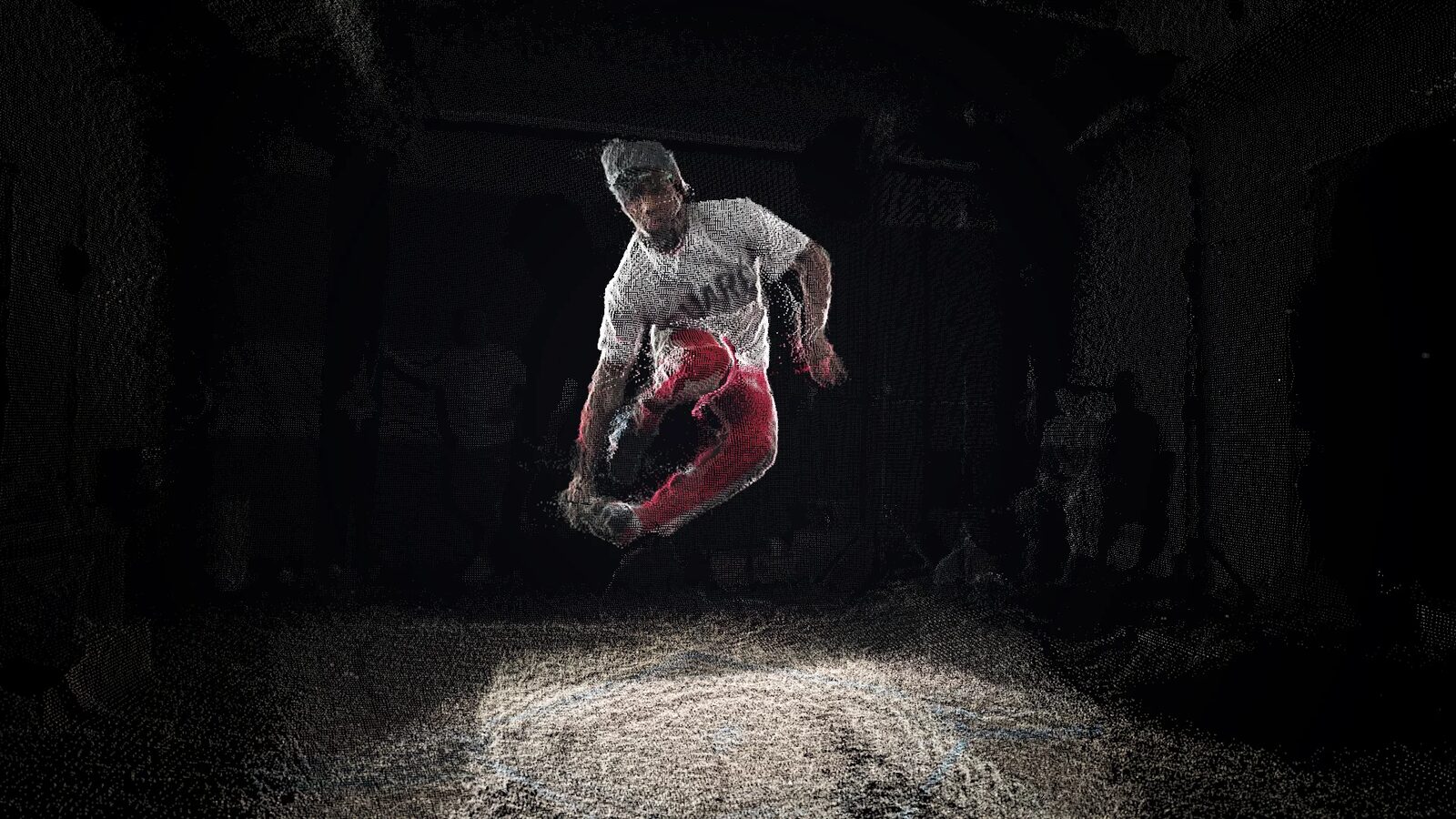
Volumetric recordings of New Yorkers occupy the room at human scale.
Intimacy among strangers in a darkened subway car
A generative volumetric documentary that places the viewer among real New Yorkers whose inner monologues surface during a subway blackout.
The project
You enter a full-scale subway car, put on a VR headset, and find its metal poles in the same place inside the virtual train. More than forty New Yorkers appear around you as volumetric recordings. Proximity and gaze open their interviews, while a Story Engine recombines the cast for each viewing. New recordings were added live during Blackout’s 2017 Tribeca Storyscapes presentation.
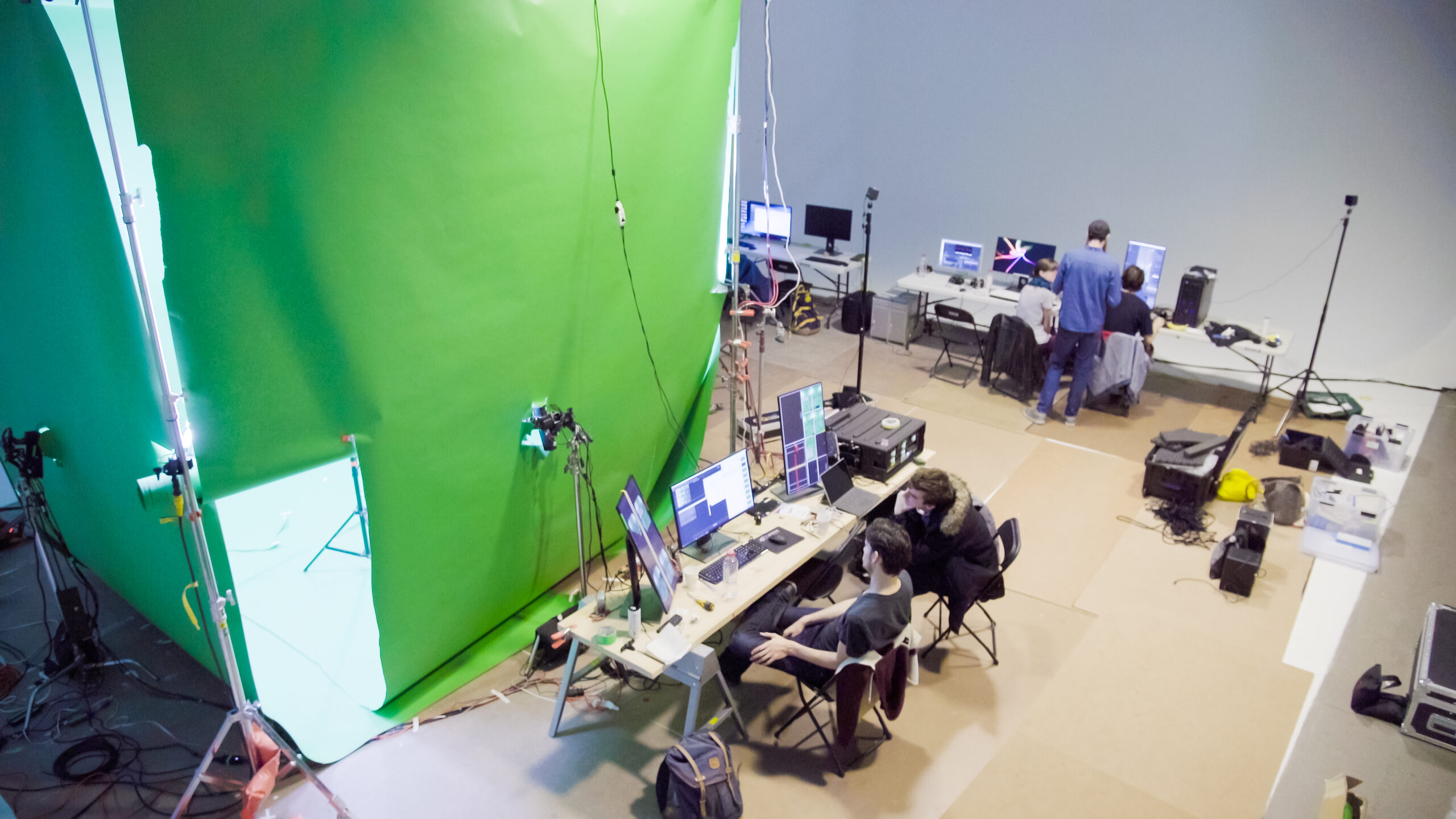
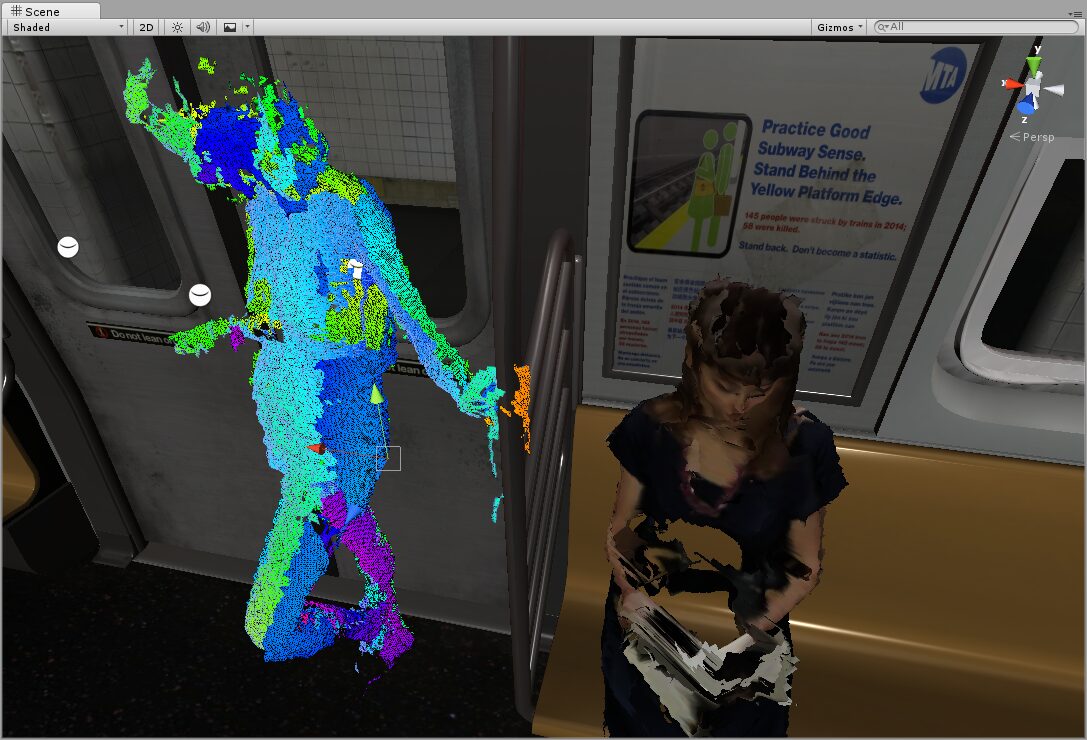
We recorded multi-hour interviews with more than forty New Yorkers, looking for the places their minds go between destinations. During Tribeca, we kept capturing people and adding them to the piece. Each visitor entered a different temporary group of straphangers and chose where to place their attention. The custom capture and live-production problems kept pushing the tool forward. That software became part of Depthkit’s lineage.
Process study
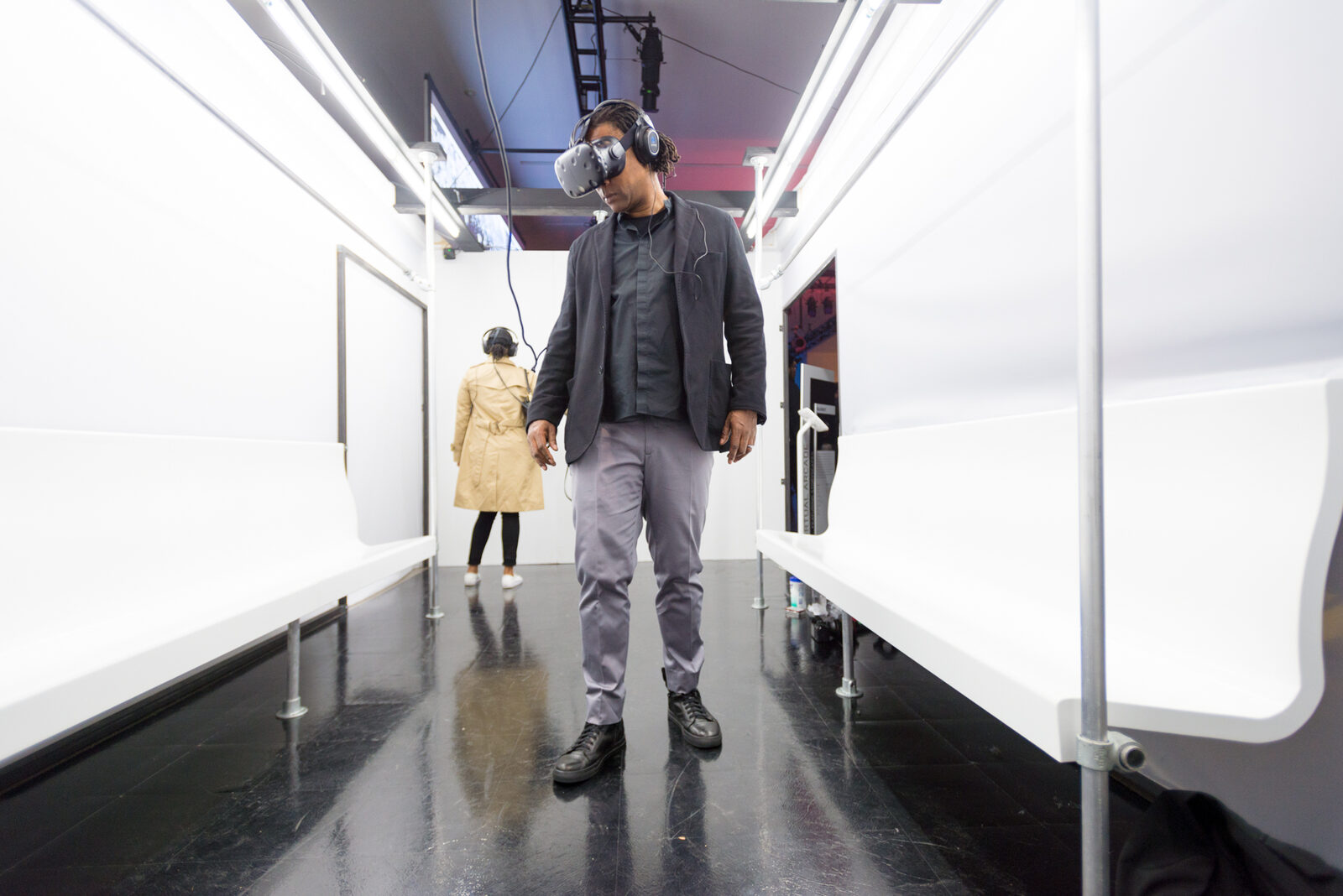
At Tribeca, we aligned Blackout's full-scale physical subway-car installation with its virtual train. For example, when UploadVR reviewer Kelly Ohannessian reached for a metal pole in the headset, her hand found the cold metal of a real pole. The small gesture carried the simulation into the body and comforted audience members new to virtual reality.
 installation documentation
Alexander Porter — Director / Project Creator · Matt Wilson — 3D Generalist / Virtual Train Environment · Full installation team credited on the project page.
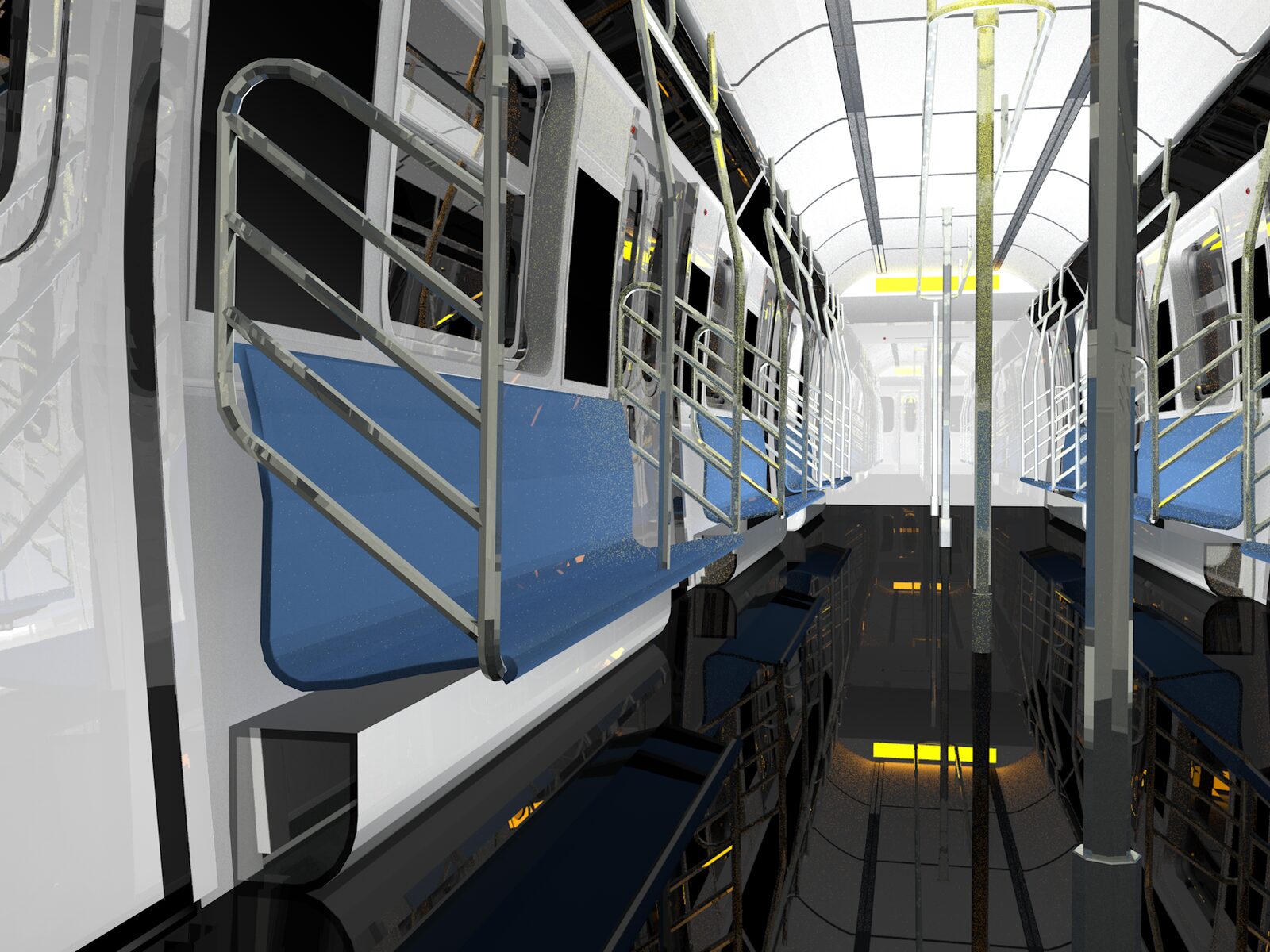
We registered the virtual train to a minimalist full-scale installation so the structural cues, including the floor, seating, walls, and pole, occupied the same positions in both spaces. Room-scale tracking let viewers move through the car while volumetric passengers and spatial audio supplied its changing social world.
The real pole gave viewers one reliable point of contact with the virtual car. From that landmark, the floor, seats, walls, volumetric passengers, and spatial audio could occupy a shared scale around them.
Experience logic
Volumetric recordings of New Yorkers occupy the room at human scale.
The viewer’s gaze determines whose private story becomes audible.
A generative Story Engine assembles a different temporary community for each encounter.
The official trailer, a forty-second production film, and an exhibition walkthrough show the finished work, the live capture setup, and the physical installation.
This short production film records the capture setup used to add new participants during the 2017 presentation.
Engadget follows a visitor through the full-scale subway-car installation and speaks with the team at Tribeca.
Scatter
Co-Founder / Immersive Director