Gesture
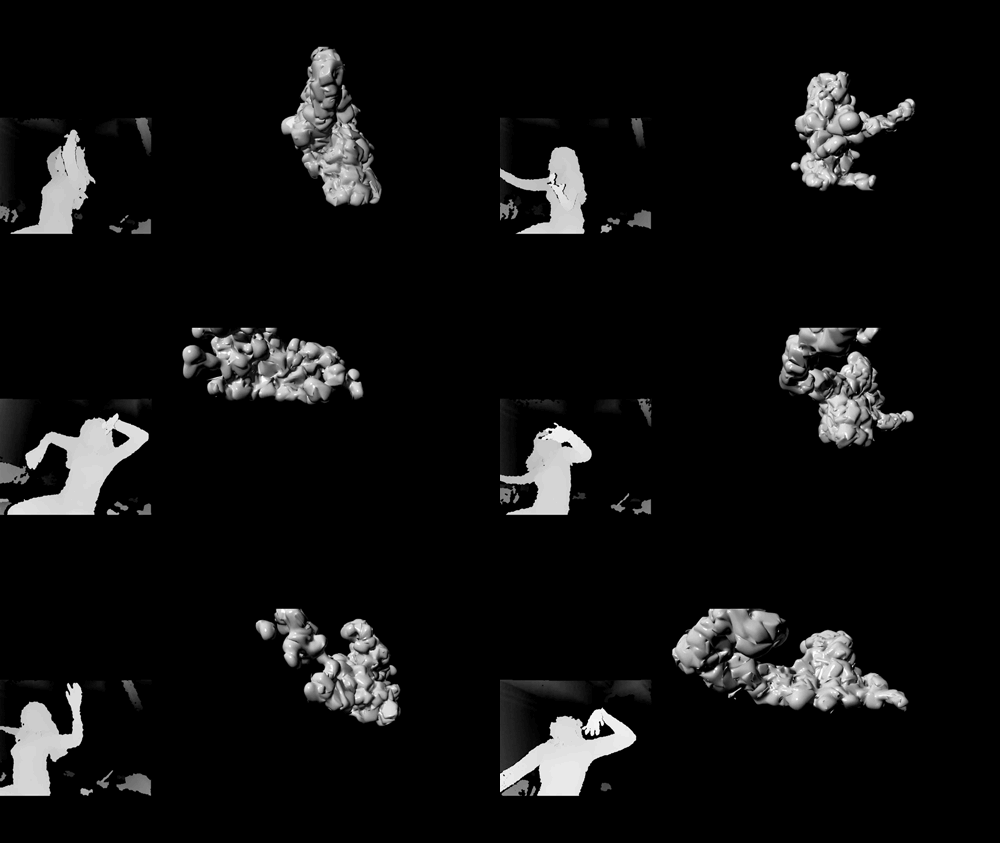
Eozin Che, J.H. Moon, and Karen Peng abstracted a person’s recurring gesture into a computational portrait.
A gesture, a face, and a subway encounter.
Using machine vision for portraiture.
The project
Computational Portraiture began with a question: as cameras became ubiquitous, how were they changing our relationship to images and altering photography as an artistic medium? The two-credit NYU ITP course ran across four semesters, from Fall 2014 through Spring 2016. Students used photogrammetry, 3D scanning, computer vision, gesture recognition, face reconstruction, and backpack-mounted GoPros to make portraits. No prior technical skills were required.
I began the course with a theory of parallel histories of photography. One is the familiar consumer history: cameras presented as humanistic devices for art, portraiture, and daily life. Running beside it is another history of cameras built for mapping, measurement, computer vision, astronomy, microscopy, and other technical forms of looking. Treating only the first history as creatively available produces an artificial narrowing.
The course asked: who says we are not allowed to use those other cameras? Portraiture gave us a deliberately human and expressive form through which to test them. We were particularly interested in environmental portraits. A thermal camera, lidar scanner, or microscope might each make a different portrait of a person and the place around them.
James George and I taught the class across four consecutive semesters at NYU ITP. It was an open-entry survey: no prior technical skills were required, and students began with the cameras, phones, laptops, and tripods they already had. We looked at artworks made with photogrammetry, 3D scanning, and computer vision, along with the research and tools behind them. The assignments were very different from one another: students traced a person's signature gesture, rebuilt a face from one photograph, and carried GoPros onto the subway.
Student-authored studies
Eozin Che, J.H. Moon, and Karen Peng abstracted a person’s recurring gesture into a computational portrait.
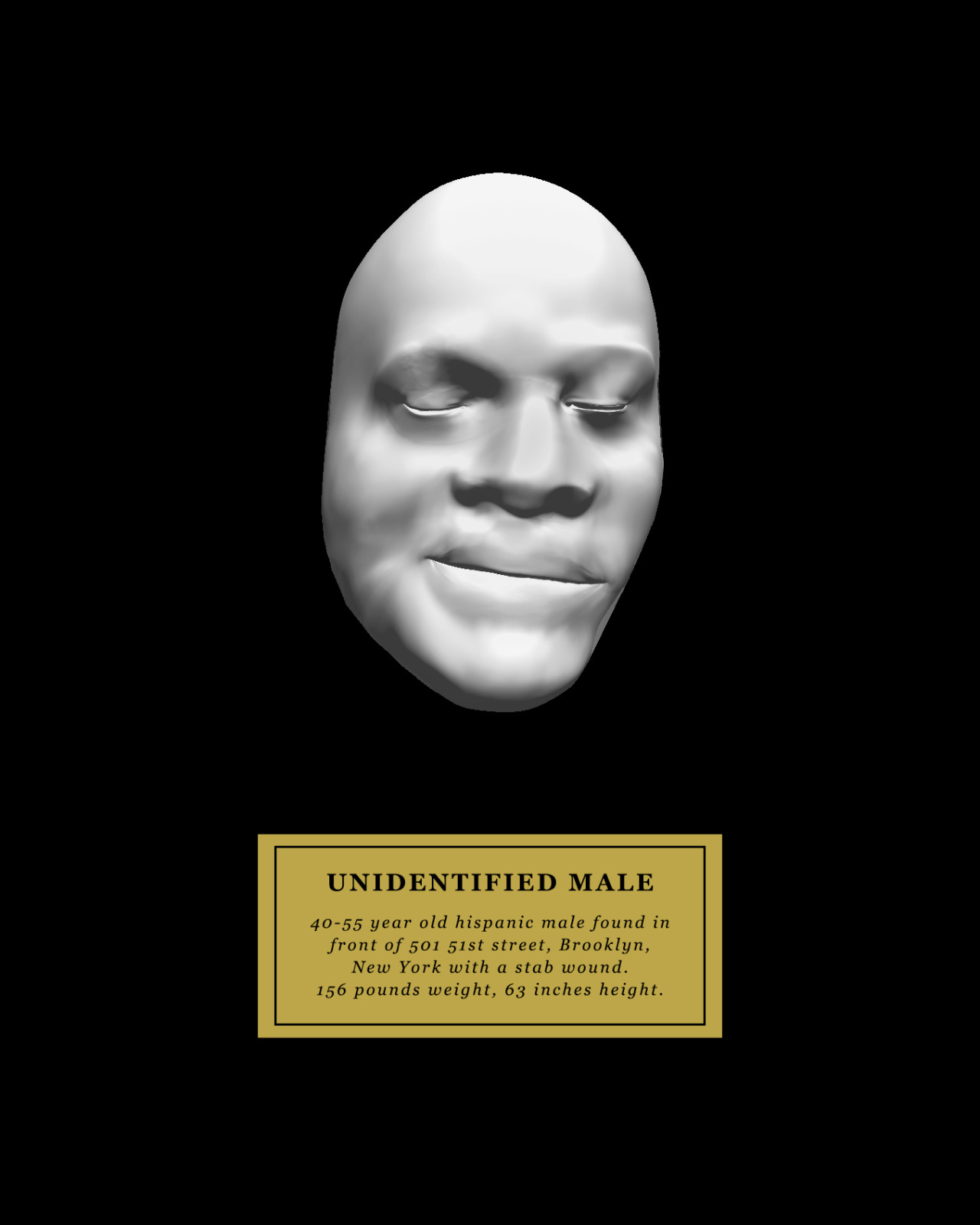
Ziv Schneider used single-image facial reconstruction to create digital death masks for unidentified-decedent cases.
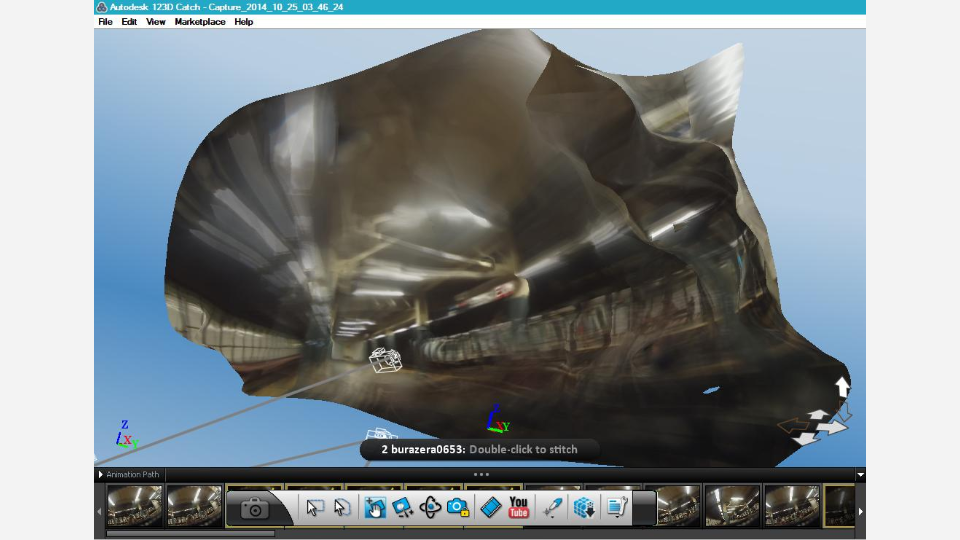
Neva Kocic used backpack-mounted cameras to turn a subway encounter into a photogrammetric study.
My role
I designed the course around environmental portraits made with cameras and sensors used for mapping, measurement, and other technical forms of looking. The projects shown here belong to the students who made them.