Headlands prototype
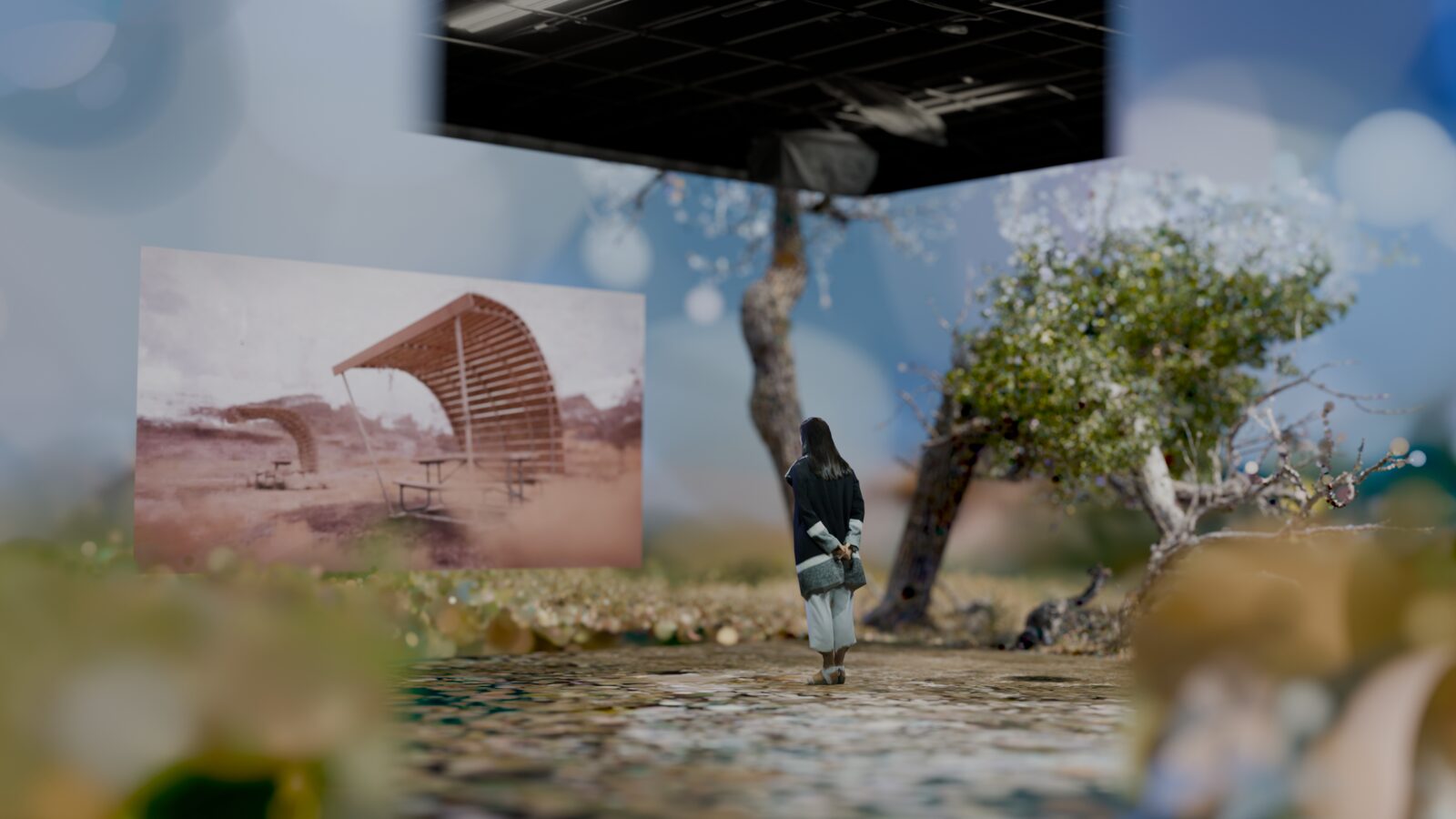
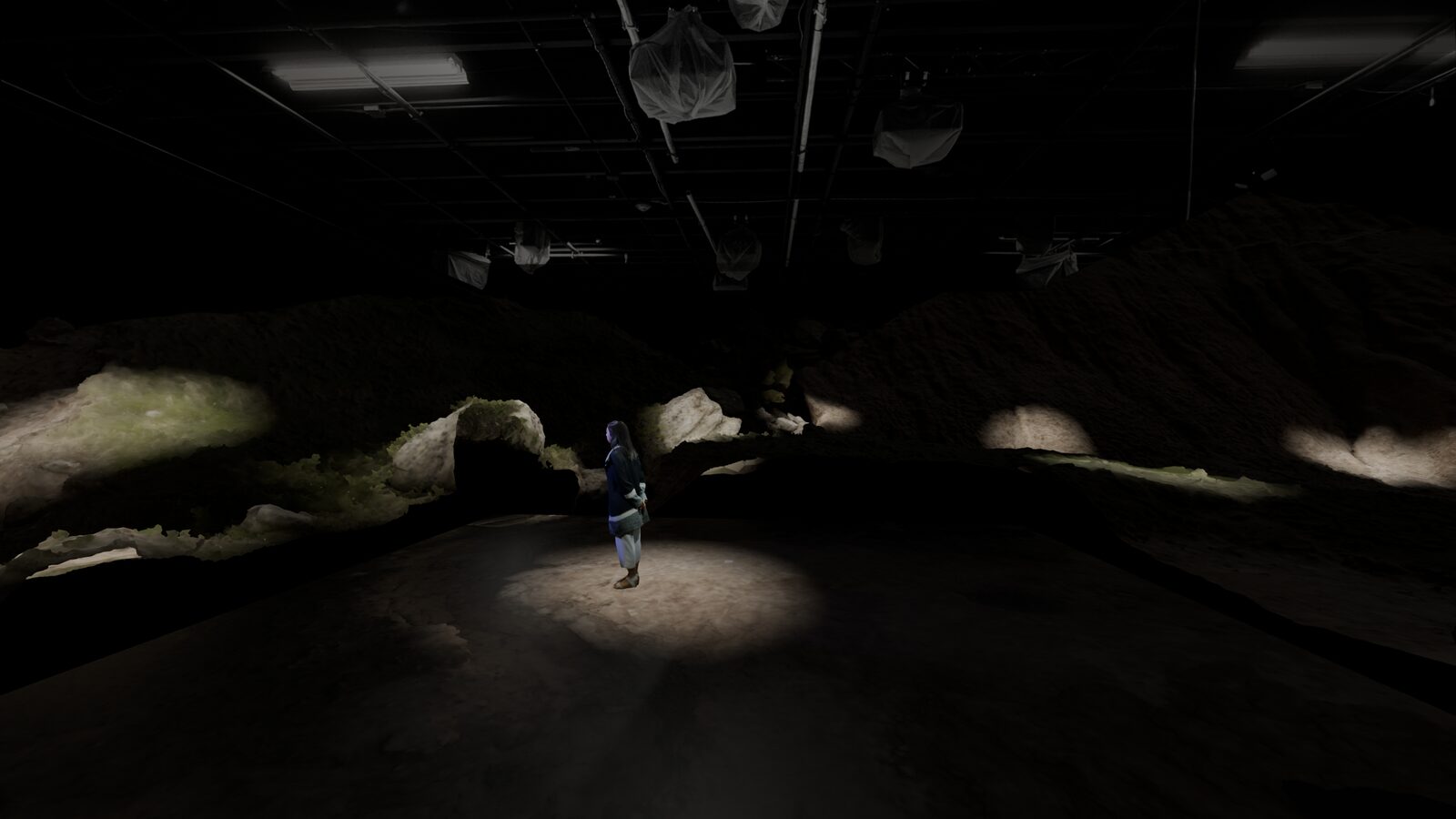
A 2025 installation at Headlands Center for the Arts tested projection, visitor interaction, and the real-time system.
Strata is an immersive installation that transforms the Badlands of South Dakota into an explorable landscape.
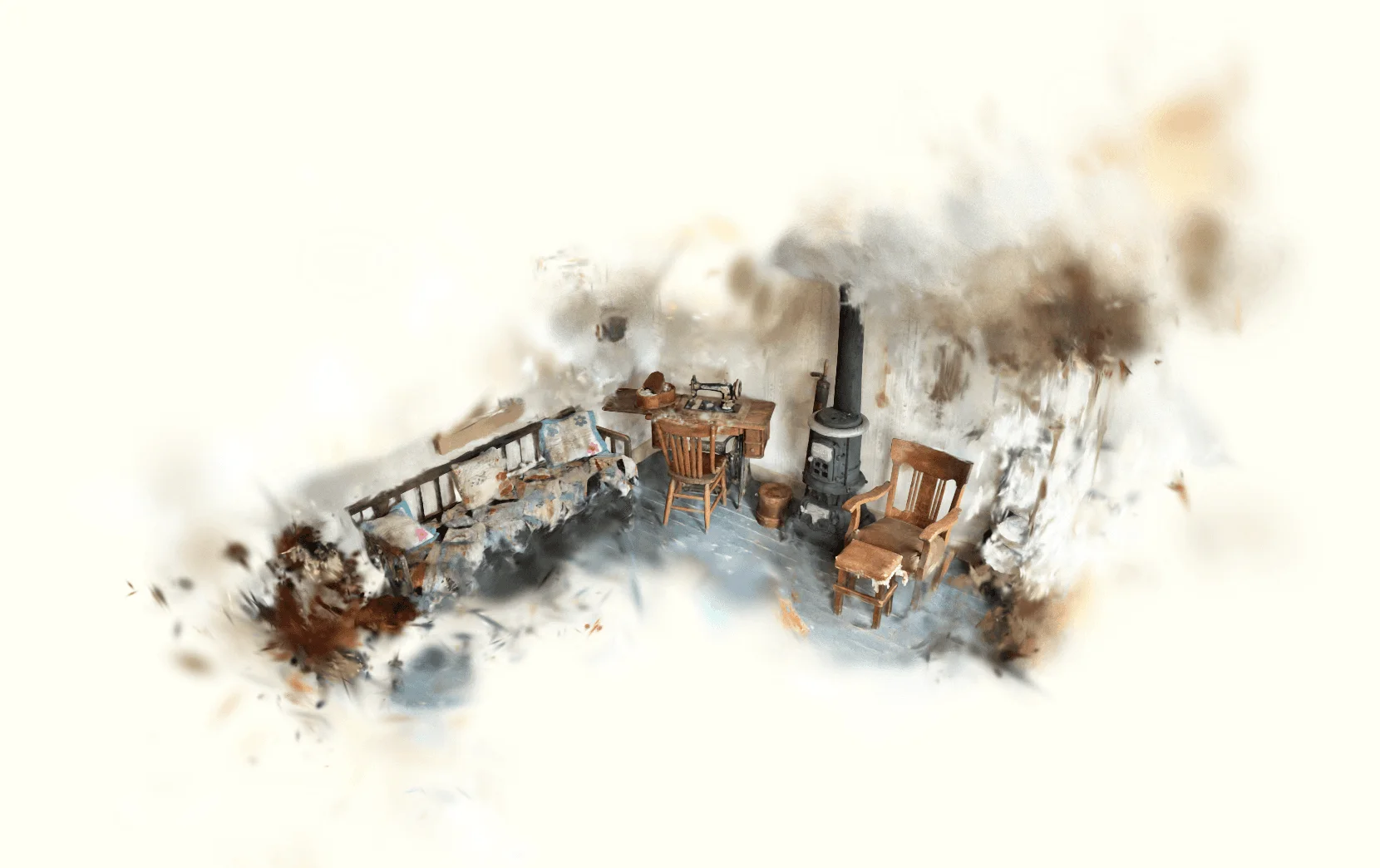 environment study
The project
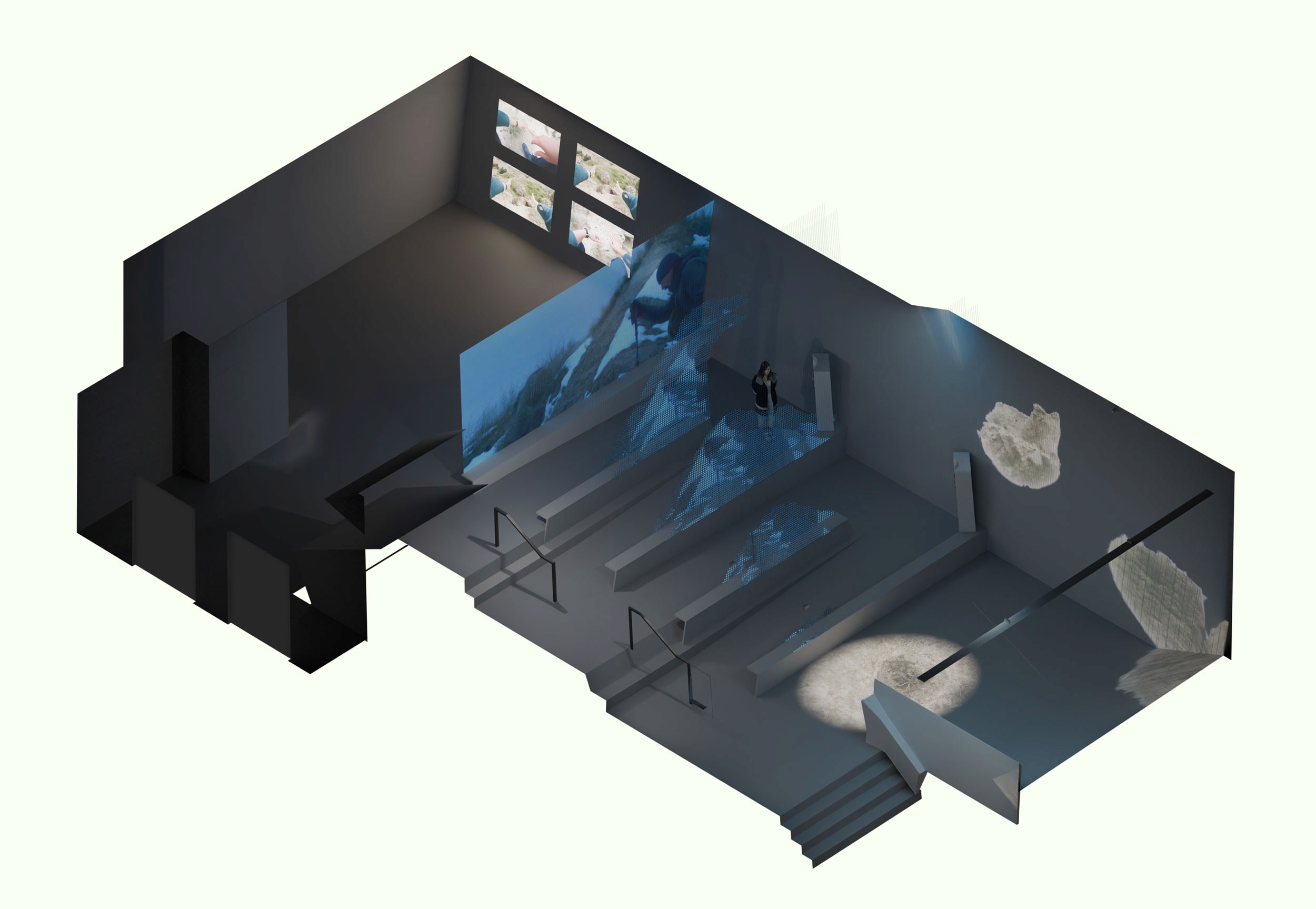
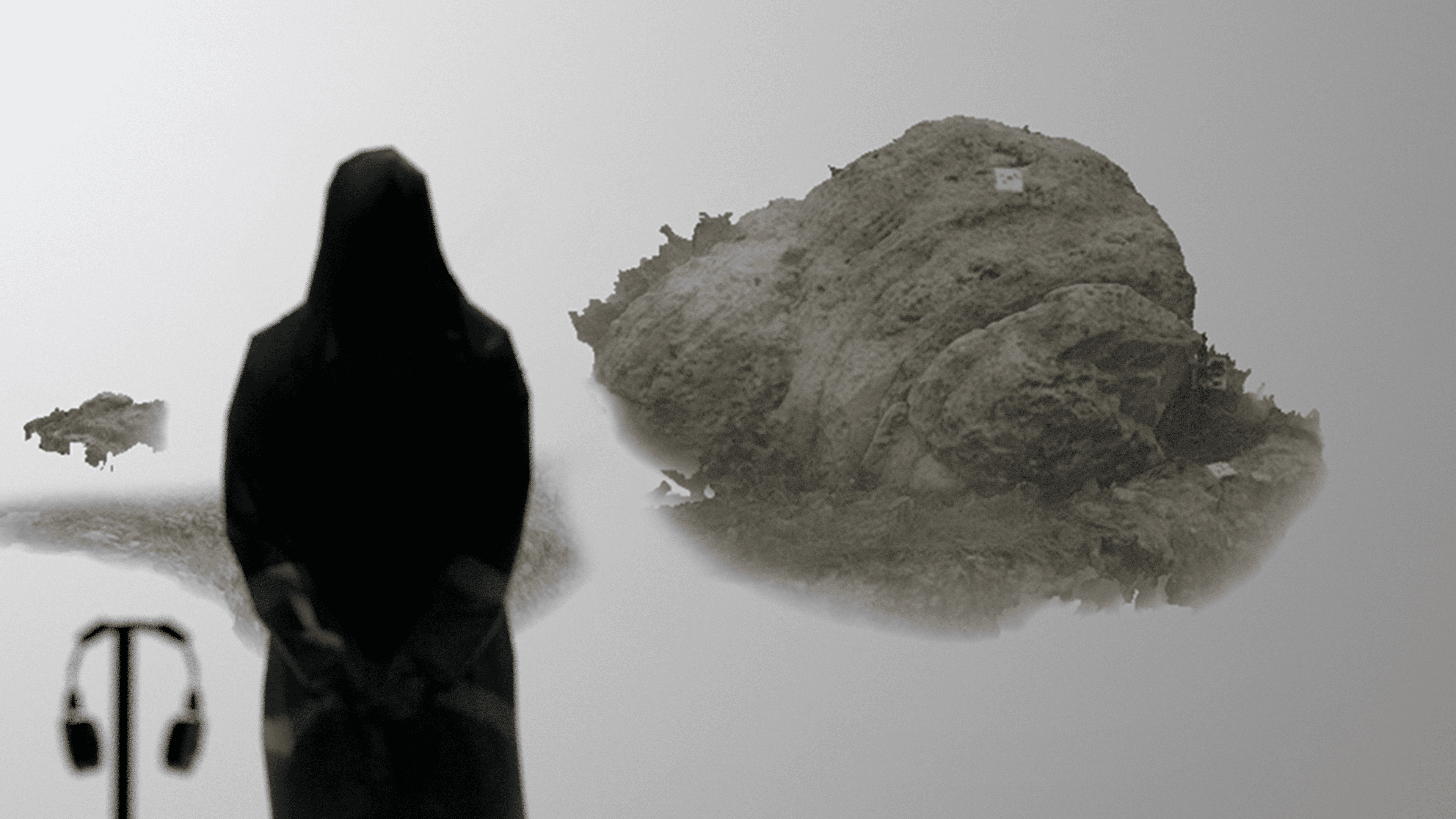
Strata (Installation) is a generative documentary environment in development, set inside a fifty-meter 3D scan of the Badlands. The current museum proposal maps that terrain across full-wall and floor projection, spatial sound, a sculptural landform screen, and a volumetric display.
As you walk, terrain appears beneath your feet. Recorded walkers reveal other parts of the landscape along their routes. Their voices remain tied to positions on those routes while footage, archives, and scanned objects surface nearby. The work is built around careful noticing. Close observation is rewarded as the landscape becomes a tapestry of stories, memories, observations, and buried histories. Because the installation responds to movement and duration, no two experiences will be the same. The final installation has not yet premiered.
We began Badlands with a difficult documentary premise: how do you make the land, rather than a single charismatic person or issue, the protagonist? The place holds Lakota histories, paleontology, wildlife management, ranching, nuclear weapons, plant knowledge, and many forms of work and observation. We didn't want to organize all of that around one person or blend those positions into one voice. The landscape was the thing they had in common.
Strata came from trying to give that structure a physical form. In 2021 I began imagining each walk through the same patch of ground as a chain of moments: one person's cone of perception, with a voice attached to the route. Several paths could cross without resolving into one view. I called that difficulty the vertigo of trying to co-mingle these views.
Hannah proposed that each path leave an accumulating imprint in the terrain. I answered that the more points of view we had, the more vision the work might have. She trusted the strange premise and helped us carry it into production. In the installation, visitors move among those situated accounts. The land is the organizing presence: the place where voices, histories, and different scales of time meet, overlap, and remain distinct.
Process studies
The Strata performance and installation use the same fifty-meter 3D model of the Badlands. We built it from more than 5,000 overlapping photographs; route, voice, and reveal systems sit on top of it.
Alexander Porter — 3D Capture · Christian Knutson — Field Photography
Christian Knutson and I photographed the same fifty-meter patch again and again until we had more than 5,000 overlapping images. I processed them through photogrammetry in sections, checked the geometry against the photographs, and joined the sections into one navigable model. In Unreal Engine, I balanced surface detail against what the computers could draw continuously. The performance and installation now share that model. A separate system records the walkers’ routes, positions, and synchronized voices; the next study describes it.
The model gave the live camera terrain it could navigate in real time. Recorded routes, spatial voices, archives, and reveal effects could then be placed at measured positions within the same fifty-meter area.
For Strata, people described the Badlands while walking through the same fifty-meter area at different times.
 diagram
 debug view
Alexander Porter — Route-recording Toolset / Unreal Engine Integration · Hannah Jayanti and Christian Knutson — Onsite Production
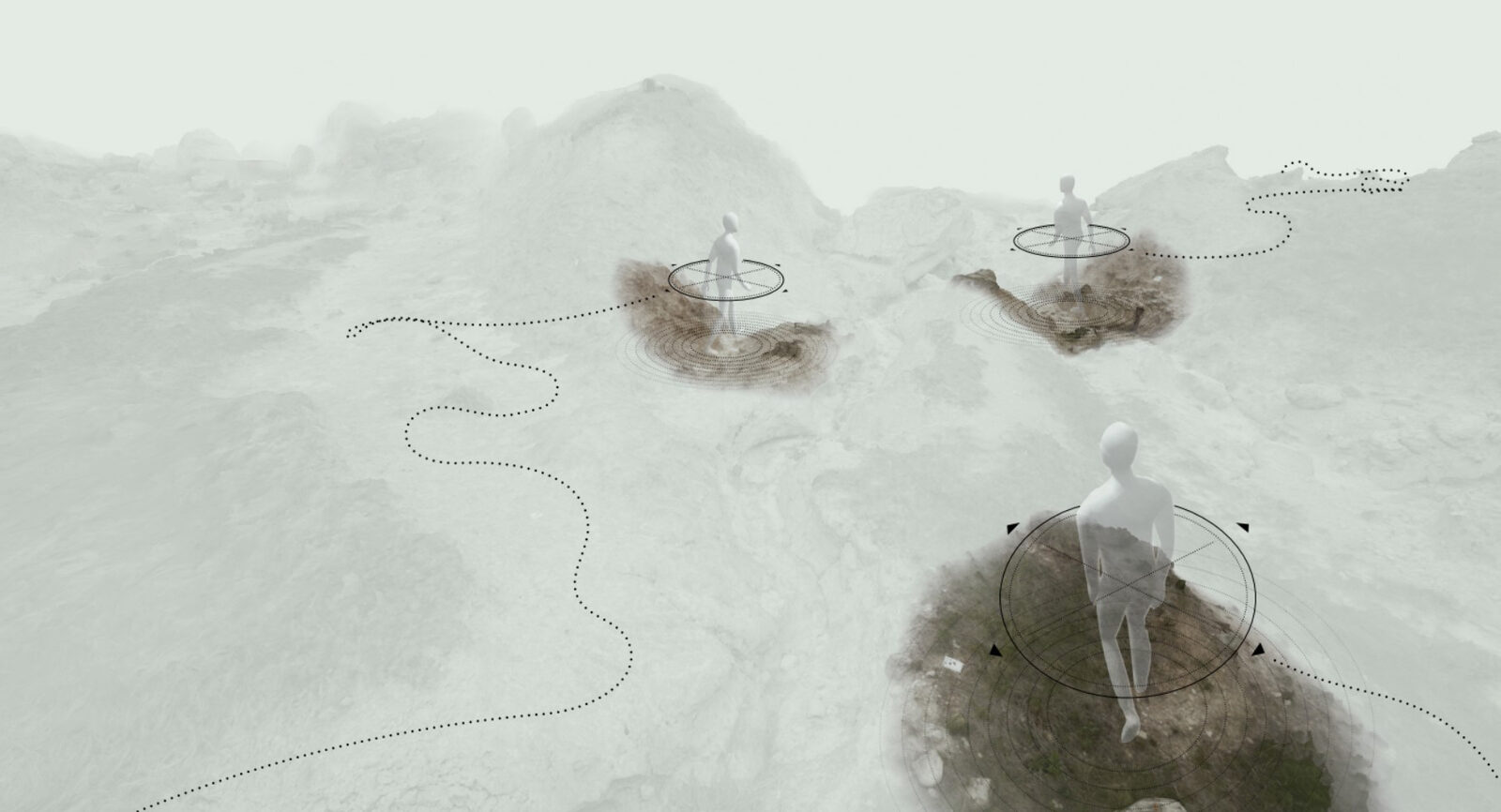
I mounted an iPhone running a custom tool on each person's body to record their location as they walked. A lavalier wireless microphone recorded their voice at the same time, and a GoPro recorded the walk as a witness camera. Back in the studio, I synchronized the location, sound, and video tracks, then used the recorded locations to build the route animation in Unreal Engine. With the tracks aligned, each voice remained attached to positions along the original walk. A diagram shows several walks as separate dotted routes across the same fifty-meter area.
The installation can place several recorded walks within the same fifty-meter area. Each voice follows its own route, so observations made at different points remain attached to distinct positions even when several accounts occupy the same reconstructed landscape.
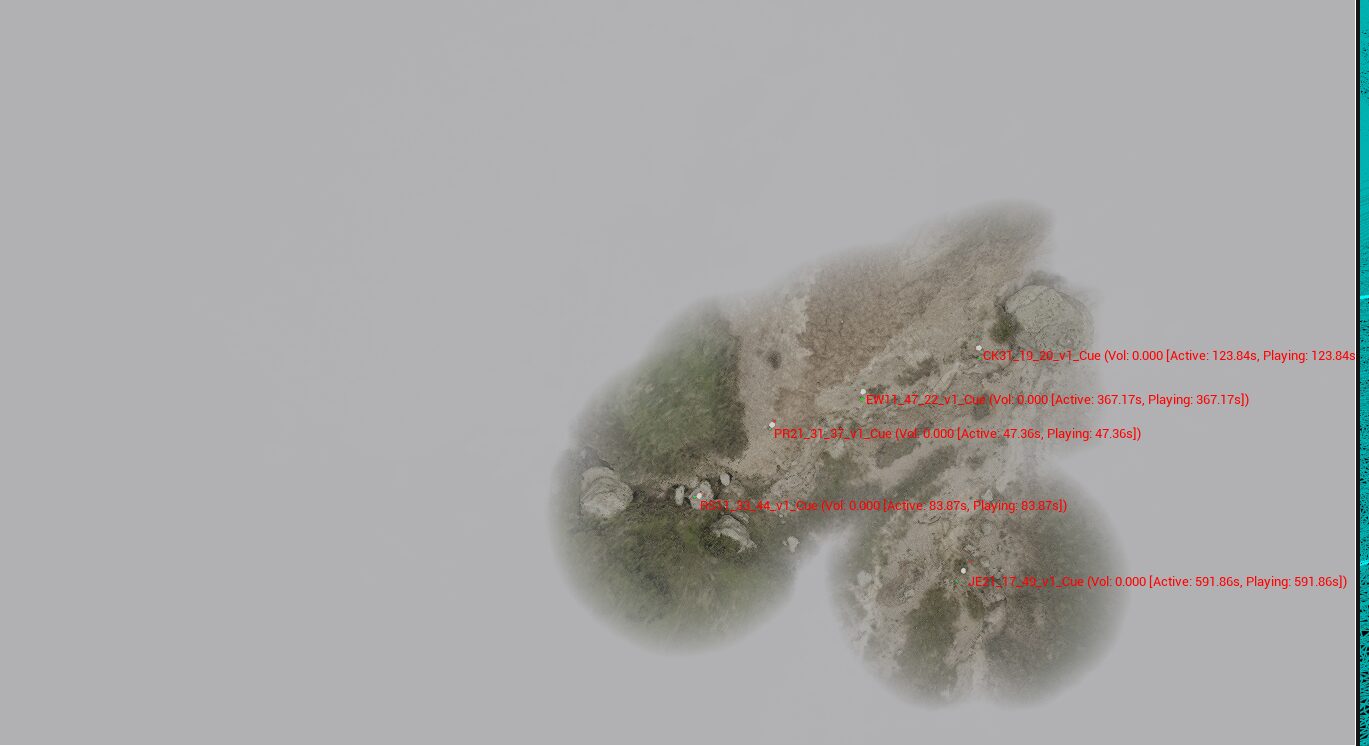
The system treats recorded walkers and present visitors as points in the Strata world. A radius around each point reveals nearby terrain. Reveal regions can overlap, but their combined value stays capped at one: fully visible. The wall projections show the same simulation rather than using a separate wall mask.
diagramAlexander Porter — reveal-system design and implementation.
I built one reveal system into the Strata world simulation. Each recorded walker supplies a point of origin; Walker Radius sets the reveal region around that point. The live camera is treated as another walker, and Player Mask Size sets the same radius around a visitor's position. When several masks overlap, the reveal remains capped at one: fully visible. The wall projections show views of this same simulation. The 2023 tests use the same basic code, with later improvements.
Recorded walks and present visitors can expose the fifty-meter scan through the same spatial rule. I am now interested in a second reveal for a future installation version: as someone approaches a wall, their proximity—and possibly the time they spend there—could uncover footage, Gaussian splats, and other material related to the nearest walker.
Behind the scenes
This production film documents how more than 5,000 photographs became the navigable Badlands terrain shared by the Strata forms. The Process Studies above explain the decisions behind that method.
A 2025 installation at Headlands Center for the Arts tested projection, visitor interaction, and the real-time system.
A modular configuration is being developed for festivals and galleries, using screens and surfaces that can adapt to different rooms.
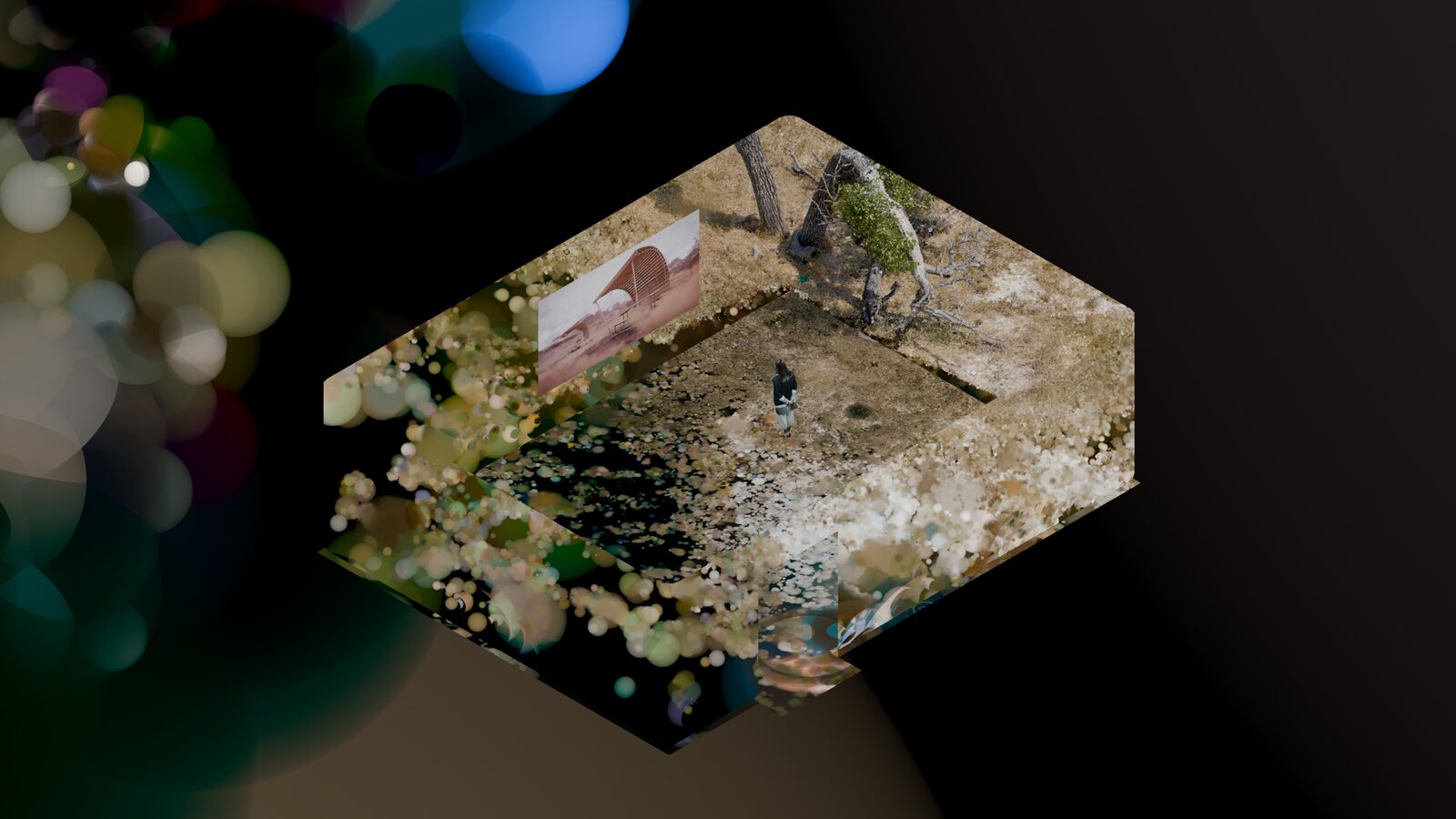
The current proposal maps a darkened gallery to a fifty-meter patch of the Badlands through full-wall and floor projection, spatial sound, sculptural terrain, and a volumetric display.
 exhibition model
 installation visualization
My role
I am building the scanned landscape and designing how recorded walks, voices, footage, and objects will appear within it. With Christian Knutson, I photographed a fifty-meter patch of the Badlands for the 3D reconstruction. The installation is being developed so that visitors’ movement through the room reveals terrain beneath their feet and brings them among the recorded walks.
Supported by the New York State Council on the Arts through UnionDocs
2024